- Free Case Evaluation: 312-779-6171 Tap Here To Call Us




Do You Need a Tetanus Shot After a Dog Bite?


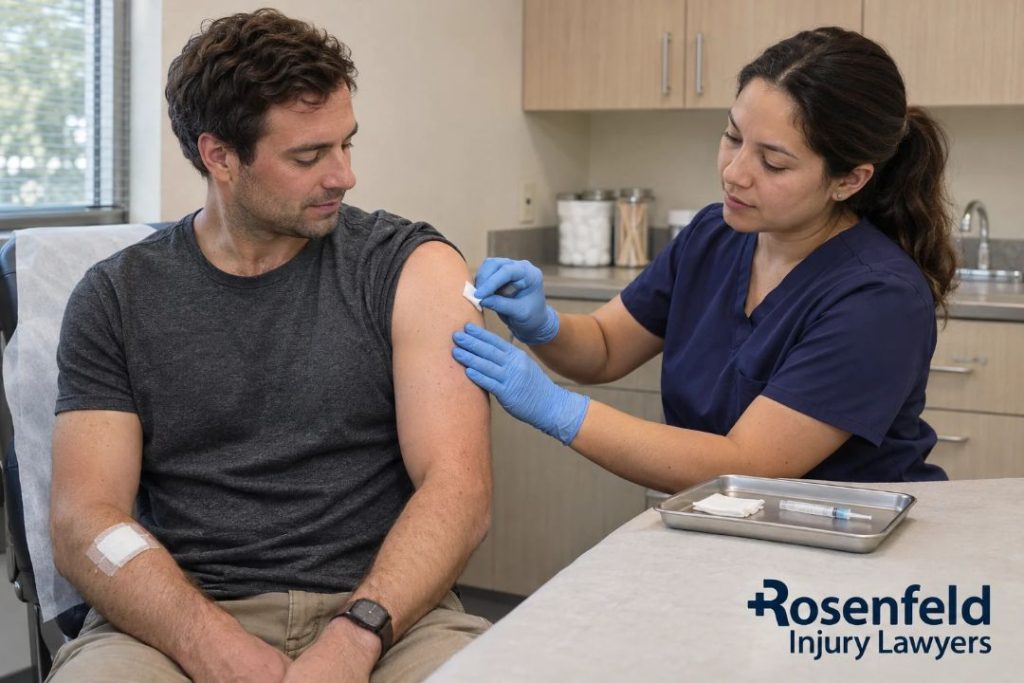
A dog bite may require a tetanus booster, depending on your vaccination history and the type of wound. A tetanus shot after a dog bite is generally recommended if your last dose was five or more years ago, provided you completed your primary vaccination series. If you are unsure about your vaccination history, you should seek medical advice.
Dog bites are considered contaminated wounds because bacteria can enter through broken skin. A doctor can assess the wound, determine whether you need a booster or additional protection, and recommend treatment. Even a small puncture wound may need medical attention.
Can You Get Tetanus From a Dog Bite?
Yes, you can get tetanus from a dog bite. Tetanus is caused by Clostridium tetani bacteria, which can enter your body through broken skin. These bacteria are found in the environment and may enter wounds contaminated with dirt or other material.
Dog bites can create puncture wounds that allow bacteria to enter deeper tissues. Because these wounds may be difficult to clean thoroughly, they can create conditions in which tetanus bacteria produce toxins that affect the nervous system.
Tetanus is uncommon but serious. It can cause muscle stiffness, painful spasms, and difficulty swallowing. Getting medical care after a bite helps determine whether vaccination, wound cleaning, or other treatment is necessary.
A tetanus infection is different from other bacterial infections that can develop after a dog bite. You should also be aware of the signs of serious infections from dog bites, particularly if redness, swelling, worsening pain, or discharge develops around the wound.
When a Tetanus Booster Is Recommended
Whether you need a tetanus shot depends on your vaccination history and the wound. Dog bites are considered contaminated wounds because saliva and bacteria can enter broken skin.
The CDC recommends a booster if your last dose was five or more years ago and you have completed your primary vaccination series. Those with unknown, incomplete, or no vaccination history may need a vaccine and, in some cases, tetanus immune globulin (TIG).
| Vaccination history | Dog bite wound | Recommendation |
| Completed series; last dose under 5 years | Dirty wound | Booster generally not needed |
| Completed series; last dose 5+ years ago | Dirty wound | Booster recommended |
| Unknown vaccination history | Dog bite | Vaccination; TIG may be needed |
| Incomplete or no vaccination | Dog bite | Vaccination and possible TIG |
| HIV or severe immunodeficiency | Dirty wound | TIG may be recommended |
Td and Tdap are tetanus-containing vaccines. Tdap also protects against pertussis (whooping cough), while Td protects against tetanus and diphtheria. Your provider will determine which is appropriate.
Tetanus immune globulin (TIG) provides temporary antibodies and may be needed depending on your vaccination history and wound.
These recommendations follow the CDC’s clinical guidance for tetanus wound management. If you’ve been bitten, have the wound and your vaccination history assessed rather than relying on the table alone.
How Soon Should You Get the Shot?
You should seek medical attention as soon as possible after a dog bite. A healthcare provider can clean the wound, assess the risk of infection, and determine whether you need a tetanus booster or TIG.
There is no universal 48-hour cutoff in CDC wound-management guidance after which a tetanus shot becomes ineffective or unnecessary. If you did not get a booster immediately after the bite, it is still worth contacting a healthcare provider rather than assuming you missed your chance.
The timing of vaccination is only one part of treatment. Wound depth, contamination, your previous vaccine doses, and other health factors all affect the recommendations.
If you are unsure what to do after a dog bite, getting prompt medical care is one of the most important steps you can take.
Tetanus Shot vs. Rabies Shots
Tetanus and rabies are different diseases. Although both may require preventive treatment after an animal bite, the vaccines work against different infections and cannot replace one another.
| Tetanus | Rabies |
| Caused by bacteria entering the body through a wound | Caused by a virus transmitted through infected saliva |
| Booster recommendations depend on wound type and vaccination history | Preventive treatment depends on the animal, exposure, and public health assessment |
| May require a tetanus vaccine and TIG | May require rabies vaccine and human rabies immune globulin |
| Bacteria can enter contaminated or puncture wounds | Virus may enter through a bite or saliva contacting broken skin |
Rabies treatment is called post-exposure prophylaxis (PEP). Depending on the exposure, it may involve wound cleaning, rabies immune globulin, and a series of rabies vaccines.
Whether you need rabies treatment depends on the dog involved, its health, vaccination status, and whether it can be safely observed or tested. In Illinois, dogs involved in bites may be subject to a 10-day observation period under applicable animal-control procedures.
You can review the CDC’s rabies post-exposure prophylaxis guidance for more information. A healthcare provider and local public health officials can help determine whether rabies treatment is necessary.
Symptoms of Tetanus to Watch For
Tetanus symptoms may develop after bacteria enter the body through a wound. Symptoms can include:
- Jaw stiffness or lockjaw
- Difficulty swallowing
- Muscle stiffness around the neck
- Painful muscle spasms
- Muscle rigidity
Tetanus affects the nervous system and can cause severe muscle contractions. If you develop symptoms that suggest tetanus after a bite, seek emergency medical care immediately. Tetanus is a medical emergency and requires hospital treatment.
Preventive vaccination and proper wound care are important because tetanus infection itself does not provide reliable immunity against future infection.
Other Treatment You May Need
A tetanus booster is only one part of caring for a dog bite. Your doctor may also clean the wound, remove damaged tissue or debris, and evaluate whether the injury needs additional treatment.
Depending on the wound, you may need antibiotics to treat or prevent certain bacterial infections. However, antibiotics are not given specifically to prevent tetanus. You can read more about antibiotics for a dog bite and when they may be recommended.
Puncture wounds can be particularly difficult to clean because bacteria may enter deeper tissues through a small opening. Read about dog bite puncture wounds to understand why wound depth matters.
Your doctor will also decide whether the wound should be closed, left open, or monitored as it heals. Healing time varies based on the wound’s location, depth, infection risk, and treatment. Learn more about how long a dog bite takes to heal.
Who Pays for Post-Bite Shots and Treatment?
Medical expenses after a dog bite may be included in a claim against the responsible dog owner, depending on the circumstances and insurance coverage. These may include tetanus shots, rabies treatment, emergency care, medications, and follow-up visits.
Keep copies of medical bills, vaccination receipts, prescriptions, and treatment records to document your expenses.
Illinois dog-bite liability is governed by the Animal Control Act. Learn more about what happens when you get bitten by a dog in Illinois.
You can also read about how medical expenses in dog bite cases may factor into a claim.
Frequently Asked Questions
You should get medical attention as soon as possible after a dog bite. However, there is no universal 48-hour cutoff for tetanus vaccination. If you delayed treatment, contact a healthcare provider anyway. Your vaccination history, wound type, and other health factors will determine whether a booster or TIG is still recommended.
Tetanus bacteria enter through breaks in the skin, so a bite that leaves the skin completely intact generally does not create the same exposure risk. However, tiny abrasions may be difficult to notice. If you are uncertain whether the skin was broken, have the area assessed by a healthcare professional.
No. A tetanus vaccine protects against tetanus, a bacterial disease that affects the nervous system. Rabies vaccination protects against rabies, a viral infection transmitted through infected saliva. After a dog bite, you may need one or both types of preventive treatment depending on the wound and exposure.
The dog owner may be responsible for medical expenses related to a bite, depending on the circumstances and applicable law. Tetanus shots, wound treatment, medication, and follow-up care may be included in a claim. Keep your medical records and receipts to document the expenses related to your injury.
Get Legal Help After a Dog Bite
A dog bite can leave you with unexpected medical expenses, including vaccinations, wound treatment, and follow-up care. If you have questions about recovering these costs, Chicago Dog Bite Injury Lawyers can help you understand your legal options. Request a free consultation. You pay no attorney fees unless we win your case.
This article is general information, not legal advice.
 Legally Reviewed By
Attorney Jonathan Rosenfeld
Content legally reviewed by Jonathan Rosenfeld The information on this page has been legally reviewed by Attorney Jonathan Rosenfeld, founder and managing partner of Rosenfeld Injury Lawyers LLC. With extensive experience representing dog bite victims across Chicago, Mr. Rosenfeld is dedicated to helping injury victims hold negligent dog owners accountable and pursue the maximum compensation available under the law. His deep legal knowledge and commitment to client advocacy ensure that the information provided is accurate, reliable, and aligned with current legal standards.