- Free Case Evaluation: 312-779-6171 Tap Here To Call Us




Who Is Responsible for Dog Bite Medical Bills in Illinois?


If you were bitten by a dog in Illinois, the dog owner is generally responsible for the injuries and reasonable medical care caused by the attack when the requirements of 510 ILCS 5/16 are met. Meanwhile, your health insurance may pay bills as treatment occurs, with reimbursement issues addressed later.
What Dog Bite Treatment Actually Costs
Dog bites can create substantial medical expenses, especially when victims need emergency treatment, surgery, wound care, rehabilitation, or treatment for emotional trauma. In 2025, Illinois had an estimated 1,283 dog-related injury claims, averaging $79,596 per claim, according to the Insurance Information Institute and State Farm.
The national data also shows why these cases can become expensive. Insurers paid $1.862 billion for 28,450 dog-related injury claims in 2025, with an average claim cost of $65,450.
Use Your Own Health Insurance for Immediate Bills
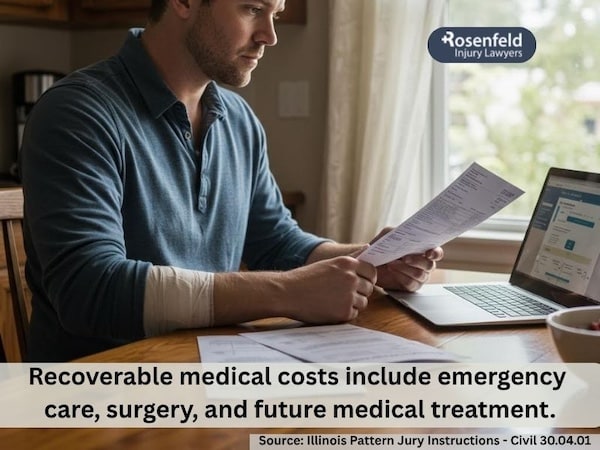
Since Illinois is a strict liability state, ultimate responsibility for your legal damages will fall on the dog owner’s insurance company. However, the initial medical costs you face cannot be covered by the defendant until a claim is resolved. Therefore, you must submit your initial medical bills to your own insurance carrier.
This ensures that the doctors and medical entities receive payments on time and the bills do not proceed to collections.
The Dog Owner’s Legal Responsibility for All Medical Treatment
The reason Illinois has strict liability laws is due to the Animal Control Act (510 ILCS 5/). Under this statute, the dog owner is legally responsible for the full cost of all reasonable and necessary medical care that results from the dog bite injuries.
Rather than having to prove that the dog owner is negligent, this is automatically assumed to be the case. However, you must prove that you did not provoke the dog, nor did you trespass on the dog owner’s property at the time of the incident. If you can confirm this, medical bills after a dog bite will be the owner’s responsibility.
Proving that you are innocent of provocation and that you suffered legal damages from the dog bite can be a complex process. Our law firm has years of experience holding dog owners accountable and assessing the full damages of dog bite plaintiffs.
Where Does the Final Payment Come From?
At the end of a dog bite lawsuit, the settlement is typically paid by the dog owner’s homeowner’s insurance policy. In some cases, the payout may also come from their personal assets. A large portion of your settlement will likely go to your insurance carrier for the costs they incurred for your initial medical expenses.
The Dog Owner’s Insurance Policy
In most cases, payment for medical bills after a dog bite will be covered by a homeowner’s insurance policy. This type of claim falls under the liability portion of most policies. It could also come from a renter’s insurance policy for the same reason.
It is important to note that some insurance policies do not cover injuries caused by certain breeds. Breeds that are more likely to cause dog bite injuries, such as pit bulls or German Shepherds, may be excluded from the liability portion of the dog owner’s insurance coverage. In this case, the medical bills after a dog attack may be covered by the owner’s assets.
What If the Owner is Uninsured?
If the dog owner is uninsured, it does not necessarily mean you cannot seek compensation for medical expenses. Instead, you may have to file a personal injury lawsuit. This legal action will allow you to recover a settlement from the dog owner’s personal assets rather than from an insurance company.
Suppose assets are required to pay off a dog bite settlement, either due to the dog owner being uninsured or not having enough coverage for the total value. In that case, the following items may be used to finalize the payout:
- Real estate properties
- Bank accounts
- Investments (stocks and bonds)
- Wages (called wage garnishment)
- Valuable possessions (boats, cars, and other property)
How Your Health Insurance Is Reimbursed
In personal injury claims, there is a legal concept called a medical lien. A medical lien is typically used to reimburse a provider or insurance company out of a personal injury settlement.
For a dog bite incident, let’s look at an example of how this process would work. First, you would seek treatment for the injuries suffered from the dog attack. The provider would then bill your insurance carrier for services rendered once you file an insurance claim. You would be responsible for covering any deductibles and copays.
However, the insurance company would then place a medical lien on your potential settlement. If your claim is successful against the dog owner, then the insurance company or healthcare provider would receive the amount owed before the rest of the settlement goes to you.
This is why documenting your dog bite injuries, treatment, and rehabilitation costs is crucial. You need an accurate record of these medical expenses to estimate how much will be taken out of your settlement for the medical lien.
Who Is Responsible for Dog Bite Medical Bills in Illinois?
Illinois law generally holds the dog owner responsible when a dog, without provocation, attacks, attempts to attack, or injures a person who is peaceably conducting themselves where they may lawfully be. This rule appears in 510 ILCS 5/16.
Under the Illinois Animal Control Act, the owner is liable for the full amount of the injury proximately caused by the dog when the statutory requirements are met. The Act’s definition of “owner” can also include anyone who keeps, harbors, or cares for the animal, so the legally responsible person isn’t always the person listed as the dog’s owner.
This means who is responsible for dog bite medical bills can depend on the facts, including who had care or control of the dog, where the attack occurred, and whether the victim provoked the animal. A dog bite claim does not require proof of negligence in the same way as a traditional negligence case when the requirements of the statute are satisfied.
Illinois’ statute focuses on whether the dog attacked or injured the person without provocation and whether the person was lawfully present. To understand how this rule applies to dog bite claims, see our guide to strict liability in Illinois dog bite cases.
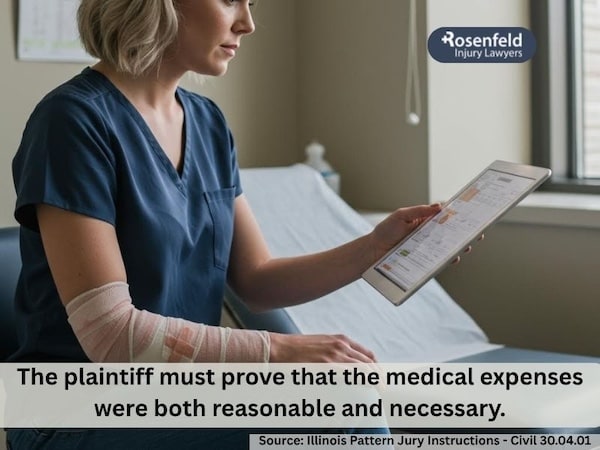
When these statutory requirements are met, the medical expenses caused by the injury can be included in the damages sought from the responsible party or available from the liable insurer. The recoverable amount depends on the required treatment, the evidence documenting the expenses, and the circumstances of the claim.
Who Pays First: Your Own Health Insurance
After a dog bite, seek medical care promptly and submit bills through your health insurance when appropriate. This can help keep providers paid while the liability claim is investigated and negotiated.
Using your health insurance first does not necessarily mean you are giving up your right to seek compensation from the dog owner or an available liability insurer. Keep copies of bills, explanation-of-benefits statements, receipts, and other records showing what you paid. For guidance on the insurance process, see our guide on how to file an insurance claim for a dog bite.
Your health insurer may later seek reimbursement from a settlement or recovery, so do not discard insurance correspondence or assume the amount shown on a medical bill is necessarily the amount that will ultimately be owed.
Which Insurance Policy Actually Pays
Homeowners insurance is often the first liability policy to examine when a dog injures someone. Renters insurance may also provide liability coverage depending on the policy and circumstances. An umbrella policy may provide additional liability coverage when its terms apply.
Policy language, exclusions, limits, and the facts of the incident control insurance coverage. Some insurers may restrict or exclude coverage for particular dog breeds or dogs with certain bite histories. A prior bite may also affect underwriting, renewal, or available coverage.
Illinois law addressing municipal breed-specific rules does not mean every private insurance contract must cover every dog. Review insurance coverage under the actual policy rather than assuming it based on the dog’s breed alone.
If you are trying to determine who is responsible for dog bite medical bills, ask for the applicable homeowners, renters, or umbrella policy information and preserve any written coverage position from the insurer.
A coverage dispute does not necessarily end a potential claim. Review the policy, applicable exclusions, available limits, and the circumstances of the attack before deciding no insurance is available.
What If the Dog Owner Has No Insurance?
If the dog owner has no applicable liability insurance, you may still have a claim against a legally responsible person, but collecting a judgment can be more difficult. A lawyer can investigate whether the defendant has assets or whether another potentially responsible party or source of coverage exists.
Potential sources of recovery can include available insurance, personal assets, or other legally available sources depending on the facts. Real estate, bank accounts, investments, and other property may be relevant, but Illinois collection law and the case’s circumstances determine whether those assets are reachable.
Do not assume that an uninsured dog owner has no legal responsibility. The absence of insurance changes how a claim may be paid; it does not automatically eliminate the underlying liability.
If the owner rents the property, the landlord is not automatically responsible simply because the dog lived there. Any potential claim against a property owner or another party requires a separate review of the facts and applicable law.
How Your Health Insurer Gets Repaid: Subrogation and Liens
When your health insurer pays medical bills related to a personal injury claim, the insurer may assert a subrogation or reimbursement right. A medical lien may also arise in some circumstances. These rights can affect how much of a settlement remains for the injured person after the claim is resolved.
Medicaid and Medicare can involve separate reimbursement or lien rules. The exact process depends on the type of coverage, applicable federal or state requirements, the amount paid, and the terms of any settlement. Review these issues carefully before finalizing a settlement.
If you are trying to determine who is responsible for dog bite medical bills, remember that the person or insurer ultimately responsible for the injury and the entity that initially paid your medical bills may be different. Keep every insurance statement and medical bill so you can identify and address the amounts during the claim.
A medical lien or reimbursement claim can reduce the amount you ultimately receive from a settlement. Therefore, verify and review the amount claimed before finalizing any settlement.
What Medical Costs a Dog Bite Claim Covers
Depending on the facts, a dog bite claim may include reasonable medical expenses related to the injury, including:
- Emergency room care
- Hospital stays
- Wound treatment and infection care
- Reconstructive surgery
- Physical therapy and rehabilitation
- Prescription medication
- Diagnostic imaging and testing
- Medical devices
- Psychological or trauma treatment
- Vaccinations and other medically necessary care
You should also keep records of copays, deductibles, and other amounts you paid out of pocket. Future treatment may be relevant when supported by medical evidence.
For information about other categories of compensation, see what damages are recoverable in a dog bite case.
If you also want to understand how prior case outcomes may differ based on the injuries and circumstances involved, see our page on Illinois dog bite settlements.
What to Do About the Bills Right Now
If medical bills are already arriving, these steps can help you protect your records and keep your claim organized:
- Get medical treatment and follow your provider’s instructions.
- Report the dog bite to the appropriate animal control or health authority and keep a copy of the report.
- Save every medical bill, insurance statement, receipt, prescription record, and treatment note.
- Ask the dog owner for insurance information, but avoid statements about fault or accepting a settlement before you understand your rights.
- Keep a written record of follow-up care, missed work, rehabilitation, and other losses related to the injury.
- Speak with an Illinois dog bite attorney promptly if the injuries are serious, the insurer disputes the claim, or the available coverage is unclear.
If you need help understanding the insurance process, you can also review how to file a dog bite insurance claim.
Frequently Asked Questions
Generally, the dog owner or another person legally responsible for the animal may be responsible for the injury and related medical expenses when the requirements of 510 ILCS 5/16 are met. Insurance may pay the claim, but the responsible party and the insurance company are not necessarily the same.
A homeowners policy may provide liability coverage for a dog bite, but coverage depends on the policy language, exclusions, limits, and the facts. Renters or umbrella insurance may also be relevant. Some policies restrict coverage for certain dogs or bite histories, so you must review the policy.
You may still have a legal claim against the responsible person, but collecting compensation can be harder without liability insurance. Reviewing the owner’s assets and the facts may identify other potential sources of recovery.
Possibly. A health insurer may have a reimbursement or subrogation claim for benefits it paid because of the injury. Medicare and Medicaid can have additional rules. Review the amount and priority of any repayment before finalizing a settlement.
Contact Our Illinois Dog Bite Lawyers for a Free Consultation
If a dog injures you in Illinois, our team can investigate the incident, document your medical expenses, communicate with insurers, and evaluate your potential claim. We can also assess future treatment needs and other damages supported by the evidence.
We offer a free consultation and work on a contingency fee basis, so you pay no upfront attorney fees and no attorney fees unless we recover compensation for you. Call 312-779-6171 to discuss your options. Contact Chicago Dog Bite Injury Lawyers today to schedule a free consultation.
 Legally Reviewed By
Attorney Jonathan Rosenfeld
Content legally reviewed by Jonathan Rosenfeld The information on this page has been legally reviewed by Attorney Jonathan Rosenfeld, founder and managing partner of Rosenfeld Injury Lawyers LLC. With extensive experience representing dog bite victims across Chicago, Mr. Rosenfeld is dedicated to helping injury victims hold negligent dog owners accountable and pursue the maximum compensation available under the law. His deep legal knowledge and commitment to client advocacy ensure that the information provided is accurate, reliable, and aligned with current legal standards.