- Free Case Evaluation: 312-779-6171 Tap Here To Call Us




How to File an Insurance Claim for a Dog Bite


Navigating the Claims Process After an Illinois Dog Bite
In Illinois, you generally file a dog bite insurance claim with the dog owner’s applicable liability insurer. Start by getting medical care, reporting the bite, and preserving evidence such as medical records, photos, witness information, and the owner’s insurance details. Knowing how to file an insurance claim for a dog bite can help protect your claim from the start.
For Chicago dog bite victims, the insurance process can feel intimidating while you are also dealing with an injury. The following steps explain how to organize your claim, communicate with the insurer, and respond to an adjuster without unnecessarily weakening your position.

The First 24 Hours: Protecting Your Health and Your Claim
Seek immediate medical attention after a dog bite. Not only does this ensure that you do not have serious injuries, but it also produces medical records that will validate your injury.
While some dog bites do not require professional medical treatment, you should always watch closely for any signs of infection. If the owner cannot produce vaccination records, you may also require rabies and tetanus shots.
Ensure that you request copies of your records, including any future treatments that the doctor recommends, like physical therapy or reconstructive surgery.
You should also report the bite to the appropriate local authority as soon as reasonably practical and preserve a copy of any report. Reporting requirements can vary by location, so confirm the applicable procedure with the local animal control authority or other appropriate agency.
Which Insurance Policies Cover a Dog Bite?
The insurance policy that may respond depends on the circumstances and the coverage available to the dog owner. Homeowners or renters insurance may provide liability coverage for a dog bite, but policy terms, exclusions, limits, and applicable law can affect the claim.
For a broader explanation of which insurance policies cover a dog bite, review our dedicated guide rather than trying to determine coverage from the policy type alone.
You can also learn more about does homeowners insurance cover dog bites and how policy language may affect a claim.
The Dog Owner’s Homeowners or Renters Insurance
Homeowners and renters insurance are common sources of liability coverage for dog bite claims. The policy may provide coverage for certain injuries caused by the insured dog, subject to the policy’s terms and limits.
Illinois law generally prohibits insurers from restricting homeowners or renters coverage solely because of a particular dog breed. However, state law allows certain underwriting action involving an individual dog that has been determined to be dangerous or vicious under the Animal Control Act.
Because coverage is fact-specific, obtain the insurer’s claim information and preserve the policy information when possible rather than assuming that a claim will or will not be covered.
Will the Dog Owner’s Insurance Policy Always Pay?
Unfortunately, whether the insurance company pays out depends on applicable laws. Some states permit insurers to exclude specific breeds, such as pit bulls, from coverage.
Illinois prohibits insurance companies from refusing to cover specific breeds (Public Act 103-0011). However, it allows a dog owner’s insurance company to revoke coverage or raise premiums if the dog has been classified as a dangerous animal under the Illinois Animal Control Act (510 ILCS 5/).
The Step-by-Step Guide to Filing Your Dog Bite Insurance Claim
Knowing how to file an insurance claim for a dog bite involves more than simply calling an insurer. A well-organized claim should establish the injury, document the incident, identify the applicable policy, and provide the insurer with relevant supporting evidence.
Step 1: Get Medical Treatment and Preserve Your Records
Seek medical treatment promptly after the attack and follow the provider’s instructions. This step creates contemporaneous documentation of the injury and can help establish what treatment was necessary.
Keep copies of medical records, bills, prescriptions, treatment recommendations, photographs, and receipts for related expenses. If treatment continues, keep adding documents to your claim file.
Step 2: Report the Dog Bite and Document the Incident
Report the bite to the appropriate local authority and obtain a copy of any available report. Also write down what happened while the events are still fresh in your memory.
Record the date, approximate time, location, circumstances of the attack, names of witnesses, the dog owner’s contact information, and anything you know about the dog. Take photographs of visible injuries and the location where the incident occurred when it is safe to do so.
Step 3: Identify the Dog Owner’s Insurer
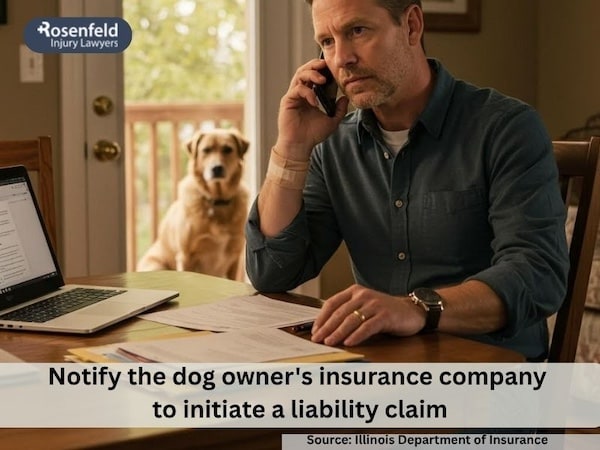
The next step in how to file an insurance claim for a dog bite is identifying the insurer that may provide liability coverage. Ask the dog owner for the name of the insurance company and claim contact information.
Do not assume that the owner’s insurance company is responsible simply because the owner has a homeowners or renters policy. Coverage depends on the applicable policy and facts. If the owner will not provide insurance information, an attorney may be able to help investigate available coverage.
Step 4: Open the Insurance Claim
Once you have the insurer’s information, report the incident and obtain a claim number. Give the insurer basic information needed to identify the incident, but avoid guessing about facts you do not know.
Ask for the adjuster’s name, contact information, claim number, and instructions for submitting documents. Keep copies of everything you send and a record of important communications.
Step 5: Submit Your Claim Documentation
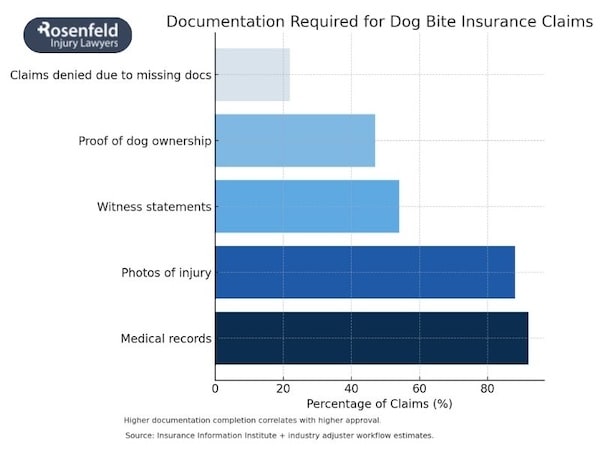
A dog bite insurance claim may require documentation showing the incident, your injuries, treatment, expenses, and other losses. Common supporting evidence includes:
- Medical records and medical bills
- Photographs of injuries and the incident location
- Animal Control or police records, when applicable
- The dog owner’s contact and insurance information
- Witness names and contact information
- Evidence of lost income, such as pay records
- Receipts for out-of-pocket expenses
- Records of continuing medical treatment
Organizing this information before submitting it can make the claim process easier to follow and reduce the risk of overlooking important evidence.
Step 6: Respond Carefully to the Insurance Adjuster
The insurance adjuster may ask questions about how the attack happened, where you were, what the dog did, whether you interacted with the animal, and what injuries you suffered. Answer truthfully, but do not speculate or minimize your injuries.
An adjuster may also request medical authorizations or other documents. Before signing a broad authorization or providing a recorded statement, consider having an attorney review what is being requested and why.
Step 7: Review the Insurer’s Position and Any Offer
After reviewing the claim, the insurer may request additional information, dispute some aspect of the claim, or make an offer. Do not assume that an early offer reflects the full value of your injuries or future treatment needs.
Before accepting an offer, review what rights you would be giving up, whether your medical treatment is complete, and whether the proposed resolution addresses the losses supported by your evidence.
What the Adjuster Will Ask You
An insurance adjuster will usually ask questions designed to understand the circumstances of the dog bite and evaluate the claim. Typical questions may include:
- Where and when did the dog bite occur?
- What were you doing immediately before the incident?
- Did you know the dog or its owner?
- Did you interact with or approach the dog?
- Were there witnesses?
- What injuries did you suffer?
- Where did you receive medical treatment?
- Are you still receiving treatment?
- Did you miss work because of the injury?
- Did you report the incident to Animal Control or another authority?
The adjuster may also request a recorded statement or medical authorization. A recorded statement can create a permanent record of your account, while an overly broad medical authorization may give an insurer access to information beyond the treatment relevant to the claim.
Do not guess when you do not remember something, speculate about the dog’s behavior, or make statements suggesting that your injuries are minor if you are still being evaluated. If you are unsure whether to provide a recorded statement or sign an authorization, speak with a lawyer before doing so.
Insurance companies may make an initial offer relatively early in the process, sometimes before the full extent of an injury is known. That is one reason to understand your medical status and supporting documentation before agreeing to resolve the claim.

The Advantage for Illinois Victims: Proving Dog Bite Liability
Illinois uses a statutory liability rule for many dog attack claims. Under the Illinois Animal Control Act, 510 ILCS 5/16, an owner may be liable when a dog, without provocation, attacks, attempts to attack, or injures a person who is peaceably conducting themselves in a place where they may lawfully be.
The Act also defines “owner” broadly to include a person who keeps or harbors an animal, has it in their care, or acts as its custodian.
For a more detailed discussion of who is liable for a dog bite, review our separate guide. This page focuses on the insurance claim process rather than providing an exhaustive analysis of liability.
How a Dog Bite Claim Moves Toward Resolution
Once the insurer receives the relevant documentation, the claim may involve additional information requests, adjuster evaluation, and negotiations. A demand letter may summarize the incident, injuries, treatment, and documented losses.
If you are represented, your attorney can generally communicate with the insurer, organize supporting evidence, respond to requests, and negotiate on your behalf. You should still keep copies of medical records, bills, wage documentation, photographs, and other evidence that may become relevant.
The amount available in a particular claim depends on the evidence, applicable coverage, policy limits, injuries, and other case-specific factors. For a separate discussion of how much a dog bite case is worth, see our claim-value guide.
Illinois Dog Bite Insurance Claim FAQs
There is no single amount that applies to every dog bite insurance claim. The available recovery can depend on the injuries, documented losses, applicable insurance coverage, policy limits, and other facts. For more information, see our guide explaining how much a dog bite case is worth.
Useful proof can include medical records, medical bills, photographs, Animal Control or police reports, witness information, the dog owner’s contact and insurance information, and documentation of lost income or other expenses. Keep copies of everything submitted to the insurer.
In Illinois, a personal injury action generally must be commenced within two years after the cause of action accrues under 735 ILCS 5/13-202, although exceptions may apply.
Different rules can apply to minors and people under a legal disability. Under 735 ILCS 5/13-211, a person who was under 18 when the cause of action accrued generally has two years after turning 18 to bring the action, subject to the statute’s terms and other applicable rules.
Not necessarily. An early offer may be made before the full extent of an injury or future treatment needs is known. Before accepting an offer, review the supporting evidence, the status of your medical treatment, and the rights you would give up by signing a settlement agreement.
Do not provide unnecessary statements or sign documents you do not understand. If you are represented, your attorney can review the offer and communicate with the insurance company on your behalf.
The dog owner’s relationship to you does not automatically prevent an insurance claim. A dog bite can potentially result in a claim even when the injured person knows the owner personally. Coverage and liability depend on the facts, applicable law, and insurance policy.
Need Help With Your Dog Bite Insurance Claim?
If you are unsure how to file an insurance claim for a dog bite, an attorney can help you understand the claim process, communicate with the insurer, and organize evidence supporting your injuries and losses. Our Chicago dog bite lawyers can discuss your circumstances during a free consultation.
Our law firm works on a contingency fee basis: no fees unless we win. Contact us to discuss your dog bite claim and learn about your legal options.
This article is for general information and is not legal advice.
 Legally Reviewed By
Attorney Jonathan Rosenfeld
Content legally reviewed by Jonathan Rosenfeld The information on this page has been legally reviewed by Attorney Jonathan Rosenfeld, founder and managing partner of Rosenfeld Injury Lawyers LLC. With extensive experience representing dog bite victims across Chicago, Mr. Rosenfeld is dedicated to helping injury victims hold negligent dog owners accountable and pursue the maximum compensation available under the law. His deep legal knowledge and commitment to client advocacy ensure that the information provided is accurate, reliable, and aligned with current legal standards.