- Free Case Evaluation: 312-779-6171 Tap Here To Call Us




Dog Bite Insurance in Illinois: Which Policies Cover a Bite?


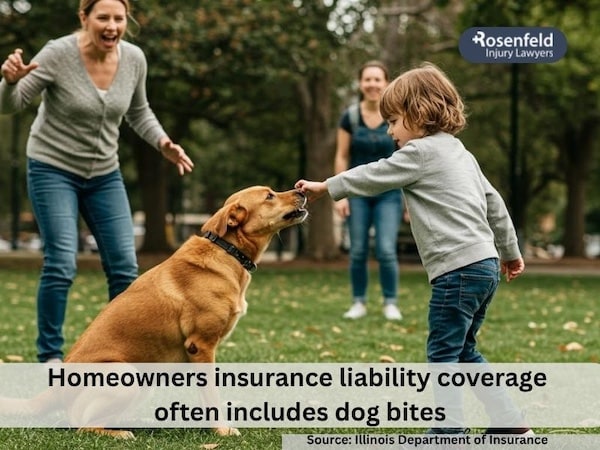
What insurance covers dog bites depends on the dog owner’s policy, coverage limits, exclusions, and the circumstances of the incident. In Illinois, homeowners and renters policies may provide liability coverage for injuries caused by a dog. Other policies, including umbrella or standalone animal liability coverage, may also apply.
What Is Dog Bite Insurance?
Dog bite insurance generally refers to liability coverage that may pay for injuries and other damages when a covered dog injures another person. It is usually part of a homeowners or renters insurance policy, although some owners may have separate animal liability coverage.
Coverage depends on the specific policy. The policy may contain liability limits, exclusions, conditions, and other provisions that affect whether an insurer will pay a particular claim.
Homeowner’s and Renter’s Insurance
The dog bite liability portion of an insurance policy typically covers dog bites. This could be homeowners’ insurance or renters’ insurance, depending on the person’s living situation.
What Does This Policy Typically Cover?
The insurance coverage will pay for the victim’s medical expenses, lost wages, and property damage up to the liability limits. According to the Insurance Information Institute, homeowners and renters insurance policies typically provide dog bite liability coverage, often with liability limits of $100,000 to $300,000, although the actual limit depends on the policy.
Farmers Insurance notes that a renter’s or homeowner’s policy will not cover bites to the policyholder or other household members. For example, if you live with your brother and your brother’s dog bites you within the home, you may not be able to make a claim.
According to Scifo v. Haeger, dog owners cannot avoid liability simply because they weren’t present with the animal at the time of the attack. This means that if a dog bit you in a public park after escaping its home, the owner cannot use this to argue that they’re not liable.
How Much Do Dog Bite Insurance Claims Cost?
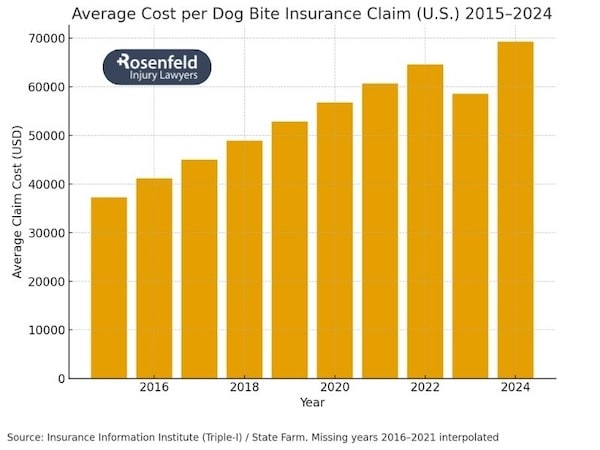
Dog-related injury claims paid by homeowners insurers totaled $1.862 billion in 2025, according to the Insurance Information Institute and State Farm. Nationwide, insurers paid 28,450 claims, averaging $65,450 per claim. The figures include dog bites and other dog-related injuries that affected insurance claims.
Illinois accounted for an estimated 1,283 claims in 2025, with an average cost of $79,596 per claim and approximately $102 million in total claim value. These figures describe insurance claims and should not be treated as an estimate of what an individual victim’s claim may be worth.
Will the Dog Owner’s Insurance Always Cover the Bite?
Dog bite claims cost homeowners’ insurance companies $1.5 billion in 2024, and the number of claims continues to rise. Not every policy provides the same coverage, however. Policy language, coverage limits, exclusions, and the facts surrounding the incident can determine whether an insurer will provide coverage.
Policy Exclusions for Certain Dog Breeds
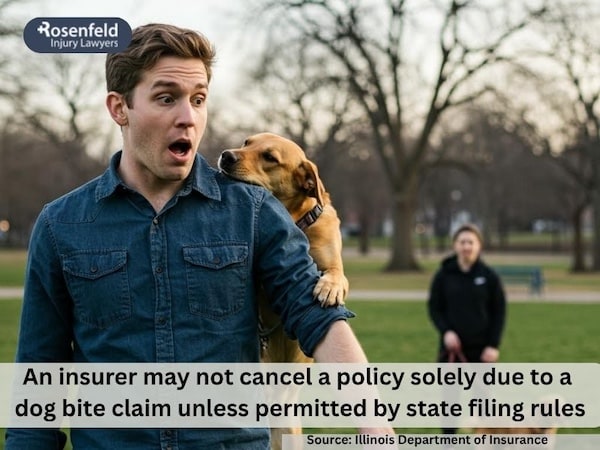
Illinois law restricts insurers from refusing to issue or renew, canceling, increasing premiums, or excluding or limiting coverage under homeowners or renters policies based solely on ownership of a particular dog breed. 215 ILCS 5/143.10e provides this protection, enacted through Public Act 103-0011.
The law allows an insurer to take certain actions if an individual dog is determined to be dangerous or vicious under the Animal Control Act, subject to the statute’s requirements.
Because insurance policies can include other exclusions or conditions, dog owners and injured people should review the policy itself rather than relying only on the dog’s breed.
Our team will review local legislation and policy language to evaluate potential coverage and identify applicable exclusions, particularly if the offending animal was previously classified as dangerous or vicious.
Exclusions Based on a Dog’s Prior Bite History
Though Illinois law limits breed-based insurance restrictions, an insurer may still take certain actions based on an individual dog being determined to be dangerous or vicious.Under 215 ILCS 5/143.10e, an insurer may cancel or refuse to issue or renew a homeowners or renters policy, or impose a reasonably increased premium, based on the determination that an individual dog is dangerous or vicious under the Animal Control Act.
This does not mean that every dog with a prior bite is automatically excluded from coverage. The dog’s classification, the policy language, the timing of the incident, and the insurer’s underwriting practices can all matter.
Can an Insurer Drop a Policy After a Dog Bite?
Yes, an insurer may have options after a dog bite, but Illinois law places limits on actions based solely on breed. Under 215 ILCS 5/143.10e, an insurer may take certain actions based on an individual dog’s determination as dangerous or vicious, subject to the statute’s requirements.
A prior bite can also affect how an insurer evaluates future risk. Whether a policy can be canceled, nonrenewed, or changed depends on the applicable law and the specific policy.
Pet Insurance vs. Pet Liability Insurance
Pet insurance and pet liability insurance serve different purposes. Pet insurance generally helps pay for veterinary expenses for the insured animal, while liability coverage may protect the owner when the animal causes covered injury or property damage to another person.
If you are asking whether “dog insurance” covers a bite, check whether the policy provides liability coverage for injuries to third parties. A veterinary pet insurance policy is not necessarily the same as liability insurance.
Other Types of Insurance That May Cover Dog Bites
There are several other types of insurance coverage that can compensate for a dog bite beyond renters’ insurance or homeowners’ insurance. Depending on the circumstances, this can include umbrella liability coverage, standalone animal liability coverage, or certain business policies.
Farm insurance may potentially apply in situations involving a covered farm operation, but coverage depends on the policy and circumstances of the incident.
Business or commercial liability insurance may also be relevant when a dog is in the care of a business, such as a boarding facility, grooming business, or other commercial operation. The applicable policy and relationship between the business and the dog must be reviewed.
Umbrella Insurance Policies
An umbrella policy is similar to comprehensive auto insurance, providing additional protection against liability. It may provide additional liability coverage when an underlying homeowners or renters policy has been exhausted, subject to the umbrella policy’s terms and conditions.
This can be crucial if the dog attack was extremely severe and the victim has increased medical costs due to reconstructive surgery or physical therapy.
Standalone Dog Liability Insurance or Animal Liability Insurance
Some dog owners purchase standalone animal liability coverage that is specifically designed to provide liability protection for injuries or property damage caused by an animal. This type of policy can be particularly relevant when a standard homeowners or renters policy does not provide the desired coverage.
However, coverage varies between policies. An injured person should obtain information about all potentially applicable policies rather than assuming that a particular type of insurance will pay a claim.
The Importance of Animal Liability Coverage for All Dog Owners
Dog bite insurance can provide an important source of liability protection for dog owners. A dog does not have to have a history of aggression for an incident to occur, and insurance may help address covered injuries and related damages.
Be sure to read the policy carefully and discuss any exclusions with the agent before signing up for the product. Understanding the policy’s liability limits, exclusions, and conditions can help clarify what coverage may be available if the dog injures someone.
Coverage Off the Owner’s Property, and Walkers, Sitters and Landlords
Liability coverage may apply even when a dog bites someone away from the owner’s home, but the policy determines the scope of coverage. A dog owner’s homeowners or renters policy may provide personal liability coverage for covered incidents away from the residence, subject to its terms and exclusions.
Dog walkers, pet sitters, groomers, and boarding businesses may have separate commercial liability policies. If a dog is injured or bites someone while in another person’s care, you may need to review more than one policy.
Landlord-related issues can also require separate analysis when a dog is kept at a rental property. The owner’s or tenant’s insurance may apply, depending on who owns the dog, who controlled the animal, and the applicable policy.
How to File a Dog Bite Insurance Claim
Filing a dog bite insurance claim generally begins with identifying the dog’s owner and the insurer that may provide liability coverage. If possible, obtain the owner’s insurance company and policy information, report the incident, and preserve evidence of the injury.
Important steps can include:
- Obtain the dog owner’s name and insurance information.
- Report the bite to the appropriate animal control agency and insurer.
- Seek medical treatment and keep records of your care and expenses.
- Photograph the injuries and preserve other evidence from the incident.
- Be cautious about providing a recorded statement until you understand what the insurer is asking and why.
- Keep copies of correspondence and claim-related documents.
An insurance adjuster may ask questions about the incident, your injuries, treatment, and other circumstances. If the claim involves significant injuries or disputed coverage, consider speaking with an attorney before making statements that could affect the claim.
For more information about the legal process, see our guide to filing an Illinois dog bite claim.
What If the Dog Owner Has No Insurance at All?
If the owner has absolutely no insurance, then the victim may need to pursue the owner directly for damages or identify another potentially applicable source of coverage. This can be a more challenging process, particularly if the owner does not have sufficient assets to satisfy a judgment.
Illinois’ Animal Control Act, 510 ILCS 5/16, generally provides that when a dog, without provocation, attacks, attempts to attack, or injures a person who is peaceably conducting themselves in a place where they may lawfully be, the owner is liable for civil damages for the full amount of the injury proximately caused.
This means an injured person generally does not need to establish that the dog was previously classified as dangerous or that the owner violated a leash law to invoke Section 16. The specific facts still matter, including whether the person was lawfully present and whether provocation is alleged.
If no insurance applies, an attorney can investigate whether the owner has assets or whether another insurance policy may provide coverage.
The Illinois personal injury statute of limitations is two years (735 ILCS 5/13-202). This makes it crucial to contact us immediately so that we can file a lawsuit and meet all applicable deadlines, particularly if the owner has no insurance to cover your needs.
When Should You Consider a Dog Bite Insurance Claim?
A dog bite insurance claim may require legal review when an insurer disputes coverage, the policy has an exclusion, the injuries are significant, multiple policies may apply, or the insurer offers less than the documented losses.
An attorney can review the available insurance policies, medical records, photographs, animal-control reports, witness information, and other evidence to determine what coverage and legal options may be available.
Potential damages can include medical expenses, lost income, pain and suffering, and other losses depending on the facts of the case. See our information about Illinois dog bite settlements for additional information.
When Is a Dog Considered Dangerous in Illinois?
Insurance coverage and Illinois’ classification of a dog as dangerous or vicious are separate issues. The Animal Control Act contains provisions governing dangerous and vicious dogs, and an individual dog’s classification may affect the insurer’s options under 215 ILCS 5/143.10e.
For more information, see when a dog is considered dangerous in Illinois.
How We Investigate Insurance Coverage in Your Case
As members of the National Association of Personal Injury Attorneys, we have over two decades of experience working with insurance companies on behalf of our clients. Our first objective is to identify all applicable policies that may be used to cover your injuries. While a homeowner’s policy is often a key source of liability coverage, other policies may also apply depending on the circumstances.
We then carefully examine the policy language to challenge any exclusions based on Illinois insurance law. For example, agents may insist the dog was excluded before the bite occurred or that only injuries on the homeowner’s property are covered.
After reviewing the policy, we will gather evidence showing these injuries should be covered and begin negotiations. We will evaluate the available evidence and applicable policy language when seeking compensation for covered losses.
Your own insurance will also play a role. If you have health insurance, we can negotiate with the hospital and your insurer to reduce your bills, so you can keep more of your settlement.
While many cases settle before trial, we are members of the Illinois Trial Lawyers Association with ample experience in courtroom representation. Our team can pursue available legal remedies when an insurance dispute cannot be resolved through negotiations.
Frequently Asked Questions
Homeowners and renters insurance often provide liability coverage for covered dog bites, subject to the policy’s limits and exclusions. Umbrella insurance or standalone animal liability insurance may also provide coverage in some circumstances. Review the actual policy to determine whether coverage applies. For more details, see our guide to “Does homeowners insurance cover dog bites?”.
Usually not. Pet health insurance generally covers eligible veterinary expenses for the insured animal. Liability coverage is designed to address covered injuries or property damage caused to third parties. Check the policy carefully because pet insurance and animal liability insurance are different products.
The cost depends on the insurer, the policy, the coverage limits, and the dog’s circumstances. Illinois law restricts certain breed-based insurance actions but permits certain actions based on an individual dog being determined dangerous or vicious under the Animal Control Act.
It depends on the circumstances and the policy. Illinois law prohibits certain actions based solely on ownership of a specific breed, but 215 ILCS 5/143.10e permits certain actions involving an individual dog determined to be dangerous or vicious. Policy terms and underwriting requirements also matter.
A person injured by an uninsured dog may have to pursue the owner directly, but you should also investigate other potential sources of coverage. The owner’s assets, other applicable policies, and the facts of the incident can affect your options.
Contact Our Illinois Dog Bite Lawyers for a Free Consultation
Insurance claims can be challenging, especially when more than one policy could cover your injuries. Our dog bite lawyers in Chicago will handle this investigation and negotiation on your behalf so that you can focus on recovery. We work on a contingency fee basis: no fees unless we win. Contact us today to schedule your free consultation with a compassionate dog bite attorney.
 Legally Reviewed By
Attorney Jonathan Rosenfeld
Content legally reviewed by Jonathan Rosenfeld The information on this page has been legally reviewed by Attorney Jonathan Rosenfeld, founder and managing partner of Rosenfeld Injury Lawyers LLC. With extensive experience representing dog bite victims across Chicago, Mr. Rosenfeld is dedicated to helping injury victims hold negligent dog owners accountable and pursue the maximum compensation available under the law. His deep legal knowledge and commitment to client advocacy ensure that the information provided is accurate, reliable, and aligned with current legal standards.