- Free Case Evaluation: 312-779-6171 Tap Here To Call Us




How a Lawyer Can Help With Your Illinois Dog Bite Claim


A dog bite claim may not require a lawyer for every minor injury, but legal help can be valuable when an attack causes medical treatment, scarring, lost income, emotional distress, or an insurance dispute. In Chicago and throughout Illinois, an attorney can explain your rights, gather evidence, communicate with insurers, and help pursue compensation under Illinois law.
When to Consider Legal Help After a Dog Attack
The answer to whether you need a lawyer depends on the severity and circumstances of the injury. While a minor nip may not require legal representation, any injury that requires medical treatment should be evaluated by an experienced Chicago dog bite lawyer.
Our award-winning attorneys can determine whether you have a strong dog bite case and help you recover full and fair compensation for your injuries. Contact us today to schedule a complimentary consultation.

For Any Injury Requiring Professional Medical Attention
You should always seek immediate medical care for any severe dog bite, particularly one that has extensive bleeding or occurred to a child.
If a bite broke the skin, required stitches, or became infected, an attorney can help document your medical expenses and other losses. Medical records can also help establish the extent of your injuries and the treatment you may need in the future.
When the Dog Owner’s Insurance Company Contacts You
Insurance company adjusters may ask questions about how the incident happened, your symptoms, and your treatment. Statements made before you understand the full extent of your injuries may later be used to dispute the value or cause of your claim.
You do not have to handle communications with the dog owner’s insurance company alone. A dog bite lawyer can communicate with the insurer, review settlement offers, and help protect your legal interests.
If the Victim Is a Child
Dog bite cases involving children have a more complex legal process than those involving adults. Firstly, a settlement offer typically requires court approval to ensure that it is in the child’s best interest. They may request a structured settlement so that the child has funds for their future needs.
The court may also appoint a guardian ad litem, a legal professional who advocates on behalf of the child. Navigating these nuances requires skilled legal representation, both to protect the child and to ensure that the insurance agency does not dispute the dog owner’s liability.
If You Have Permanent Scarring or Disfigurement
Some injuries caused by bites, particularly those to the face or hands, require ongoing medical attention and may leave permanent disfigurement. This can result in medical bills, lost wages, and other losses that must be carefully documented.
Our attorneys can work with appropriate professionals to evaluate current and future losses. We can also consider the emotional impact that scarring and disfigurement may have on a victim when evaluating non-economic damages, such as pain and suffering.

How Can a Lawyer Help With a Dog Bite Claim?
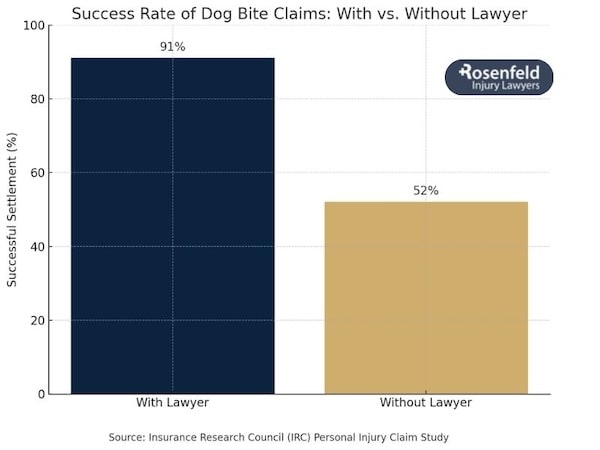
A lawyer can investigate the incident, gather evidence, handle communications with insurers, and evaluate the damages associated with the injury. Legal help can be particularly useful when the insurer disputes liability, the injuries are significant, or the victim is a child.
Leveling the Playing Field Against Insurance Companies
Despite Illinois dog bite laws imposing strict liability under 510 ILCS 5/16, insurers may attempt to dispute how the attack occurred or minimize the victim’s losses. Under Section 16, an owner may be liable when a dog, without provocation, attacks, attempts to attack, or injures a person who is peaceably conducting themselves in a place where they may lawfully be.
We handle communications with our clients’ insurers and can review whether an offer accounts for documented medical expenses, lost income, pain and suffering, and other applicable damages.
A Thorough Investigation and Gathering Evidence
Evidence is important in a dog bite case. Our attorneys can collect information about the dog and the circumstances of the attack, including animal control records, witness statements, photographs, medical records, and other relevant documentation.
Collecting Detailed Witness Statements
Witnesses can help establish what happened before, during, and after the attack. They may also provide information about whether the owner was complying with applicable leash or animal-control requirements.
Accurately Valuing Your Emotional Distress and Trauma
In addition to physical injuries, many victims experience fear, anxiety, or trauma after a dog attack. These effects may form part of a claim for non-economic damages when supported by the facts and evidence.
Documentation such as medical records, treatment notes, and statements from people familiar with the victim’s condition may help establish the emotional impact of the incident.
Negotiating Medical Liens to Increase Your Net Recovery
Medical liens can affect the amount a victim ultimately receives from a settlement. Depending on the circumstances, a lawyer may negotiate with medical providers or other entities asserting a lien to determine whether the amount owed can be reduced.
Can I Sue for a Dog Bite in Illinois?
Yes. Illinois law allows an injured person to pursue compensation when the requirements of the Illinois Animal Control Act are met. Under 510 ILCS 5/16, an owner is liable when a dog, without provocation, attacks, attempts to attack, or injures a person who is peaceably conducting themselves in a place where they may lawfully be.
Illinois does not follow the common-law “one-bite rule.” Section 16 does not require a prior history of aggression when its statutory requirements are satisfied. Illinois courts have recognized that the Animal Control Act eliminated the common-law one-bite rule.
Steps in an Illinois Dog Bite Claim
The process varies by case, but an injured person will generally need to:
- Get medical care: Seek prompt treatment and keep records of diagnoses, treatment, prescriptions, and bills.
- Report the attack: Report the incident to the appropriate animal control authority or law enforcement agency.
- Identify the owner and insurer: Obtain the owner’s identifying information and, when available, the applicable homeowners, renters, or other liability insurance information.
- Gather evidence: Preserve photographs, medical records, witness information, damaged clothing, animal control reports, and vaccination records.
- File the insurance claim: Provide the insurer with appropriate documentation of the incident and resulting losses.
- Send a demand: If appropriate, a lawyer can prepare a demand that explains the legal and factual basis for the requested compensation.
- Negotiate: The parties may negotiate before a lawsuit is filed.
- File a lawsuit if needed: If the claim cannot be resolved, litigation may be necessary before the applicable deadline.
What Proof Do You Need After a Dog Bite?
Useful evidence may include:
- Photos of the injury, scarring, and the location where the attack occurred
- Medical records, bills, and treatment recommendations
- The animal control or police report
- Names and contact information for witnesses
- The owner’s identity and the dog’s vaccination records
- Damaged clothing or other physical evidence
Preserve evidence as soon as possible. Do not discard photographs, records, or clothing that may help document what happened.
Defenses the Owner May Raise
Dog owners or their insurers may raise defenses such as provocation or trespassing. Section 16 applies when the injured person was peaceably conducting themselves in a place where they may lawfully be, and the attack occurred without provocation.
A defendant may also raise comparative-fault arguments under 735 ILCS 5/2-1116. In Illinois, a plaintiff who is more than 50% responsible for an injury generally cannot recover damages under the comparative-fault statute, while a plaintiff who is 50% or less at fault may have damages reduced in proportion to their fault. The application of comparative fault to Animal Control Act claims should be reviewed based on the specific facts and current Illinois law.
For more information, see our guide to common defenses in dog bite lawsuits.
How Long Does a Dog Bite Case Take?
There is no fixed timeline. An insurance claim may resolve in a matter of months, while a lawsuit can take considerably longer. The timing depends on factors such as the severity of the injuries, ongoing treatment, the need to reach maximum medical improvement, disputed liability, the amount of evidence, and whether the case proceeds to trial.
2025 Dog Bite and Injury Data
According to the Insurance Information Institute and State Farm, there were 28,450 dog bite and related injury claims in the United States in 2025, with an average cost of $65,450 per claim. Illinois accounted for 1,283 claims with an average cost of $79,596. These figures include other dog-related injuries, such as fractures or blunt-force trauma, not only bites.
Illinois Dog Bite Claim FAQs
Our experienced attorneys work on a contingency fee basis: no fees unless we win. You don’t have to pay anything up front.
Yes, you may be able to pursue a claim even when the dog belongs to a friend or family member. In many cases, the applicable homeowners or renters insurance policy may respond to the claim. Legal representation can help separate the insurance process from the personal relationship involved.
Do not assume that an initial offer reflects the full value of your losses. Before accepting an offer, consider whether it accounts for current and future medical treatment, lost income, scarring, pain and suffering, and other documented damages. An attorney can review the offer and explain your options.
Illinois generally provides a two-year statute of limitations for personal injury actions under 735 ILCS 5/13-202. Different rules can apply to minors. Under 735 ILCS 5/13-211, a person who was under 18 when the cause of action accrued generally has two years after reaching age 18 to bring the action. Because exceptions may apply, consult an attorney about the deadline for a specific case.
It depends on the circumstances. Factors include the severity of the injury, medical treatment, permanent effects, disputed liability, available insurance coverage, and the costs and risks of litigation. A lawyer can review the facts and explain whether pursuing a legal claim may be appropriate.
Yes, potentially. Illinois Section 16 covers a dog that attacks, attempts to attack, or injures a person, so an injury caused by being knocked down may fall within the statute even without a bite. The incident facts and the resulting injury matter.
Reporting requirements can depend on the location and circumstances of the incident. In Chicago, local animal-control rules require reporting of dog bites. Reporting can also create an official record that may matter for a later insurance or legal claim.
Let Us Help You Recover Fair Compensation
Our skilled attorneys handle dog bite cases on a contingency fee basis: no fees unless we win. Call 312-779-6171 or contact our office to schedule a free consultation and discuss your legal options.
 Legally Reviewed By
Attorney Jonathan Rosenfeld
Content legally reviewed by Jonathan Rosenfeld The information on this page has been legally reviewed by Attorney Jonathan Rosenfeld, founder and managing partner of Rosenfeld Injury Lawyers LLC. With extensive experience representing dog bite victims across Chicago, Mr. Rosenfeld is dedicated to helping injury victims hold negligent dog owners accountable and pursue the maximum compensation available under the law. His deep legal knowledge and commitment to client advocacy ensure that the information provided is accurate, reliable, and aligned with current legal standards.