- Free Case Evaluation: 312-779-6171 Tap Here To Call Us




Homeowner Liability for Dog Bites in Illinois: When Is a Homeowner Liable?


A homeowner may be responsible for a dog bite in Illinois when they qualify as an “owner” under the Illinois Animal Control Act or when a separate negligence claim applies. The facts matter, including who kept or controlled the dog, where the bite occurred, whether the victim was lawfully present, and whether the dog was provoked.
Homeowner liability for dog bites in Illinois can therefore depend on more than legal ownership. Our Chicago-based lawyers represent victims across Illinois who have suffered serious injury, emotional trauma, and medical expenses due to dog-related incidents. We help clients seek compensation under Illinois law, holding both dog owners and homeowners accountable when negligence or unsafe conditions lead to preventable harm.
How Is Dog Bite Liability Regulated Under the Illinois Animal Control Act?
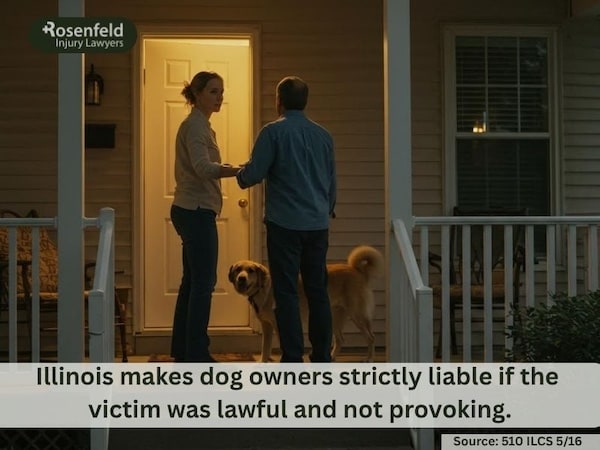
Dog bite liability in Illinois is primarily governed by the Illinois Animal Control Act, specifically 510 ILCS 5/16, which establishes a strict liability standard for qualifying dog-bite injuries. Under this law, a dog owner can be liable when the animal, without provocation, attacks, attempts to attack, or injures someone who is peaceably acting in a place where they may lawfully be.
Unlike states that follow the “one bite rule,” Illinois does not require proof that the dog’s owner knew of prior aggressive behavior before statutory liability can apply. Instead, the claim depends on whether the requirements of Section 16 are satisfied.
The Act can apply beyond the person who purchased or legally owns the dog. Under 510 ILCS 5/2.16, the statutory definition of “owner” includes a person who keeps or harbors an animal, has it in their care, acts as its custodian, or knowingly permits a dog to remain on premises they occupy. This makes the question of who controlled or cared for the dog important when evaluating a claim.
For example, a homeowner who regularly keeps a relative’s dog, cares for a guest’s dog, or otherwise exercises sufficient control over the animal may need to be evaluated under the Act.
Does Illinois Law Have a One-Bite Rule?
No, Illinois law does not follow the one-bite rule. Instead, the state imposes statutory liability under the Illinois Animal Control Act when Section 16’s requirements are met.
This means a dog does not necessarily need a prior bite or documented history of aggression before an injured person can pursue a claim. The absence of a prior attack does not by itself prevent a claim under Illinois law.
Can a Homeowner Be Liable for a Dog They Don’t Own?
Yes, in some circumstances. The Illinois Animal Control Act defines “owner” broadly enough to include certain people who do not hold title to the dog.</span> Under 510 ILCS 5/2.16, an owner includes a person who keeps or harbors an animal, has it in their care, acts as its custodian, or knowingly permits a dog to remain on premises they occupy.
This can be relevant in several situations:
- A houseguest brings a dog into the homeowner’s residence and the homeowner exercises care or control over the animal.
- A relative’s dog lives in the home, and the homeowner regularly helps care for it.
- A homeowner agrees to dog-sit and assumes responsibility for the animal’s care.
However, simply owning or occupying the property where a dog is present does not automatically make a person liable. The specific facts must establish whether the homeowner falls within the statutory definition or may otherwise be liable under a negligence theory.
What You Must Prove Under 510 ILCS 5/16
A claim under Section 16 of the Illinois Animal Control Act generally requires evidence that the dog attacked, attempted to attack, or injured the person; the person was acting peaceably; the person was in a place where they had a legal right to be; and the animal acted without provocation.
The statutory owner’s identity is also important. Under 510 ILCS 5/2.16, an owner can include someone who keeps or harbors the dog, has it in their care, acts as its custodian, or knowingly permits the dog to remain on premises they occupy.
Premises Liability When the Homeowner Isn’t the “Owner”
A homeowner who does not qualify as the dog’s owner under the Illinois Animal Control Act may still face a separate negligence claim depending on the circumstances. The homeowner’s conduct, knowledge of the dog’s presence or behavior, control over the property, and relationship with the injured person may all be relevant.
The Illinois Premises Liability Act, 740 ILCS 130, addresses the duties of owners and occupiers of premises. Comparative-fault issues may also arise in a negligence claim under 735 ILCS 5/2-1116. The specific legal theory and facts should be reviewed to determine whether these provisions apply.
In Steinberg v. Petta, the Illinois Supreme Court considered whether an absentee landlord could be considered a harborer of a tenant’s dog. The decision illustrates why owning property alone does not necessarily establish statutory ownership or control of a tenant’s dog.
Bitten at a Friend’s or Family Member’s Home: Can You Sue?
Yes. A dog bite at a friend’s or family member’s home may support a claim when the requirements of Illinois law are met. Being invited onto private property does not by itself prevent an injured person from pursuing compensation.
The claim may involve the dog’s statutory owner, a homeowner who qualifies as an owner under the Animal Control Act, or another party whose negligence contributed to the injury. Evidence about who owned, kept, harbored, or cared for the dog can help determine who may be legally responsible.
Trespassers and Uninvited Visitors
A person’s legal status on the property can affect a dog bite claim. Section 16 of the Illinois Animal Control Act requires the injured person to have been acting peaceably in a place where they had a legal right to be.
Trespass and provocation may therefore become important factual issues. You should not automatically assume an uninvited visitor has no claim without reviewing the circumstances surrounding the incident.
Who Besides Dog Owners Can Be Held Liable for Dog Bite Injuries?
In Illinois, liability isn’t necessarily limited to the dog’s legal owner. Under state law, certain people who harbor, keep, or control a dog can fall within the statutory definition of owner.
Homeowners and Property Occupants
A homeowner may be liable when the facts establish that the homeowner meets the statutory definition of owner or when another legal theory creates liability. Homeowner liability for dog bites in Illinois should therefore be evaluated based on the homeowner’s actual relationship to the dog rather than property ownership alone.
Landlords and Property Managers
A landlord is not automatically liable for a tenant’s dog simply because the landlord owns the property. Liability can depend on whether the landlord exercised sufficient care, custody, or control over the animal or whether a separate negligence theory applies. For more information, see landlord liability for a tenant’s dog.
Dog Sitters, Kennels, and Caregivers
People or businesses that take responsibility for caring for a dog may need to be evaluated based on the degree of care, custody, or control they exercised over the animal. The facts can determine whether they fall within the statutory definition or face a separate negligence claim.
Employers or Business Owners
When a dog bite occurs at a workplace or business, liability may depend on who owned or controlled the dog and whether the business or employer acted negligently. The applicable legal theory should be evaluated based on the circumstances of the incident.
For a broader overview of potential defendants, see who is liable for a dog bite.
What Does Homeowner Liability for Dog Bites in Illinois Depend On?
Facts that may affect homeowner liability include who owned or cared for the dog, whether the homeowner knowingly permitted the dog to remain on the premises, who controlled the animal, and whether the injured person was lawfully present.
Other relevant evidence may include:
- The dog’s ownership and living arrangements
- Who regularly fed, walked, restrained, or cared for the dog
- Whether the homeowner agreed to watch or keep the animal
- Where the attack occurred
- Whether the injured person was invited or otherwise lawfully present
- Whether the dog was provoked
- Statements from witnesses and other evidence documenting the incident
A homeowner’s knowledge that a dog was present is not necessarily the same as statutory ownership. Review the facts to determine whether the homeowner had the type of care, custody, control, or other relationship required for the applicable claim.
Does Homeowners Insurance Cover Dog Bites in Illinois?
Yes, homeowners insurance often covers dog bites in Illinois, but protection varies by policy. Most include medical payments coverage for immediate medical treatment and liability coverage if the homeowner is held responsible under applicable law.
Coverage may extend to treatment, lost wages, and pain and suffering, though some insurance companies exclude specific dog breeds or impose other restrictions. Review policy language, exclusions, limits, and the circumstances of the incident before assuming coverage applies.
For more information, see homeowners insurance and dog bites.

What Damages Can Illinois Victims Recover in Dog Bite Claims?
Victims of dog bite incidents in Illinois can recover both economic and non-economic damages through personal injury claims filed under Illinois law. These damages compensate for the full extent of injuries sustained in an attack, including both physical and emotional harm.
Economic Damages
Economic damages address the measurable financial impact of the attack, including:
- Medical expenses for emergency care, surgeries, and ongoing medical treatment
- Lost wages or reduced earning capacity due to missed work
- Future medical care such as scar revision or psychological counseling for post-traumatic stress disorder
Non-Economic Damages
Victims may also recover for pain and suffering, emotional distress, and loss of normal life. These forms of compensation recognize the lasting effects of injuries, such as anxiety, depression, or fear of dogs following the incident.
What to Do After a Dog Bite on Someone’s Property
After a dog bite, take steps to protect your health, document the incident, and preserve information that may be important to a claim.
- Seek appropriate medical attention and follow your healthcare provider’s instructions.
- Report the bite to the appropriate animal control administrator within 24 hours if you know about the bite, as required by 510 ILCS 5/13.
- Photograph your injuries, the location, and any conditions that may help document what happened.
- Obtain witness names and contact information when possible.
- Obtain the homeowner’s and dog owner’s insurance information when available.
- Preserve medical records, bills, photographs, communications, and other evidence related to the attack.
- Be cautious about providing recorded statements to an insurance adjuster before understanding your rights and the circumstances of the claim.
Illinois generally provides two years to file a personal-injury action under 735 ILCS 5/13-202, although exceptions can apply. For minors, 735 ILCS 5/13-211 generally provides two years after the person reaches age 18, subject to the statute’s provisions.
Frequently Asked Questions
Yes. A dog bite at a friend’s house may support a claim when the requirements of Illinois law are met. Knowing the homeowner does not automatically prevent you from seeking compensation. The dog’s owner, homeowner, or another responsible party may be involved depending on who owned, kept, harbored, or controlled the dog.
Not automatically. A homeowner’s liability can depend on whether the homeowner qualifies as an “owner” under 510 ILCS 5/2.16 or whether the facts support a separate negligence claim. Factors can include whether the homeowner cared for or controlled the dog and whether the homeowner knowingly permitted the dog to remain on the property.
Not necessarily. Section 16 of the Illinois Animal Control Act requires the injured person to be peaceably acting in a place where they may lawfully be. Because trespass can affect that requirement, review the circumstances surrounding the person’s presence on the property before determining whether a claim may proceed.
Generally, you must file a personal-injury action within two years under 735 ILCS 5/13-202. Different rules may apply in particular circumstances, including claims involving minors. Because missing a filing deadline can affect legal rights, an attorney should review the dates involved.
Homeowners insurance may cover a qualifying dog bite claim, but who is responsible and what coverage is available depends on the circumstances and policy terms. The dog’s owner may also be responsible. Coverage should be confirmed rather than assumed.
Understand Your Rights After a Dog Attack in Illinois
After an attack, victims often face painful recovery, medical bills, and uncertainty about their rights under Illinois dog bite laws. Our Chicago dog bite lawyers can review the circumstances, identify potentially responsible parties, and explain available legal options.
The firm offers a free consultation and works on a contingency fee basis, meaning there are no upfront costs and you pay nothing unless the firm successfully recovers compensation for you.
If you or someone you love has suffered serious injuries from an attack, contact our Chicago-based dog bite lawyers today to seek compensation and get the support you deserve.
 Legally Reviewed By
Attorney Jonathan Rosenfeld
Content legally reviewed by Jonathan Rosenfeld The information on this page has been legally reviewed by Attorney Jonathan Rosenfeld, founder and managing partner of Rosenfeld Injury Lawyers LLC. With extensive experience representing dog bite victims across Chicago, Mr. Rosenfeld is dedicated to helping injury victims hold negligent dog owners accountable and pursue the maximum compensation available under the law. His deep legal knowledge and commitment to client advocacy ensure that the information provided is accurate, reliable, and aligned with current legal standards.