- Free Case Evaluation: 312-779-6171 Tap Here To Call Us




Non-Bite Dog Attack Injuries: Knockdowns, Scratches & Your Rights


Dog attack injuries can happen even when a dog never bites. In Illinois, a person who is lawfully present and is attacked, knocked down, scratched, or otherwise injured may have a claim under the Illinois Animal Control Act. The type and severity of the injury can affect the damages available.
Common Non-Bite Injuries from a Dog Attack
A serious dog attack does not need to involve a bite to cause significant harm. Non-bite dog attack injuries are surprisingly common and can be just as life-changing as bite wounds. Under Illinois law, liability can apply when a dog attacks, attempts to attack, or injures a person without provocation, provided the person was peaceably conducting themselves where they had a legal right to be.
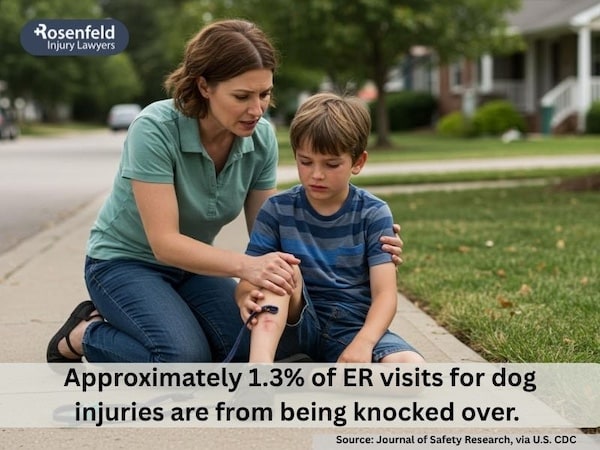
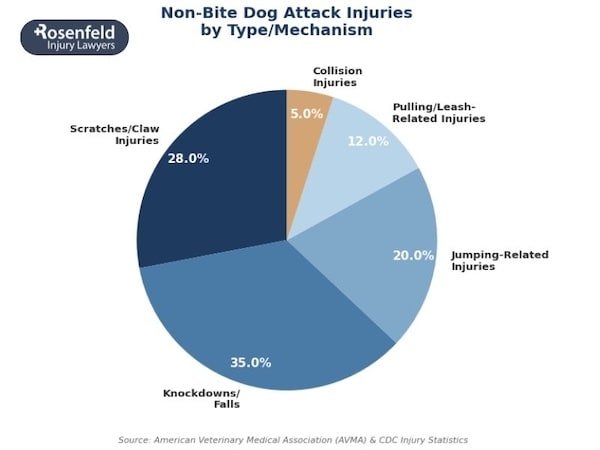
- Fall-Related Injuries – Being knocked to the ground by a lunging or charging dog can result in bone fractures, sprains, dislocated joints, or head trauma such as concussions. Falls can also cause hip and wrist fractures, particularly in older adults, as well as spinal injuries or other complications.
- Scratches and Lacerations – A dog’s claws can inflict deep, scratching wounds, sometimes more damaging than a bite. These cuts may cause scarring, nerve damage, or dangerous infections that require medical treatment.
- Psychological Trauma – The terror of being attacked by a dog can cause emotional distress, severe anxiety, and post-traumatic stress disorder (PTSD), especially in children.
A fall or other physical injury may also lead to emotional trauma, counseling needs, or PTSD. These effects can be relevant when evaluating the damages caused by the incident.
How Illinois Law Covers Dog Attack Injuries Without a Bite
Illinois Animal Control Act Section 16, 510 ILCS 5/16, provides that when a dog, without provocation, “attacks, attempts to attack, or injures” a person who is peaceably conducting themselves in a place where they may lawfully be, the owner is liable for the full amount of the injury proximately caused by the animal.
This language does not require a bite. A dog that knocks someone down, scratches someone, or causes an injury during an attempted attack may fall within the statute when its requirements are met.
The current statute does not use the phrase “otherwise injures.” The specific wording is “attacks, attempts to attack, or injures,” so legal content should use the statutory language accurately.
Liability under Section 16 is distinct from a negligence claim. Evidence of inadequate control, a leash-law violation, or other negligent conduct may also be relevant depending on the circumstances.
Strict Liability vs. Negligence in Non-Bite Cases
Illinois law can impose liability without requiring the injured person to prove that the owner was negligent. Section 16 focuses on whether the dog attacked, attempted to attack, or injured the person without provocation and whether the person was lawfully present.
Negligence may still apply in some cases, particularly when the facts involve inadequate control, a local leash ordinance, or another alleged breach of duty. Because the legal theory can depend on the circumstances, an attorney should review the facts before deciding which claims apply.
For example, evidence that a dog was running loose may help establish how the incident occurred, but a leash-law violation should not be presented as an automatic substitute for the statutory requirements under 510 ILCS 5/16.
Chased by a Dog: Cyclists, Runners and “Dog Fright” Injuries
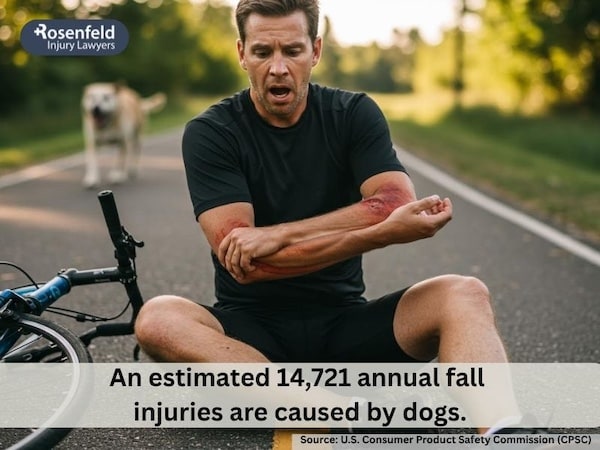
A person does not necessarily need to be physically touched by a dog to suffer a serious injury. A cyclist may swerve to avoid a charging dog, a runner may fall while trying to escape, or a pedestrian may run into traffic while being chased.
These incidents require a careful review of what happened and whether the facts satisfy the Illinois Animal Control Act. Evidence such as witness statements, photographs, video footage, animal-control reports, and medical records may help establish how the incident occurred.
A Dog Knocked Me Over: What to Do Next
If a dog knocked you over, take steps to document the incident and your injuries as soon as reasonably possible:
- Seek medical attention, even if your injuries initially seem minor.
- Report the incident to the appropriate animal control authority and follow any medical guidance you receive.
- Photograph visible injuries, damaged property, and the location where the incident occurred.
- Collect the dog owner’s contact and insurance information, along with witness information if available.
- Avoid making statements about fault or accepting responsibility before you understand the circumstances and your legal rights.
Prompt documentation can help connect your medical treatment and other losses to the incident.
When Are Dog Owners Not Held Liable in Illinois
Even though Illinois imposes strict liability for dog attack cases, there are two primary exceptions where a dog owner may not be held liable for injuries inflicted by their animal:
- Provocation – If the victim provoked the dog, the circumstances may affect liability under the Illinois Animal Control Act.
- Trespassing – If the victim was unlawfully on the owner’s private property when the dog attack occurred, the owner may be exempt from liability.
Questions involving provocation can be fact-specific, so an allegation that the victim provoked the dog does not by itself establish that the defense applies. For more information, see our article on defenses dog owners raise in Illinois dog attack claims.
Seeking Compensation in Non-Bite Dog Attack Cases
Victims of non-bite dog attack injuries in Illinois may seek compensation for losses caused by a qualifying incident. Depending on the facts and applicable law, damages may include economic and non-economic losses.
Economic Damages
These are the measurable financial losses you’ve suffered because of the dog attack:
- Medical Bills – Emergency care, hospital stays, surgeries for bone fractures, wound care for scratching, and psychological therapy for emotional distress or PTSD.
- Lost Wages – Income lost while you recover from being attacked by a dog, plus future earning capacity if your ability to work is reduced.
- Property Damage – Reimbursement for clothing items, glasses, phones, or other belongings destroyed during the attack.
Non-Economic Damages
These compensate you for the harder-to-quantify impact of the dog attack:
- Pain and Suffering – Compensation for ongoing physical pain, mental anguish, and emotional ramifications caused by the attack.
- Loss of Enjoyment of Life – The impact of your injuries on your daily activities, hobbies, and relationships.
- Psychological Treatment – Recovery for the emotional toll, including therapy costs for PTSD, anxiety, and fear of dogs.
A dog owner’s homeowners or renters insurance may provide coverage, depending on the policy and circumstances. Coverage can vary, so review the policy rather than assuming insurance will pay every claim.
Emotional Trauma and PTSD After a Dog Attack
A non-bite incident can cause more than physical harm. Emotional distress, anxiety, fear of dogs, and PTSD may require counseling or other mental health treatment. When supported by appropriate evidence, these physical and emotional effects may be considered when evaluating a personal injury claim.</mark>
Deadline to File a Dog Attack Injury Claim in Illinois
Illinois generally provides two years to file a personal injury action under 735 ILCS 5/13-202, subject to applicable exceptions. For a person who was under 18 when the claim accrued, 735 ILCS 5/13-211 generally allows two years after reaching age 18. Because deadlines can vary based on the circumstances, prompt legal review is important.
Our Settlements and Recoveries for Dog Attack Victims
Case results and settlement examples should be included only after confirming that each result involved a non-bite incident and that the result is approved for publication. Settlement amounts in other cases do not predict what another person may recover.
Why You Must Seek Medical Attention After Any Attack
After any dog attack, including one without bite injuries, it’s critical to seek medical attention right away. Many dog attack victims underestimate their injuries because there’s no visible bite, but serious harm can still occur.
- Hidden Injuries – Falls or being knocked over can lead to bone fractures, internal bleeding, or a concussion that may not show symptoms immediately. A prompt medical exam helps diagnose these conditions early.
- Infection Prevention – Even small scratches or cuts can become infected if untreated. Early care can reduce complications.
- Medical Documentation – Visiting a doctor creates an official medical record linking your injuries to the attack, which is crucial when filing a dog attack lawsuit.
Medical records can also document emotional symptoms and recommended counseling or other psychological treatment. Follow your healthcare provider’s instructions and keep records of your treatment and related expenses.
For information about whether homeowners insurance may cover a dog-related claim, see our guide on whether homeowners insurance covers dog bites in Illinois.
How a Dog Bite Injury Lawyer Can Help in Non-Bite Dog Attack Cases
A lawyer can help investigate the incident, gather medical and other evidence, identify potentially available insurance coverage, and communicate with the insurer. If we can’t resolve a claim through negotiation, legal counsel can evaluate whether litigation is appropriate.
Our team can assist with:
- Case Evaluation and Investigation – We review the facts of your dog attack claim, gather evidence, and identify all potentially responsible parties.
- Medical and Psychological Documentation – We work with doctors and mental health professionals to document all injuries, ensuring every damage is included in your personal injury lawsuit.
- Insurance Negotiation – We deal directly with the dog owner’s homeowner’s or renter’s insurance company to pursue compensation for your medical costs, lost wages, and non-economic damages.
- Litigation and Trial Representation – If negotiations fail, we’re ready to fight for you in court under Illinois’ strict dog attack liability laws.
- No Fee Unless We Win – Our contingency fee arrangement means there are no upfront attorney fees, and you pay no attorney fee unless we successfully recover compensation for you.
By choosing our expert lawyer team, you gain a partner committed to protecting your rights, reducing your stress, and guiding you toward a full recovery.
Frequently Asked Questions
Yes, potentially. Illinois law does not require a bite when the requirements of 510 ILCS 5/16 are satisfied. The dog must have attacked, attempted to attack, or injured you without provocation, and you must have been peaceably conducting yourself in a place where you were lawfully present. The facts of the incident determine whether a claim is available.
Potentially. A scratch can qualify as an injury under Illinois law if it meets the requirements of the Animal Control Act. Medical records, photographs, witness accounts, and evidence showing how the scratch occurred can help establish the injury’s nature and extent.
You may have a claim even if the dog never physically touched you. A fall or bicycle crash caused while responding to an attacking or attempting-to-attack dog should be evaluated based on the circumstances, including the dog’s conduct, the location, witnesses, and the resulting injuries.
They can include bruises, abrasions, scratches, lacerations, fractures, sprains, dislocations, head injuries, and other trauma from a fall or collision. Some injuries, including concussions and psychological trauma, may not be immediately visible, which is why medical evaluation is important.
Generally, Illinois gives an injured person two years to file a personal injury action under 735 ILCS 5/13-202. Different rules can apply to minors and people under a legal disability under 735 ILCS 5/13-211. Because exceptions may apply, do not assume that the deadline is the same in every case.
Schedule a Free Consultation with Our Dog Attack Lawyers
If you or someone you love has been injured in Illinois by a dog attack, even without a bite, we can help. Our experienced Chicago dog bite lawyers handle non-bite dog attack injuries, including attacks by unleashed or roaming dogs, and fight to make sure victims receive compensation for their medical expenses, lost income, and emotional distress.
We can also help you understand whether homeowners insurance covers your claim and what options may be available to pursue compensation. We offer a free consultation and handle qualifying cases on a contingency fee basis, so there are no upfront attorney fees and you pay no attorney fee unless we successfully recover compensation for you. Call 312-779-6171 to discuss your options.
 Legally Reviewed By
Attorney Jonathan Rosenfeld
Content legally reviewed by Jonathan Rosenfeld The information on this page has been legally reviewed by Attorney Jonathan Rosenfeld, founder and managing partner of Rosenfeld Injury Lawyers LLC. With extensive experience representing dog bite victims across Chicago, Mr. Rosenfeld is dedicated to helping injury victims hold negligent dog owners accountable and pursue the maximum compensation available under the law. His deep legal knowledge and commitment to client advocacy ensure that the information provided is accurate, reliable, and aligned with current legal standards.