- Free Case Evaluation: 312-779-6171 Tap Here To Call Us




Why Do Dogs Bite? How Lack of Training Raises the Risk


Dogs may bite because of fear, pain, resource guarding, territorial behavior, frustration, being startled, or overstimulation. Lack of training and socialization can make it harder for a dog and its owner to manage these situations. Understanding why dogs bite can help people recognize warning signs and reduce the risk of an attack.
Link Between Lack of Training and Dog Bites
Owning a dog comes with significant responsibility. You not only have to care for your dog and welcome it into your home, but you must also train it so it can be safe around other dogs and people. Untrained dogs can have more difficulty responding appropriately to unfamiliar people, animals, or stressful situations, which may increase the risk of aggressive behavior or a bite.
When you bring a dog into your home, you must prioritize training and socializing to keep the public safe from your pet. Proper training does not guarantee that a dog will never bite, but it can help owners recognize triggers, manage behavior, and respond to commands in potentially stressful situations.
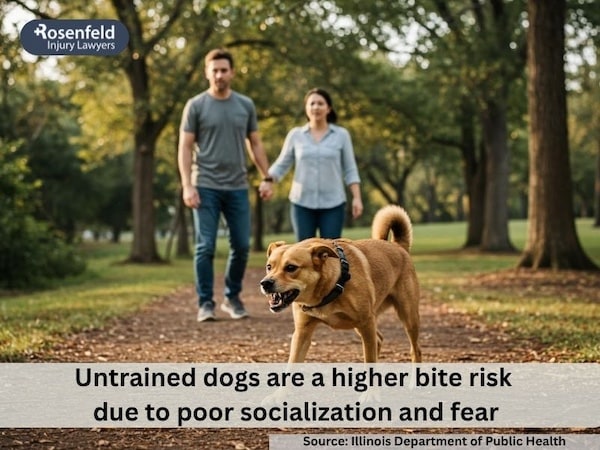
How a Lack of Training Increases the Risk of an Attack
Trained dogs are better behaved and know how to manage themselves when interacting with others. Training can also help owners redirect a dog’s behavior and avoid situations that may cause fear, frustration, or overstimulation. Here are a few reasons a lack of training can make some dogs harder to manage and may increase the risk of another person’s injuries.
Poor Impulse Control
Well-trained dogs have better impulse control than their untrained counterparts. Teaching your pet to manage their responses to external stimuli will increase the likelihood that they stay calm when unexpected circumstances arise, such as a stranger approaching them. A dog’s ability to manage itself could be the difference between staying calm and attacking.
Lack of Socialization
Socialization helps dogs feel comfortable around other animals and people of all ages. The more you socialize your dog early on, the more you will improve your dog’s ability to interact with others and avoid aggressive behaviors, especially around children.
Early socialization should suit the individual dog and should not force a fearful dog into situations that overwhelm it. Reward-based training and gradual exposure can help dogs develop more appropriate responses to people, animals, and unfamiliar environments.
Unreliable Commands
You should expect your dog to follow your commands. When you order the dog to sit, stay, or lie down, it should be instinctual for them to obey, no matter the breed. If you don’t train your dog with these commands consistently, it may ignore you and become harder to redirect in stressful situations. People may also wonder, “Do small dogs bite more than big dogs?,” but a dog’s size does not mean its bite should be ignored, as smaller breeds can still cause significant injuries.
Common Reasons Dogs Bite
Understanding why dogs bite requires looking at what happened immediately before the incident. A bite that appears sudden may follow a trigger such as fear, pain, guarding, or being startled.
Fear or Anxiety
Fear is a common reason dogs may display aggressive behavior. A dog may bite when it feels threatened, cornered, or unable to escape from an unfamiliar person, animal, or situation. Giving a fearful dog space and avoiding forced interactions can help prevent escalation.
Pain or Illness
A dog experiencing pain or illness may react defensively when someone touches or approaches it. A sudden change in behavior can warrant veterinary evaluation because an underlying medical problem may contribute to unusual aggression.
Resource Guarding
Some dogs guard food, toys, beds, or other items they consider valuable. A dog may stiffen, stare, growl, bare its teeth, or bite when someone approaches the guarded resource. Training and professional behavioral guidance may help address resource-guarding behavior.
Territorial Behavior
Dogs may react aggressively when they believe a person or animal is entering their territory. This can include a home, yard, vehicle, or another space the dog considers its own. Territorial behavior may involve barking, lunging, growling, snapping, or biting.
Protecting Puppies
A mother dog may become defensive when she believes her puppies are threatened. Avoid approaching or handling puppies when the mother appears stressed or protective.
Prey Drive and Chasing
Some dogs instinctively chase moving objects, animals, or people. A dog that chases may become difficult to control if it has not learned reliable commands and appropriate boundaries.
Overstimulation or Rough Play
Excited or overstimulated dogs may lose control during play. Mouthing may be normal in some situations, but rough play can become dangerous if the dog cannot be redirected or the behavior escalates.
Being Startled
A dog may react defensively when suddenly awakened, touched, or approached from behind. This is one reason people should avoid disturbing dogs while they sleep, eat, or chew a valued item.
Warning Signs a Dog Is About to Bite
Dogs may display warning signals before biting, although not every dog gives an obvious warning. Signs can include lip licking, yawning, a lowered or tucked tail, whale eye, stiffening, a hard stare, growling, baring teeth, snapping, lunging, or attempting to move away.
Recognizing these signals can help people create distance before a situation escalates. Children and adults should avoid approaching a dog that appears fearful, tense, defensive, or uncomfortable.
Why Punishing a Growl Makes Bites More Likely
A growl can warn that a dog is uncomfortable, frightened, or guarding something. Punishing the growl may suppress that warning without addressing the underlying trigger. In some circumstances, the dog may then have fewer visible warning behaviors before escalating.
Do Dogs Bite for No Reason?
A bite that appears unprovoked may still have a trigger that’s hard for a person to recognize. Fear, pain, resource guarding, territorial behavior, frustration, or being startled can contribute to biting. This doesn’t mean every bite can be explained after the fact, but identifying what happened immediately before an attack may help explain the dog’s behavior.
How Training and Socialization Reduce Bite Risk
Training and socialization can help owners manage situations that may otherwise lead to aggressive behavior. Early, appropriate socialization can help dogs become more comfortable around people, animals, and unfamiliar environments. Reward-based training can also teach reliable commands that let owners redirect a dog when needed.
Owners should consider veterinary evaluation when aggressive behavior appears suddenly or changes significantly. A professional dog trainer or qualified behaviorist may also help identify triggers and develop a behavior-management plan.
Who Gets Bitten Most?
Children are an important group when discussing dog bite prevention because they may have difficulty recognizing canine warning signals or understanding when to give a dog space. Rather than repeating detailed information here, see our guide on why children are bitten more often.
Is the Dog’s Training a Factor in an Illinois Dog Bite Case?
While training can potentially prevent an attack, the dog’s training history is generally not required to establish liability under Illinois’ Animal Control Act. Illinois is a strict-liability state for qualifying dog attacks and injuries under the statute, subject to its requirements, including the absence of provocation and the injured person’s lawful presence.
Whether the dog was trained, previously aggressive, or had never attacked anyone before does not by itself determine whether the statutory requirements are met. The circumstances surrounding the incident, including any alleged provocation, may be legally significant.
Owner Liability for Untrained Dogs Under the Illinois Animal Control Act
The Illinois Animal Control Act (510 ILCS 5/16) states that if a dog, without provocation, attacks, attempts to attack, or injures a person who is peaceably conducting themselves in a place where they may lawfully be, the owner may be liable for civil damages for the injury proximately caused by the attack or injury.
Provocation can be an important issue in an Illinois dog attack claim. If you are unsure what counts as provoking a dog, Illinois law should be applied to the specific circumstances of the incident.
The statute’s definition of “owner” also extends beyond someone who simply holds legal title to a dog. Under 510 ILCS 5/2.16, the term can include a person who keeps or harbors an animal, has it in their care, acts as its custodian, or knowingly permits a dog to remain on premises they occupy.
Lack of training is therefore not, by itself, a defense to liability. However, you should review the specific facts of an incident because Illinois law includes requirements concerning provocation and lawful presence.
Steps to Take After Being Injured by an Untrained Dog
It is essential to follow these steps if you are the victim of a dog attack, whether the dog is trained or not:
- Seek medical attention immediately
- Report the attack to the appropriate local animal control authority
- Alert the owner of the incident if they are not aware
- Document injury severity and psychological trauma
- Preserve photographs, medical records, witness information, and other evidence related to the incident
- Consult an Illinois dog attack lawyer if you need help evaluating your legal options
If you are unsure whether the circumstances support a claim, a legal consultation can help you understand how Illinois law may apply to your situation.
Frequently Asked Questions
Sometimes. Dogs may show signs of fear, discomfort, or defensive behavior before biting, including stiffening, growling, staring, baring their teeth, or attempting to move away. However, people may miss subtle warning signals, and some bites can appear sudden. Recognizing canine body language can help reduce the risk of an escalating encounter.
Treat a dog that has bitten someone cautiously. The appropriate response depends on why the bite occurred, the circumstances, the dog’s behavior, and professional evaluation. Owners should take reasonable steps to prevent another incident and seek guidance from a veterinarian or qualified behavior professional when appropriate.
Lack of training can make a dog more difficult to manage, but it does not mean every untrained dog will bite. Training and socialization can help owners manage commands, identify triggers, and respond to stressful situations. Other factors, including fear, pain, guarding, territorial behavior, and overstimulation, can also contribute to biting.
A bite that seems to happen without warning may follow an unrecognized trigger. Some dogs display subtle body-language changes that people may overlook. Fear, pain, guarding, startling, frustration, or territorial behavior can contribute to a bite. Not every incident will have an obvious explanation.
Potentially, if the requirements of 510 ILCS 5/16 are satisfied. Illinois law provides for civil liability when a dog, without provocation, attacks, attempts to attack, or injures a person who is peaceably conducting themselves in a place where they may lawfully be. Review the specific circumstances to determine whether the statute applies.
Contact Our Firm to Discuss Your Dog Bite Case
Our dog bite injury law firm helps injured people understand their legal options after dog attacks in Chicago and throughout Illinois. We understand the dangers untrained dogs pose to children, other dogs, and even adults.
Victims of an aggressive dog may be able to seek compensation for qualifying losses, depending on the facts of the case, including:
- Lost wages
- Medical treatment costs
- Future health bills
- Psychological trauma
- Pain and suffering
- Loss of joy in life
Our attorneys will investigate your circumstances, assess all legal damages, obtain documentation of your injuries or illness, establish liability, respond to insurers, and litigate in civil court if necessary.
We offer a complimentary consultation, allowing you to ask questions about liability and how it will affect your claim. Contact our Chicago dog bite lawyers today to schedule a free, no-obligation consultation.
 Legally Reviewed By
Attorney Jonathan Rosenfeld
Content legally reviewed by Jonathan Rosenfeld The information on this page has been legally reviewed by Attorney Jonathan Rosenfeld, founder and managing partner of Rosenfeld Injury Lawyers LLC. With extensive experience representing dog bite victims across Chicago, Mr. Rosenfeld is dedicated to helping injury victims hold negligent dog owners accountable and pursue the maximum compensation available under the law. His deep legal knowledge and commitment to client advocacy ensure that the information provided is accurate, reliable, and aligned with current legal standards.