- Free Case Evaluation: 312-779-6171 Tap Here To Call Us




Dog Bite When the Owner Is Not Present or Unknown: What to Do


If a dog bites you and the dog bite owner not present at the scene, seek medical attention, report the bite, and document the dog and location. If the owner is unknown, animal control and witnesses may help identify the dog. Illinois law can impose liability even when the owner was not physically present during the attack.
A Frightening Situation for Any Dog Bite Victim
Being bitten by a dog can be a traumatizing experience. In the moment, you may be in a lot of physical pain from immediate injuries, and the emotional harm suffered can last for months or even years. Not knowing who owns the dog can make the situation more difficult because you may need to identify the animal and determine who may be legally responsible.
After a bite attack, it is crucial to take the proper steps to protect your health and preserve any hope of identifying the liable party. A canine bite injury lawyer can play an important role in securing your financial future after a severe attack.
In this guide, we will discuss the immediate actions to take in the event of an attack.
Your Immediate Steps After a Stray or Loose Dog Bite
Any injuries that a dog causes can have life-altering consequences. A severe bite could become infected. If the dog has rabies, it could pass the disease along through its saliva. Even if the dog never bit you, your attempt to escape could have caused you to fall, leading to broken bones.
If you are dealing with a stray dog bite or an owner who is not at the scene, focus on these steps:
- Seek medical attention right away – This is the top priority after a bite attack. Have the wound cleaned and evaluated, particularly if it is deep, bleeding, or shows signs of infection. Tell the healthcare provider that the dog’s vaccination status may be unknown.
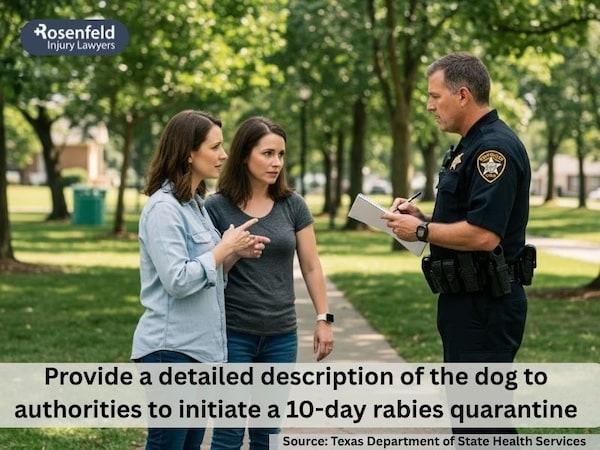
- Report the incident to the local authorities – If a dog in Illinois attacks you, contact both the police and the local animal control in your city or county. Provide as detailed a description as possible of the dog and the location of the attack.
- Gather information from the accident scene – If it is safe, photograph the dog, check for a collar or tags, and speak with witnesses. Look for nearby doorbell or security cameras that may have captured the attack or the dog’s movements.
- Preserve your records – Keep medical records, bills, photographs, prescriptions, treatment plans, and other documents related to the injury.
- Do not put yourself at risk trying to find the owner – Let animal control or other appropriate authorities help locate the dog when possible.
- Consult a dog bite lawyer – An attorney can investigate whether the dog’s owner, keeper, harborer, custodian, or another potentially responsible party can be identified.
Owner Known but Not Present (Loose or Unattended Dog)
A dog bite owner not present when the attack happens can still be legally responsible under Illinois law. Section 16 of the Illinois Animal Control Act, 510 ILCS 5/16, does not require the owner to be standing nearby when the dog attacks.
Under the statute, liability can apply when a dog, without provocation, attacks, attempts to attack, or injures a person who is peaceably conducting themselves in a place where they may lawfully be. A loose or unattended dog can provide important evidence about the circumstances of the incident, but liability still depends on the statutory requirements and facts of the case.
Therefore, an owner who was at work, inside a home, or otherwise away from the scene may still face a claim if the statutory requirements are met.
Who Else Can Be Liable When the Owner Isn’t Around?
The person who owns the dog on paper is not necessarily the only person who may fall within Illinois’ statutory definition of “owner.” Under 510 ILCS 5/2.16, an owner can include a person who keeps or harbors an animal, has it in their care, acts as its custodian, or knowingly permits a dog to remain on premises they occupy.
Depending on the facts, this definition can be relevant when a dog is being cared for by a dog sitter, walker, kennel, or another person with custody of the animal. A person who regularly keeps or cares for a dog may also need to be investigated.
Landlord liability involves additional facts and should not be assumed simply because a tenant owns the dog. For more information, see our guide to landlord liability for a tenant’s dog.
How to Track Down an Unknown Dog Owner
If the dog bite unknown owner cannot be identified at the scene, document as much information as possible while it is still fresh. You may be able to identify the owner by:
- Asking nearby residents and witnesses whether they recognize the dog
- Checking nearby doorbell and security cameras
- Looking for a collar, identification tag, or license information
- Asking animal control whether the dog has been scanned for a microchip
- Posting a description or photograph through appropriate neighborhood networks, such as Nextdoor or local social media groups
- Providing authorities with the location where the dog was last seen
Do not approach an unfamiliar dog if doing so could expose you or another person to another attack.
Rabies Prevention After Being Bitten by a Dog
If you cannot immediately identify the dog’s owner, one danger is contracting Rabies from the dog. Without knowing who the dog belongs to, no one can tell whether the dog is up to date on its vaccinations.
You should promptly discuss rabies risk with a healthcare provider and local public health or animal control authorities. Whether rabies post-exposure prophylaxis is necessary depends on the circumstances of the exposure and whether the animal can be observed or tested.
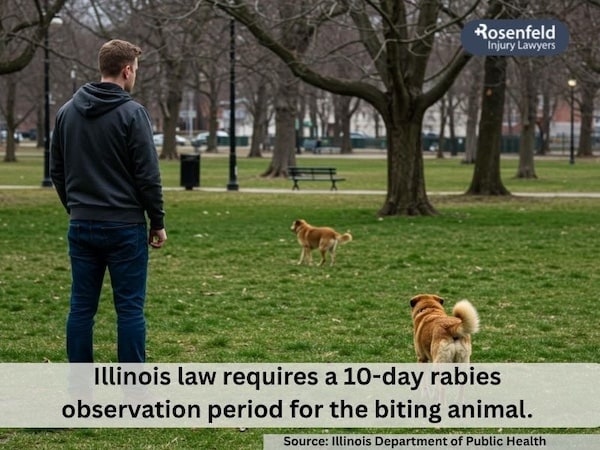
Under 510 ILCS 5/13, when authorities receive information that a person has been bitten by an animal, the animal generally must be confined for observation by a licensed veterinarian for at least 10 days, subject to the statute’s provisions.
Why Finding the Dog Matters for Rabies Shots
Finding the dog can help healthcare and public health professionals determine whether rabies treatment is necessary. If the animal can be located and appropriately observed, that information may affect the medical recommendation.
If rabies post-exposure prophylaxis is recommended for someone who has not previously received rabies vaccination, the CDC recommends human rabies immune globulin and a vaccine series on days 0, 3, 7, and 14. People with certain immune conditions may need an additional dose.
Do not wait to seek medical advice while trying to locate the dog. Rabies prevention decisions should be made promptly by qualified healthcare and public health professionals.
Where to Report a Bite in Chicago and Cook County
In Chicago, a dog bite can be reported through 311 and Chicago Animal Care and Control. For bites occurring in Cook County suburbs, contact the appropriate local animal control or Cook County animal and rabies authorities. Reporting helps create an official record and may assist with locating the animal.
Can You File a Dog Bite Claim if the Dog’s Owner is Unknown?
If the dog’s owner is initially unknown, that does not necessarily mean an injury claim is impossible. The investigation may identify a person who owns, keeps, harbors, cares for, or acts as custodian of the dog under the Illinois Animal Control Act.
Depending on the circumstances, other parties may also need to be investigated. For example, a property owner, kennel, caretaker, or public entity could raise separate legal questions, but potential liability cannot be assumed without reviewing the facts. Claims involving governmental entities may also involve additional notice or procedural requirements.
Under 735 ILCS 5/13-202, personal injury actions generally must be commenced within two years after the cause of action accrues. (ilga.gov) This deadline makes it important to investigate an unknown owner promptly rather than waiting until the limitation period is close to expiring.
For an Illinois Animal Control Act claim, the focus is on whether the statutory requirements are satisfied, including the circumstances of the attack, the victim’s conduct, lawful presence, and the identity or status of the responsible owner.
How Are Your Medical Bills Paid When You Don’t Know Who the Dog Belongs to?
Dog bite victims often face difficult financial realities after the attacks. An attack can lead to serious injuries, including puncture wounds, lacerations, infections, broken bones, muscle sprains and strains, and even amputations. These consequences can leave you with medical bills you must address.
Health insurance may cover eligible medical treatment under the policy terms, although deductibles, co-pays, and other costs may remain. If you later identify the dog owner, those medical expenses may become part of a potential injury claim, depending on the facts.
Potential damages can include medical expenses, lost wages, emotional distress, pain and suffering, and loss of enjoyment of life. For more information about medical expenses in these cases, see our guide to medical bills.
- Lost wages
- Medical bills
- Health insurance co-pays and deductibles
- Emotional distress
- Pain and suffering
- Loss of enjoyment of life
If you have been injured and the dog bite owner not present at the scene, preserving evidence can help determine whether a responsible party can eventually be identified.
What If the Dog Was Loose or Roaming?
A loose or roaming dog can create additional evidence about how the attack occurred, including where the dog was found and whether witnesses saw it running at large. However, a loose dog does not, by itself, establish every element of a claim.
If you were injured by an unleashed or roaming dog, you can learn more about unleashed and roaming dog attacks.
When Should You Get Legal Help?
If the owner cannot be identified immediately, legal guidance may help if the injury is serious, medical treatment is ongoing, witnesses need to be located, or there is uncertainty about who had custody or control of the dog. An attorney can help preserve evidence and investigate potential responsible parties.
Because an owner may not have been present during the attack, do not assume that the absence of the owner eliminates a potential claim under Illinois law.
Frequently Asked Questions
Not necessarily. Whether you need rabies post-exposure prophylaxis depends on the circumstances of the exposure and whether you can locate, observe, or test the animal. A healthcare provider and public health officials can assess the risk. If PEP is recommended, start treatment promptly rather than waiting indefinitely to find the animal.
It depends on your vaccination history and the wound. CDC guidance considers animal bites dirty or major wounds. If you completed the primary series, the CDC generally recommends a tetanus vaccine if your last dose was five or more years ago. People with an unknown or incomplete vaccination history may need vaccination regardless of when their last dose was.
Yes, potentially. Illinois’ Animal Control Act does not require the owner to be physically present when the dog attacks. If the statutory requirements are met, the owner’s absence from the scene does not by itself eliminate potential liability under 510 ILCS 5/16.
It depends on whether the dog can be connected to an owner, keeper, harborer, or custodian. Illinois defines “owner” broadly under 510 ILCS 5/2.16. If you can’t identify a responsible person, other potential sources of recovery may require separate legal analysis, so investigate the circumstances carefully.
Yes, medical evaluation is important, particularly for deep wounds, punctures, significant bleeding, possible infection, or an unknown vaccination history. The CDC recommends seeking medical attention for serious or deep wounds and discussing rabies treatment when the dog’s vaccination status is unknown.
Contact Us for a Free Consultation and Guidance
If you were injured in Chicago or elsewhere in Illinois and the dog’s owner was absent or initially unknown, our attorneys can help investigate the circumstances, preserve evidence, identify potential responsible parties, and evaluate your legal options.
Our firm operates on a contingency fee basis, meaning you owe nothing unless we secure a favorable outcome. You can also take advantage of a free consultation to discuss your situation and learn more about the legal process.
Contact us today at 312-779-6171 to schedule your free consultation.
 Legally Reviewed By
Attorney Jonathan Rosenfeld
Content legally reviewed by Jonathan Rosenfeld The information on this page has been legally reviewed by Attorney Jonathan Rosenfeld, founder and managing partner of Rosenfeld Injury Lawyers LLC. With extensive experience representing dog bite victims across Chicago, Mr. Rosenfeld is dedicated to helping injury victims hold negligent dog owners accountable and pursue the maximum compensation available under the law. His deep legal knowledge and commitment to client advocacy ensure that the information provided is accurate, reliable, and aligned with current legal standards.