- Free Case Evaluation: 312-779-6171 Tap Here To Call Us




What Happens When a Dog Bites a Child


Protecting Your Child After a Traumatic Dog Attack
What happens when a dog bites a child can depend on the severity of the injury, the dog’s vaccination status, and the circumstances of the attack. In Illinois, parents should prioritize medical care, report the bite, document what happened, and preserve information about the dog and its owner.
Dog bites involving a child can be terrifying for the parents of the victim. These small, vulnerable kids can be seriously injured by dog bites, even if the breed is relatively small. The aftermath of the attack may be overwhelming, but it is important to know how to respond immediately after the incident.
Illinois law may allow a child injured by a dog to pursue compensation from the responsible party. If your child was bitten, understanding the medical, reporting, and legal steps can help you protect your child’s interests.
Our personal injury law firm can guide you through the claims process to protect your child’s rights and fight for full compensation.
Immediate Steps to Take if a Dog Bites Your Child
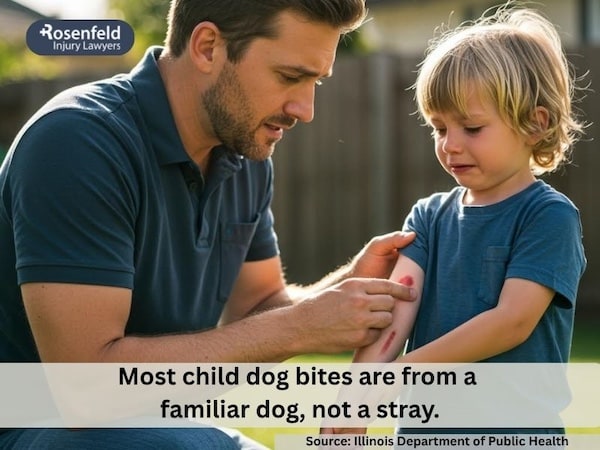
When dog bites happen, victims must act quickly to protect their health and financial futures. If a dog bites your child, here is what you should do as soon as possible:
- Seek immediate medical care – Even if the wound seems like a minor injury, focus on finding medical care quickly
- Identify the dog and their owner – Obtain the dog owner’s contact information and take a picture of the dog if possible
- Confirm vaccination status – Ask the dog owner for proof that the dog has received the Rabies vaccination
- Report the incident – In Illinois, report the bite to the appropriate local animal control authority and follow any applicable reporting requirements.
- Document the attack – Take photos of your child’s face or other injured areas, record the location and time of the attack, and collect statements from witnesses
- Consult an experienced dog bite lawyer – Contact our law firm to discuss your legal options for dog bite injuries
Documenting Your Child’s Injuries
Take photographs of the injuries as they heal, not just immediately after the attack. Keep the dog owner’s information, vaccination records, witness information, medical records, bills, and other documents related to the incident. These records may help establish the nature and extent of your child’s injuries.
When to Take Your Child to the ER for a Dog Bite
A child should receive prompt medical attention after a dog bite, particularly when the wound is deep, bleeding will not stop, or the bite affects the face, hands, or genitals.
Medical professionals can clean and evaluate the wound and determine whether stitches, antibiotics, a tetanus vaccination, or other treatment may be appropriate. If the dog’s rabies vaccination status cannot be confirmed, tell the medical provider and local animal control authority. They can help determine whether rabies post-exposure treatment is appropriate based on the circumstances.
Parents should also watch for possible infection, including increasing redness, swelling, drainage or pus, worsening pain, or fever. A child’s medical provider can advise when follow-up care is necessary.
Understanding Why a Dog Bites a Child
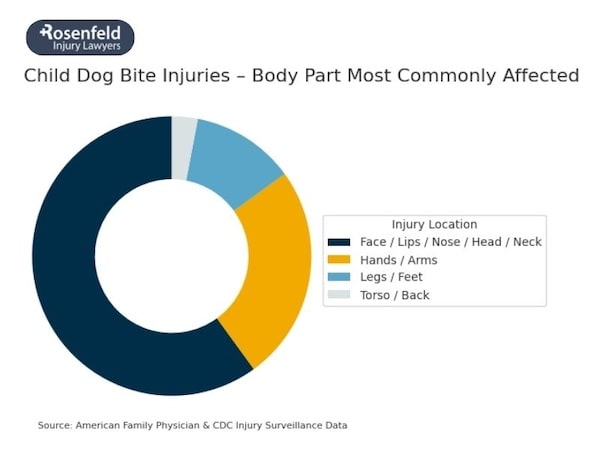
Children may be more vulnerable to serious dog bite injuries because of their smaller size, unpredictable movements, and difficulty recognizing canine warning signals. Children may also suffer more significant facial injuries because their faces can be closer to a dog’s mouth.
For more information about children’s risk factors and prevention, see our guide on why children are bitten more often.
The Legal Process: What Happens to the Dog and Owner?
What happens when a dog bites a child may include an animal-control investigation and veterinary observation of the dog. The animal is not automatically euthanized after every bite.
Will the Dangerous Dog Be Euthanized?
When someone’s dog bites a child, the parents often want justice for the animal and their owner. However, dogs are not automatically euthanized, or “put down,” after every serious injury.
Instead, authorities will investigate the dog’s circumstances. Depending on the circumstances and applicable animal-control rules, authorities may consider the dog’s history, the circumstances of the attack, and whether additional action is necessary to protect public safety.
Investigation and Quarantine
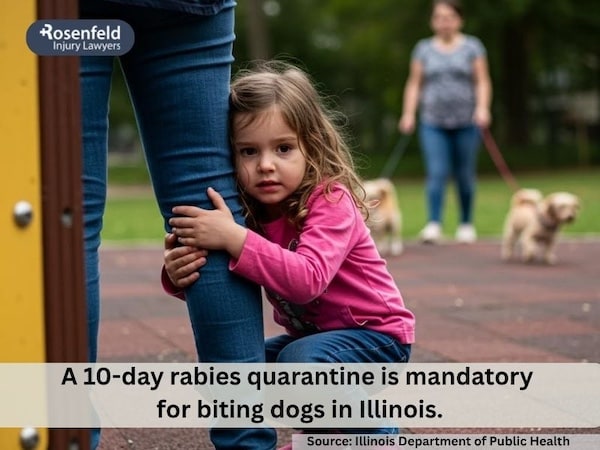
When the appropriate Illinois animal-control authority receives information that a person has been bitten, the Illinois Animal Control Act generally requires the animal to be confined under veterinary observation for at least 10 days from the date of the bite, subject to statutory exceptions. The owner, or an available agent or caretaker, must present a documented biting animal to a licensed veterinarian within 24 hours.
In Chicago, parents should follow the reporting instructions from Chicago Animal Care and Control and keep any report or reference number they receive.
The Owner’s Responsibility Under Illinois Dog Bite Laws
The primary law governing owner liability is the Illinois Animal Control Act, specifically 510 ILCS 5/16. The statute generally provides liability when a dog attacks, attempts to attack, or injures a person who is acting peaceably and is in a place where they have a legal right to be, without provoking the dog.
This is different from a negligence-based claim because the statute does not require the injured person to prove that the owner failed to use reasonable care. The specific facts, including whether there was provocation or another applicable defense, still matter.
Some states have a “one-bite rule,” which exempts dog owners from liability for a first offense if the dog has no history of aggressive behavior. Illinois generally does not require proof that the dog previously showed dangerous behavior before you can pursue a statutory claim.
Pursuing a Dog Bite Case for Your Child
Since a dog owner can be held strictly liable for injuries caused by their pet, you can pursue compensation for legal damages via a civil claim. If successful, you and your child may receive a settlement that addresses compensatory damages, including both economic and non-economic losses.
Parents should also understand that a child’s claim and a parent’s potential claim for expenses can involve different legal considerations and deadlines.
How Long Do I Have to File a Dog Bite Claim for My Child in Illinois?
Illinois generally gives two years to bring a personal injury action under 735 ILCS 5/13-202. For a person who was under 18 when the cause of action accrued, 735 ILCS 5/13-211 generally permits the action to be brought within two years after the person turns 18, subject to applicable exceptions and other legal rules. A parent’s separate claim for expenses may have a different deadline, so an attorney should review the circumstances.
Because claims involving minors can involve additional procedural requirements, including court involvement with certain settlements, parents should obtain case-specific legal advice before agreeing to a settlement.
Compensation for Your Child’s Dog Bite Injuries
Dog bite injuries can have a major impact on a child’s life. A dangerous dog’s attack can have physical, emotional, and financial consequences. Here are some legal damages you could seek compensation for in a dog bite claim:
Economic Damages
- Lost wages – Though this rarely applies to child victims, an inability to work can lead to compensation for lost income
- Past medical expenses – The costs of medical attention can be covered by the settlement, including reconstructive surgery, emergency room care, medication, pain management, rehabilitation, and therapy
- Future medical bills – Expected treatment in the future can also be included in the dog bite case settlement
Non-Economic Damages
- Emotional trauma – The psychological harm suffered by your child may lead to depression, anxiety, Post-Traumatic Stress Disorder, or other emotional wounds
- Pain and suffering – An animal attack can cause painful injuries that lead to ongoing suffering for the victim
- Loss of enjoyment of life – The trauma or physical consequences from the injuries caused by the dog may make it hard for the injured person to enjoy normal aspects of life
- Permanent scarring and disfigurement – Dog bite victims can seek compensation for permanent alterations to their body and appearance due to the dog bite. For more information, see our page about facial scars from dog bites.
Punitive Damages
In cases involving gross negligence or intentional misconduct, a judge may award punitive damages to further punish the defendant and prevent future attacks. Whether punitive damages are available depends on the specific facts and applicable Illinois law.
Helping Your Child Cope Emotionally After a Dog Bite
A dog bite can affect a child emotionally even after the physical wounds begin to heal. Parents can reassure the child, listen to their concerns, and avoid blaming the child for the attack.
Watch for ongoing fear of dogs, nightmares, changes in sleep or behavior, avoidance of activities, or other signs that the child is struggling after the incident. If emotional symptoms persist or interfere with daily life, consider discussing them with the child’s pediatrician or a qualified mental health professional.
Keeping routines as normal as possible and allowing the child to discuss the event at their own pace may also help them feel secure.
What If It Was Your Own Dog or a Relative’s Dog?
A child may still have legal options if the dog belonged to a family member or was a household pet. Depending on the circumstances, a homeowners or renters insurance policy may cover a qualifying injury claim.
Parents may also wonder whether they should get rid of the dog after an attack. That decision involves safety, veterinary and behavioral considerations, and any instructions from animal-control authorities. Because every situation is different, parents should discuss potential legal and insurance issues with an attorney before deciding how to proceed.
How a Structured Settlement Protects Your Child’s Financial Future
Settlements in personal injury cases involving children are often structured differently. Depending on the amount and circumstances of the settlement, the court may require approval or other safeguards to protect a minor’s funds.
Because requirements can vary by circumstance, parents should have an attorney review any proposed settlement and explain how the funds would be held or distributed.
Attorney review required: The settlement examples previously appearing on this page should not be published unless the firm can verify and approve the names, ages, facts, amounts, and supporting documentation.
Frequently Asked Questions
Yes. Even a bite that appears minor should be evaluated by a medical professional when appropriate, particularly if the skin is broken. A healthcare provider can assess the wound, determine whether additional treatment is needed, and address tetanus or rabies concerns based on the circumstances.
Usually not automatically. Illinois law provides for investigation and veterinary observation after a reported bite, and the circumstances of the incident can affect what happens to the animal. A bite does not automatically mean the dog will be euthanized.
Yes, a family relationship does not automatically prevent a claim. Depending on the circumstances, insurance may help resolve an injury claim. Review the facts surrounding ownership, the incident, insurance coverage, and the applicable law before pursuing a claim.
Generally, a child’s claim is subject to the rules in 735 ILCS 5/13-211, which generally allows two years after the child turns 18, while other claims can have different deadlines. Because exceptions can apply, parents should have an attorney review the claim promptly.
Not necessarily. The appropriate response depends on the circumstances of the bite, the severity of the incident, the dog’s behavior and history, veterinary or behavioral evaluations, and animal-control requirements. Parents should prioritize the child’s safety and obtain appropriate professional guidance.
Contact Our Illinois Child Injury Lawyers Today For a Free Consultation
Recovering compensation for your child can feel like a monumental task after a traumatic dog attack. Our personal injury attorneys understand the challenges your family is facing, and we will provide a compassionate approach to the claims process. Whether your child was attacked by an unfamiliar dog or a relative’s pet, we can help you understand your legal options and pursue a claim against a responsible party when the facts support one.
Our Chicago dog bite lawyers work on a contingency fee basis, meaning you owe nothing unless we secure a favorable settlement. We can help evaluate the circumstances, gather evidence, assess damages, and communicate with insurance companies.
If your child has suffered dog bite injuries, contact us today to schedule a free consultation and discuss your legal options
 Legally Reviewed By
Attorney Jonathan Rosenfeld
Content legally reviewed by Jonathan Rosenfeld The information on this page has been legally reviewed by Attorney Jonathan Rosenfeld, founder and managing partner of Rosenfeld Injury Lawyers LLC. With extensive experience representing dog bite victims across Chicago, Mr. Rosenfeld is dedicated to helping injury victims hold negligent dog owners accountable and pursue the maximum compensation available under the law. His deep legal knowledge and commitment to client advocacy ensure that the information provided is accurate, reliable, and aligned with current legal standards.