
Top-Rated Dog Bite Lawyers
Millions Recovered. Experienced Team. 24-7 Service



A dog bite attorney South Shore, IL, can help if a dog attack leaves you with serious injuries, medical expenses, or emotional trauma. Our legal team can investigate what happened, explain your legal options, and help you pursue compensation for your losses. You only pay our fees if we win your case.
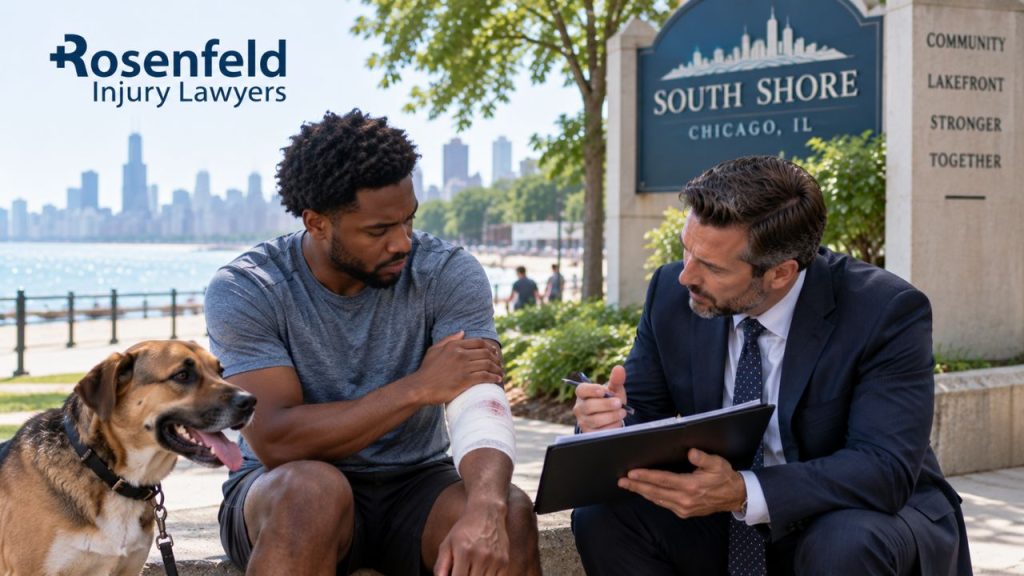
A dog bite attorney in South Shore, IL can help you understand your rights after a dog bite or animal attack in South Shore, Chicago. South Shore is South Shore (Community Area 43) within the City of Chicago. That means residents are subject to Chicago’s local animal-control ordinances, the Illinois Animal Control Act, and other Illinois Personal Injury Law requirements. If you need legal assistance, you can contact a dog bite attorney South Shore serving Chicago residents.
South Shore is located on Chicago’s South Side along Lake Michigan. Jackson Park South Shore is directly adjacent to the community area, while the lakefront, Rainbow Beach Park, residential streets, sidewalks, and public paths provide numerous places where residents may encounter dogs. The community is also home to the South Shore Cultural Center, a distinctive lakefront landmark housed in a former private country club.
Jackson Park totals 551.52 acres and includes natural areas, recreational facilities, athletic fields, a golf course, beaches, harbors, and other public spaces. The Chicago Park District’s current records identify Jackson Park as extending into the South Shore community area. Rainbow Beach Park, meanwhile, includes a beach, playgrounds, athletic facilities, gardens, and other lakefront recreational areas.
A dog does not necessarily need a prior bite history for an injured person to have a claim. Illinois law provides a specific statutory basis for owner liability when a dog or other animal, without provocation, attacks, attempts to attack, or injures a person who is peacefully conducting themselves where they may lawfully be. The Illinois Animal Control Act 510 ILCS 5/16 addresses this liability directly.
Because South Shore is part of Chicago, a dog bite attorney Chicago South Side can evaluate both the Illinois statute and the Chicago ordinances applicable to the location and circumstances of the incident.
South Shore does not have its own village code. The applicable local rules are found in Chicago municipal code chapter 7-12, the city’s Animal Care and Control chapter. The chapter contains provisions concerning animal restraint, dangerous animals, animal bites, licensing, and related requirements.
The Illinois Animal Control Act 510 ILCS 5/16 establishes civil liability when a dog or other animal, without provocation, attacks, attempts to attack, or injures a person who is peaceably conducting themselves in a place where they may lawfully be. The statute states that the owner is liable for civil damages for the full amount of the injury approximately caused by the animal.
This is the basis for what is commonly called strict liability Illinois dog bite law. In practical terms, a claimant generally does not need to prove the owner knew the dog was dangerous or that the animal had previously bitten someone. The concept is also described as strict liability dog owner responsibility because the statutory claim focuses on the animal’s conduct and the incident circumstances rather than requiring proof of a prior history of dangerous behavior.
A potential provocation defense Illinois issue can arise when the circumstances surrounding the incident are disputed. For additional information about Illinois requirements, see our firm’s Illinois dog bite laws resource.
The Chicago leash law municipal code 7-12-030 requires animal owners to keep their animals under restraint. The ordinance generally prohibits an owner from allowing an animal to cross outside the owner’s property or remain outdoors on an unfenced portion of the owner’s property unless the animal is leashed and under the control of the owner or another responsible person.
The ordinance is relevant to an unleashed dog attacks claim, but a violation of the leash or restraint provision is not the only possible basis for a civil claim. Illinois’ statutory liability rules may apply independently when the requirements of 510 ILCS 5/16 are satisfied.
The Chicago Park District leash rules may also be relevant when an incident occurs in or around a park. Document the precise facts and location rather than assuming every park incident involves the same circumstances.
Chicago Municipal Code §7-12-140 requires owners of dogs four months of age or older to obtain a city dog license, subject to the exceptions in the ordinance. When the dog is on a public way, the owner must ensure the license is visibly and securely attached to the dog’s collar, harness, or similar device, or make it available for inspection upon request by an authorized city official.
Chicago also has a formal dangerous dog investigation in the Chicago process. Under Chicago Municipal Code §7-12-050, the City may investigate a complaint or report involving an animal bite, attack, threatening behavior, or other circumstances suggesting that an animal may be dangerous
If an animal is declared dangerous, the ordinance can impose requirements concerning confinement, muzzling, restraint, warning signs, microchipping, sterilization, and liability insurance. The current ordinance requires at least $100,000 in liability insurance for each animal declared dangerous under the circumstances specified in the code.
Chicago also has specific post-bite requirements. Under Chicago Municipal Code §7-12-090, the owner of an animal that has bitten a person or another domestic animal must notify the Executive Director within 24 hours and, subject to the ordinance’s conditions, arrange for the animal to be confined for rabies observation for 10 days.
These administrative requirements do not replace a victim’s civil claim. They may, however, create records relevant to an incident investigation.
A dog bite wound can involve much more than a superficial mark. Teeth can penetrate skin, muscle, tendons, blood vessels, and nerves, while an attack can also cause a person to fall or sustain additional injuries.
Common injuries may include:
Medical documentation is particularly important when an injury requires continuing treatment. A bite may initially appear limited but later require additional wound care, infection treatment, physical therapy, surgery, or other medical services.
Our information on dog bite nerve damage discusses injuries involving nerves, while its resource on dog bite scars and disfigurement addresses scarring and permanent changes in appearance.
A dog bite infection Illinois claim may involve medical expenses extending beyond the initial emergency treatment. The type of infection, wound severity, required treatment, and long-term consequences can all affect the medical evidence associated with a claim.
Dog bites involving children may require particular attention because of the nature and location of some injuries. If a child was injured, our law firm’s resource on dog bites involving children may provide additional information.
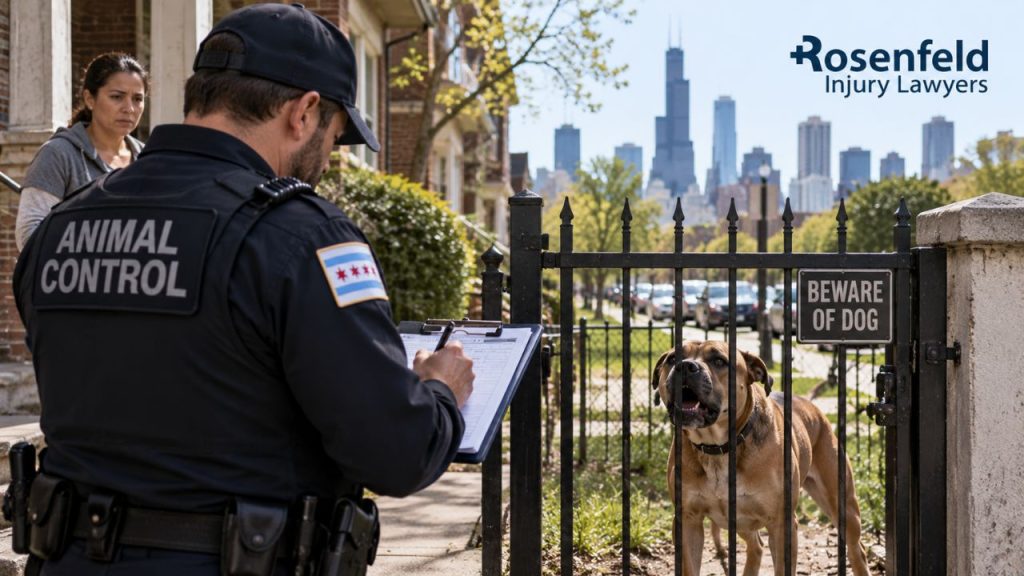
A victim may be entitled to pursue animal attack compensation for damages caused by a qualifying dog bite or animal attack. The specific categories and amount of damages depend on the facts, medical evidence, applicable law, insurance coverage, and other circumstances.
Potential damages may include:
A serious injury may require continuing medical care long after the initial emergency treatment. For example, significant nerve damage, infection, facial injury, or permanent scarring may require additional treatment or specialist care.
Illinois personal injury law does not impose a general statutory cap on compensatory damages for ordinary personal injury claims. The recoverable damages in a particular case depend on the evidence and applicable legal principles.
Insurance can also be relevant. A homeowner’s or renter’s policy may provide liability coverage for certain dog-related injuries, but coverage depends on the policy language, exclusions, circumstances of the incident, and other applicable considerations. An insurance claim dog bite should therefore be evaluated rather than assuming coverage exists or does not exist.
Our law firm’s page concerning Illinois dog bite settlements provides additional information about factors that can affect the resolution of an Illinois dog bite claim. Past results, where published, should not be treated as a guarantee or prediction of what another case will recover.
A South Shore dog bite attorney can investigate the circumstances surrounding an injury and help determine what legal claims and evidence may be available. The investigation can be particularly important when the dog owner, insurance company, or another party disputes what happened.
Depending on the circumstances, legal assistance may involve:
Records from Chicago Animal Care and Control can be relevant when the City investigated the animal, received a bite report, or conducted a dangerous-animal investigation. Chicago’s ordinance expressly permits investigations following reports of bites, attacks, or threatening behavior.
If the incident occurred in Jackson Park, South Shore, Rainbow Beach Park, or another recreational area, the precise location can be important. The Chicago Park District identifies Jackson Park as a 551.52-acre park extending into the South Shore, while Rainbow Beach Park provides a large lakefront recreational area nearby.
A South Shore dog bite lawyer can also help preserve information that might otherwise become difficult to obtain, such as witness contact information, photographs, medical documentation, animal-control records, and available surveillance.
For incidents involving public recreational areas, see our resource on dog park animal attacks. For incidents involving an off-leash animal, our firm’s page on unleashed dog attacks may also be relevant.
We handles representation through a contingency-fee arrangement. Attorney fees contingency means attorney compensation is generally tied to recovery under the terms of the representation agreement rather than requiring the client to pay an upfront attorney fee. Our firm’s attorneys offers a free consultation at South Shore and advertises no fee unless we win, subject to the terms of the representation agreement.
A person searching for an Illinois personal injury lawyer should provide the attorney with as much information as possible about the incident, treatment, dog owner, witnesses, and insurance.
The general two-year statute of limitations for personal injury actions in Illinois is set out in 735 ILCS 5/13-202. The statute generally requires an action for damages based on an injury to the person to be commenced within two years after the cause of action accrues.
This deadline can be affected by circumstances such as the victim’s age and other statutory provisions. Claims involving minors may be treated differently under Illinois law, so a person should not assume the ordinary deadline applies without reviewing the specific circumstances.
Waiting until the deadline is close can also make investigation more difficult. Medical records, photographs, witness information, animal-control records, and other evidence should be preserved as soon as reasonably possible.
South Shore is part of the City of Chicago, so both Illinois law and Chicago’s local animal-control rules can apply. Important provisions include the Illinois Animal Control Act 510 ILCS 5/16 and Chicago Municipal Code Ch. 7-12, including Chicago Municipal Code §7-12-030 concerning animal restraint.
The general two-year statute of limitations for Illinois personal injury claims is established by 735 ILCS 5/13-202. Exceptions and special rules may apply, including rules affecting minors, so the applicable deadline should be evaluated based on the facts of the individual case.
A previous bite is not generally required for a claim under 510 ILCS 5/16. The statute provides for owner liability when the statutory requirements are met, including that the animal acted without provocation and the injured person was peacefully conducting themselves in a place where they could lawfully be.
Seek prompt medical attention, document your injuries, identify the dog and owner if possible, and preserve witness and incident information. You should also report the incident to the appropriate authorities and contact Chicago Animal Care and Control regarding animal-control matters; the City’s 311 system lists 312-744-5000 as its contact number. If there is an immediate emergency or continuing danger, call 911.
Illinois and Chicago dog-control laws can still apply when a dog bite occurs in a public park. If you were injured in Jackson Park or Rainbow Beach Park, document the exact location, nearby paths or facilities, witnesses, photographs, and any other information that may help establish what happened.
A homeowners or renters insurance policy may provide liability coverage for a dog bite, but coverage depends on the specific policy, exclusions, circumstances of the incident, and applicable law. An attorney can review the available insurance information and help determine how the insurance claim dog bite should be handled.
A dog bite can result in medical expenses, lost income, physical pain, scarring, emotional trauma, and other losses. A Chicago Dog Bite Injury Lawyer can help investigate the incident, evaluate the applicable law, communicate with insurance companies, and pursue compensation when supported by the facts and evidence.
If you were injured near Jackson Park, Rainbow Beach Park, the South Shore Cultural Center, a residential street, a sidewalk, or a lakefront path dog attack location. Call 312-779-6171 today.
For Chicago-wide representation, you can also contact our Chicago dog bite lawyer team. Contact a dog bite attorney South Shore, IL today to discuss your legal options.