- Free Case Evaluation: 312-779-6171 Tap Here To Call Us




Should I Report a Dog Bite to the Police in Illinois?


Many people ask us, “Should I report a dog bite to the police in Illinois?” At Dog Bite Injury Lawyer, we always tell our clients: yes, reporting is essential, because it protects your health, your legal rights, and your community’s safety.
We know how overwhelming a dog bite incident can be. You’re not alone, and you don’t have to face it in silence. Whether the bite occurred in a public place or on private property, making an official report helps ensure the dog owner is held accountable under Illinois law and creates vital evidence for your legal claim.

Does Illinois Law Require Reporting Animal Bites?
Yes. Under 510 ILCS 5/12 of the Illinois Animal Control Act”
“It shall be the duty of any person having knowledge that any person has been bitten by an animal to immediately notify the administrator or, if no administrator exists, the county health department.”
This means that anyone who knows about the bite: the victim, a doctor, a witness, or even a family member, must report it. The requirement applies no matter where the bite happened or whether the dog is vaccinated.
Even a single unreported animal bite poses a risk to public health. Reporting ensures that animal control can investigate, the dog can be properly examined for rabies, and the victim receives the medical and legal protection they deserve.
Where to Report a Dog Attack in Illinois
If you’ve been bitten, it’s important to report the incident right away. Under Illinois law, reporting helps protect your health and ensures the dog is properly evaluated by animal control.
Here’s where to make your report:
- Local Animal Control: Contact your county or city animal control department. They handle investigations, quarantine orders, and safety evaluations.
- Local Police Department: If the bite happened in a public place, caused serious injuries, or the dog owner refuses to cooperate, contact law enforcement to file an official report.
- Emergency Room or Physician: Healthcare providers are legally required to notify animal control or the health department when treating bite wounds.
Examples:
- In Chicago, contact the Department of Animal Care and Control (CACC) at (312) 747-1406.
- In suburban Cook County, contact Cook County Animal and Rabies Control.
Prompt reporting allows officials to confirm the dog’s rabies vaccination status, investigate the attack, and help prevent future incidents.
When Police Should Be Involved
While animal control handles most dog bite claims, it’s often wise to contact the local police department as well, especially when the attack involves serious circumstances requiring urgent medical attention.
Police should be notified if:
- The bite caused serious injury or disfigurement.
- The dog was running loose in violation of leash laws under 510 ILCS 5/9.
- The dog owner acted negligently or recklessly, such as ignoring prior dangerous dog warnings.
- The owner refuses to cooperate with the authorities or provide vaccination records.
A law enforcement agency report serves as official documentation and can strengthen both civil and criminal cases. It helps establish the facts of the incident, confirm the dog owner’s responsibility, and support your legal claim under Illinois’ strict liability law.
What Happens After You Report a Dog Bite in Illinois
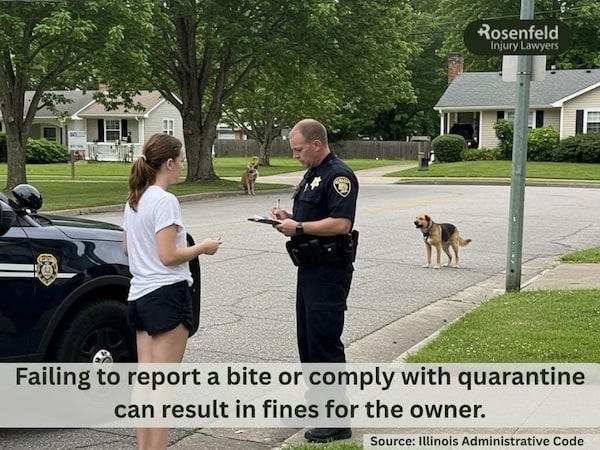
After a dog bite is reported, local animal control and health officials follow specific steps to protect everyone involved:
- Animal Control Investigation: Officers gather details about the incident, dog, and owner, verify vaccination records, and interview witnesses.
- 10-Day Quarantine: Under 510 ILCS 5/12, the dog must be confined and observed by a veterinarian for 10 days to check for rabies. The animal cannot be euthanized during this period unless it shows symptoms.
- Public Health Reporting: The results are sent to animal control and the Illinois Department of Public Health.
- Dangerous or Vicious Classification: If the dog shows aggressive behavior or has a history of attacks, it may be labeled “dangerous” or “vicious,” triggering strict owner requirements.
What Are Dangerous and Vicious Dogs Under the Illinois Animal Control Act?
Under Illinois law, dogs that show aggressive behavior may be classified as dangerous or vicious, depending on the severity of the attack and the risk they pose to public safety.
- Dangerous Dog (510 ILCS 5/2.05a): A dog that behaves aggressively without provocation or has bitten someone without causing serious injury. This designation often leads to strict leash, muzzle, and registration requirements for the owner.
- Vicious Dog (510 ILCS 5/2.19b): A dog that has seriously injured or killed a person or another animal without provocation, or one previously declared dangerous three times. Owners must follow strict control and insurance rules, and the dog may be ordered removed or euthanized if it poses a continuing threat.
These laws exist to protect public safety and prevent future attacks, while ensuring dog owners are held strictly liable for injuries caused by their pets.
What Happens to Dogs Reported for Bites
Dogs reported for bites are not automatically put down in Illinois. Most are simply quarantined and examined to rule out rabies or other diseases.
Euthanasia is only considered if:
- The dog shows clear signs of rabies or infection.
- It has been officially classified as vicious and poses an ongoing danger to public safety.
- A court or animal control authority determines the dog cannot be safely controlled by its owner.
In most dog bite claims, the goal is to protect the victim and the public, not to punish the animal unnecessarily. Reporting allows authorities to evaluate the incident, ensure proper medical observation, and enforce safety measures so similar attacks don’t occur again.
Do Victims Have a Legal Case If the Dog Has No History of Aggressive Behavior?
Yes. In Illinois, victims still have a case even if the dog has no prior history of aggression. The state does not follow the “one-bite rule.”
Under 510 ILCS 5/16, dog owners are held strictly liable when their dog bites or attacks someone who was lawfully present and not provoking the animal. That means the injured person doesn’t need to prove the owner knew the dog was dangerous, only that the attack occurred.
This strict liability law ensures fairness for victims, recognizing that any bite can cause serious injury and suffering, regardless of the dog’s past behavior.
Why Reporting Is Crucial for Your Legal Claim
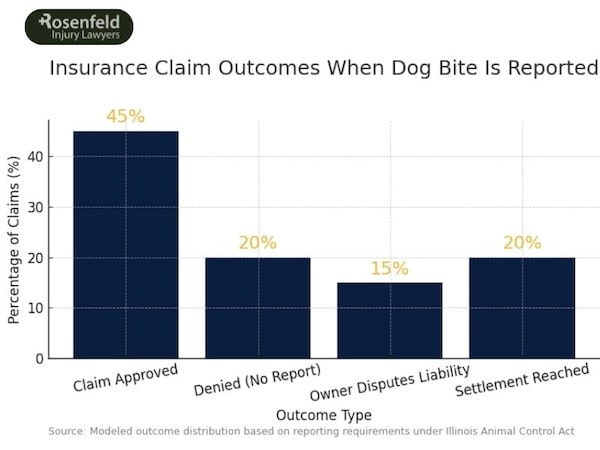
Filing a report is one of the most important steps after a dog bite. It creates a permanent record connecting the dog, the owner, and your injury: evidence that’s essential in a personal injury or insurance claim.
Without that documentation, a dog owner or their insurer may deny the incident ever happened. A report typically includes the owner’s contact information, vaccination and rabies status, witness statements, and details of your injuries.
Under Illinois’ strict liability statute, your legal case relies on showing that the attack was unprovoked and that you were lawfully present when it occurred. The report helps demonstrate those facts and strengthens your right to seek compensation for your pain, medical expenses, and lost wages.
How to Strengthen Your Dog Bite Case in Illinois
After a dog bite, taking the right steps early on can make a major difference in your legal claim. The more information collected and documentation preserved, the stronger your claim will be under Illinois law.
Here’s what we tell our clients to do:
- Seek medical attention immediately to prevent the bite wound from becoming infected and create medical records of your injuries.
- Keep copies of all medical, vet, and animal control reports.
- Photograph your wounds and any visible scarring or damage to clothing.
- Track your medical treatment, including follow-up visits, surgeries, or therapy.
- Contact an experienced Illinois dog bite lawyer if you’ve suffered scarring, nerve damage, or lasting trauma because early legal guidance can make a major difference in protecting your rights.
How Our Chicago Dog Attack Lawyers Can Help
We stand with victims throughout Illinois who have suffered a dog bite incident. Our Chicago legal team has years of experience handling complex dog bite cases under Illinois law, and we’re here to guide you every step of the way.
Here’s how we can help:
- Confirm dog ownership and prior complaints to establish responsibility.
- Build and strengthen your strict liability claim.
- Prove lack of provocation and that you were lawfully present when the bite occurred.
- Negotiate with insurance companies to recover fair compensation for your medical expenses, lost wages, and pain and suffering.
We handle every case on a contingency fee basis, meaning you pay no upfront costs and no attorney fees unless we win. Your initial consultation is free and completely confidential.
If you or someone you love was injured in a dog attack, contact our Chicago dog bite lawyers today. We believe in your case, and we’re here to help you reclaim your sense of safety and justice.
Content reviewed by Chicago dog bite lawyer Jonathan Rosenfeld of Rosenfeld Injury Lawyers LLC, who hold dog owners accountable to secure compensation for injured victims and their families, and is a trial lawyer recognized by Super Lawyers, the American Association of Justice, and Million Dollar Advocates for serious crash cases across Illinois.