- Free Case Evaluation: 312-779-6171 Tap Here To Call Us




What Dog Breed Has the Strongest Bite?


Why Bite Force Matters in Dog Attack Cases
“What dog breed has the strongest bite force?” is a common question that our personal injury lawyers see after dog bite incidents.
How Is a Dog’s Bite Force Measured?
A dog’s bite force is measured by the pressure exerted per square inch of surface area, also known as pounds per square inch (PSI). Jaw strength comes from both the mandible, or jawbone, and the jaw muscles. This is calculated using a bite force meter, which is tested on animal participants in controlled settings.
A specific dog’s actual bite force may vary significantly from laboratory conditions, meaning that dogs from other breeds may have a more powerful bite force than a dog from the breeds listed here.
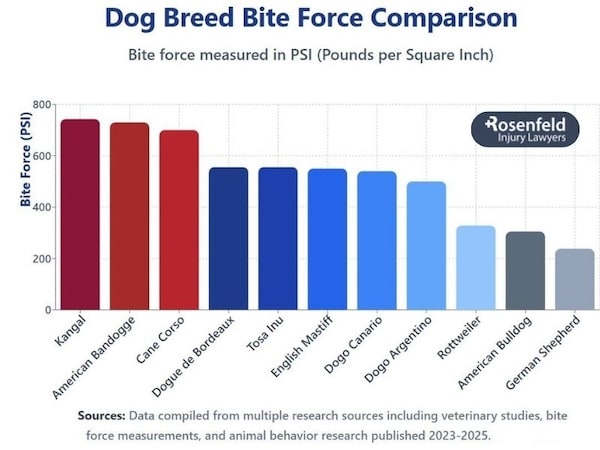
Top 10 Dog Breeds With the Strongest Bite Force
The following list is based on scientific and veterinary research into bite force by breed. However, it is important to note that a dog’s behavior, not its breed, determines whether it may bite a person.
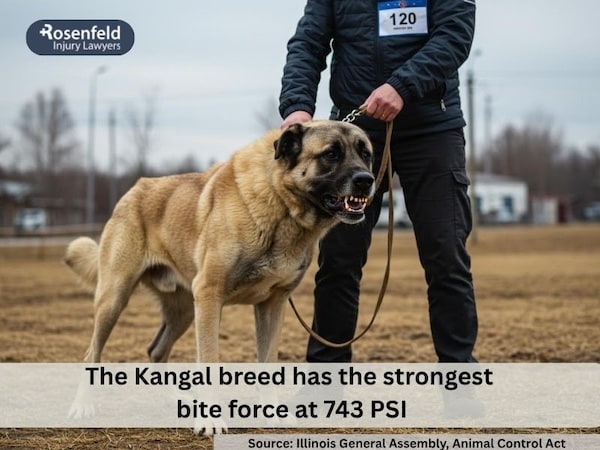
#1: Kangal (743 PSI)
The Kangal Dog is an ancient Central Asian breed that has been used to guard livestock since at least the 11th century. Kangals protect sheep from common predators, such as wolves, bears, and jackals, resulting in a powerful bite force and a protective instinct.
According to articles, the Kangal’s highest bite force is 743 PSI. This is higher than a shark’s bite force, meaning that Kangals are one of the top dogs in the animal kingdom. However, researchers note that the bite strength of the average Kangal is likely much lower, around 200 to 500 PSI.
While a common breed in Turkey, Kangals are rather uncommon in the United States and do not feature highly in bite statistics.
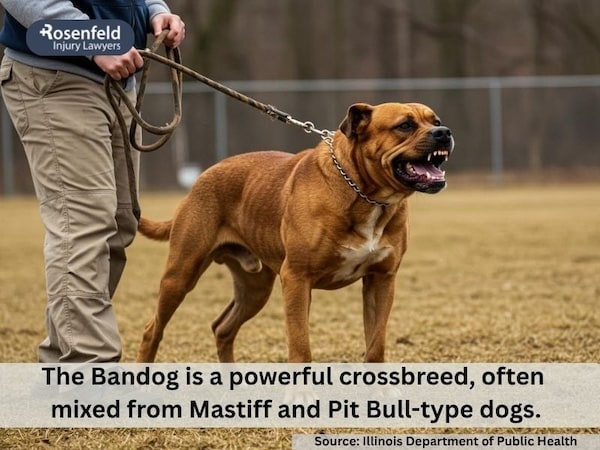
#2: Bandog (730 PSI)
Also known as the American Bandogge Mastiff, the Bandog is a mixed breed dog that is not recognized by any official registry, such as the American Kennel Club. It is believed to be a mix of English Mastiff or Neopolitan Mastiff, American Pit Bull Terrier, and American Bulldog.
The Bandog was bred to protect livestock and homesteads, but it may have also been used in fighting rings as well. It is estimated that the American Bandogge has a bite force of around 730 PSI, making it one of the breeds with the strongest bite force.
#3: Cane Corso (700 PSI)
The Cane Corso is an ancient breed whose lineage stretches back to Roman times; its name means “bodyguard dog.” This Italian breed can weigh well over 100 pounds, and it has a bite force to match.
For the Cane Corso, 700 PSI is estimated as its maximum bite force, which is even higher than that of a lion. Decades of selective breeding have instilled the Cane Corso with strong protective instincts, particularly for their family and home. They are also not friendly toward strangers and guests, meaning they may attack if they feel that their personal space has been invaded.
#4: Dogue de Bordeaux (556 PSI)
Also known as the French Mastiff, Dogue de Bordeaux is a larger dog, with males weighing in at around 110 pounds. Some claim that the Dogue de Bordeaux is descended from Roman war dogs, and they have been used in various wars to pull machinery or drag wounded soldiers back to safety.
The American Kennel Club notes that Dogue de Bordeaux has the largest head proportionally of any breed, meaning it has stronger muscles. Brachycephalic dogs, like mastiffs, also tend to have stronger bites due to their unique jaw structure.
#5: Tosa Inu (556 PSI)
This Japanese breed was originally bred for fighting rings, which is unfortunately still legal in many areas of Japan and even considered family entertainment. The Tosa Inu is the largest of all Japanese dog breeds, and as such has a stronger bite than other breeds from the islands.
While Tosa Inu can be very affectionate with their families and are considered good with children, they are highly dog aggressive. If they are not socialized around other dogs early in life, they are likely to attack without provocation. This means that people may be accidentally bitten when attempting to break up a dog fight.
#6: English Mastiff (552 PSI)
The English Mastiff is a massive dog breed that can weigh over 200 pounds, and it has the bite force to match. Typically called just the mastiff, this breed has a history that spans over 2,000 years, dating back to when the Romans discovered it after invading the British Isles.
Like other large breeds, English Mastiffs have been used as livestock guardians and in war to haul artillery. They are known for being friendly and affectionate, with a calm temperament that makes them well-suited for children. However, these gentle giants may also become aggressive when cornered or when protecting their loved ones.
#7: Perro de Presa Canario (540 PSI)
The Presa Canario is named for the Canary Islands, an autonomous region of Spain. It is believed to have been introduced to the islands by Spanish conquistadors, who used it as a versatile dog. Presa Canarios are known for their powerful jaws, which is why they have one of the strongest bite forces amongst all dogs.
According to the American Kennel Club, the Presa Canario is highly vigilant and wary of strangers. It is also not generally regarded as a good family pet, as it does not tolerate children.

#8: Wolfdog (406 PSI)
Wolf hybrids are not a recognized breed, as they result from interbreeding between domestic dogs and wolves. Rather, they are sorted into low-content, mid-content, and high-content wolfdogs, depending on the amount of wolf DNA they possess.
Most wolfdogs do not have a wolf parent, but are instead hybrids of other wolfdogs or breeds that resemble wolves, like Huskies. The lack of breed standards means that most are not temperament tested and do not come from regulated breeders.
Wolfdogs can be challenging to keep as pets, particularly those with high wolf content. They are naturally fearful of humans, independent, and need a wide space to roam. Additionally, they are highly territorial, which may increase their likelihood of attacking when they perceive their space as threatened.
#9: Rottweiler (328 PSI)
The Rottweiler is a mastiff-type dog that can weigh up to 135 pounds. Thanks to their muscular build and aloof temperament, they are often used as guard dogs for either livestock or property. With proper training, Rottweilers can be gentle and affectionate; however, poorly socialized dogs may bite strangers who approach too closely to their property.
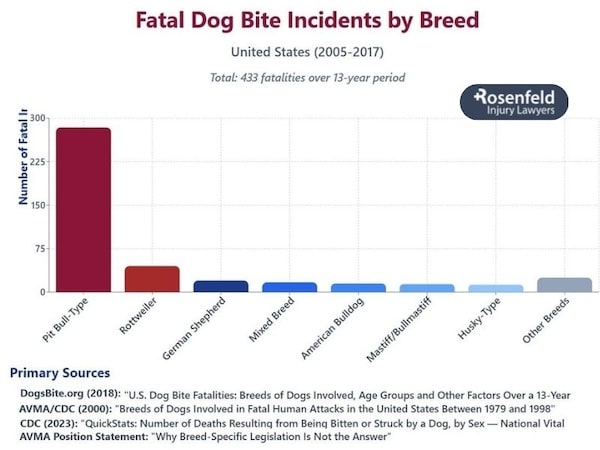
Rottweilers are frequently listed in lists of breeds most likely to bite. The American Veterinary Medical Association notes that, together, pit bulls and Rottweilers account for over half of fatal dog attacks. They are also a more common breed than the others on this list, such as Cane Corsos.
#10: American Bulldog (305 PSI)
A descendant of the more well-known English Bulldog, American Bulldogs were used in pioneering times as an all-purpose dog, guarding properties and livestock. They can weigh up to 100 pounds, making them much larger than their English counterparts. As a brachycephalic breed, they have a stronger bite force than other breeds with longer snouts.
American Bulldogs are not known for being affectionate, but they can be aggressive, as they were bred to bring down feral hogs that may have threatened a homestead. Their protective instincts make them highly territorial, meaning that a stranger who enters their space may be attacked.
Is Bite Force the Only Factor in a Dangerous Dog Attack?
While many wonder which dog has the strongest bite force, a dog’s bite strength is only one component of whether it will attack a human. Other factors include the following.
- Dog’s Size: Larger dogs are overrepresented in dog bite statistics because they have a more powerful bite force and larger teeth. Bites from small dogs are less likely to be reported because they do not result in significant injury.
- Temperament: Two dogs from the same breed may exhibit significantly different behaviors due to genetic differences and varying life experiences. A well-mannered dog is less likely to cause catastrophic damage, as they will let go instead of biting down and hanging on.
- Socialization: Properly socialized dogs should not show any aggressive behavior toward humans, making them less likely to bite. Repeatedly exposing dogs to various situations and a wide variety of people, such as at the park or dog park, will make them less likely to attack out of fear.
- Training: Dogs must be trained to prevent resource guarding, including guarding food bowls, toys, or even their favorite human. Guarding behaviors may increase the likelihood of a dog biting unprovoked, such as when a child reaches for their food bowl.
- Biting Behavior: Even a dog with minimal bite force can cause devastating injuries if it holds onto the victim or shakes, resulting in torn skin and ripped muscles.
The Difference Between High Bite Force and Frequent Dog Bites
The dog breeds with higher bite forces are not as common in the United States and may be used for specialized tasks, like guarding a herd, livestock, or property. Because of their lower prevalence, people are less likely to encounter them.
The most popular dog breeds in a given area are more likely to be represented in bite statistics, even if they do not have the strongest dog bites. For example, in some areas of Canada, Siberian Huskies are involved in the majority of bite incidents because they are more prevalent in these regions.
Additionally, most dog bite cases involve a dog known to the victim, such as the family pet or a neighbor’s dog. This, combined with the rarity of the above breeds, means that they are not highly represented in dog bite incidents.
Certain dog breeds are more often cited in bite incidents, including the following.
- Pit Bulls: The American Pit Bull Terrier is an extremely muscular dog that was originally bred as a fighting dog. While aggressive behavior toward humans is not in the breed standards, they do have protective instincts toward their families and may attack strangers. They may also bite a human who tries to intervene in a dog fight. As a note, it is a myth that pit bulls have locking jaws. While they do have strong jaws, their jaw structure is no different from that of other dog breeds.
- Mixed Breeds: Mixed breeds have become increasingly popular, such as the Goldendoodle. Because there are more of them, and because the dog’s parents may not have been temperament tested, these popular dog breeds may be more likely to bite. Owners of mixed dogs often report that they are more easily agitated, less sociable toward other dogs, and more likely to show problematic behavior. These all can contribute to a higher bite risk.
- German Shepherds: These intelligent dogs are very popular as police dogs and guard dogs. German Shepherds used by police forces are known for clamping down on an assailant and refusing to let go, resulting in more devastating injuries. Their high energy means that without proper training, they may become destructive or aggressive. The American Veterinary Medical Association notes that German Shepherds are frequently represented on lists of dogs most likely to bite.
- Chow Chows: Initially bred as guard dogs in ancient China, Chow Chows are known for their protective nature and wariness toward strangers. Many consider them the “introvert of the dog world,” unwilling to befriend even frequent visitors to a home. They are also notably aggressive toward other dogs, which is consistent with other guard breeds. Entering the dog’s space may be misconstrued as a threat, potentially leading to a dog attack.
- Jack Russell Terriers: Most bites by small dogs, like Jack Russell Terriers, are not reported because they do not result in serious injuries. However, aggressive behavior may be overlooked in smaller dogs because it is not perceived as dangerous, resulting in more frequent minor bites.
Your Legal Rights After a Dog Bite
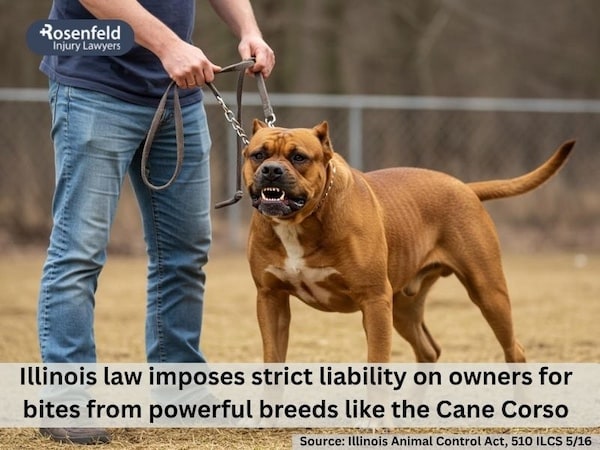
States like Illinois have strict liability for dog bites, meaning that the owner is almost always considered at fault (510 ILCS 5/). Rare exceptions include if the dog was injured or in pain, if it was protecting puppies, or if the victim intentionally caused harm to the dog or its owner.
In this case, courts turn to the “reasonable dog” standard set by Kirkham v. Will. This standard considers what a well-behaved, healthy, and properly socialized dog would do in the same circumstance.
The court case revolved around a dog bite incident in which an intoxicated neighbor entered the dog’s space and was attacked. It was determined that the victim had not provoked the dog in any way, meaning that the dog was acting unreasonably.
Even if the victim provoked the dog, the owner can be considered negligent. This means that they had a duty to protect others from potential aggression, such as muzzling their dog in public or installing a fence that is high enough to prevent the dog from escaping. Failing to do so would be considered a breach of duty, and they would be liable for damages caused by
What Compensation Can Be Recovered?
As Million Dollar Advocates, we will fight to ensure that you receive all appropriate financial compensation. Damages can include:
- Medical expenses, including emergency room visits and surgery
- Future medical treatment
- Psychological counseling
- Lost wages
- Physical pain and suffering
- Emotional distress
- Disfigurement and permanent scarring
- Loss of normal life
What Makes Us The Best Lawyers for Serious Dog Bite Cases?
Our firm is highly familiar with the catastrophic injuries that can occur from powerful dog bites, particularly for children and the elderly. We will thoroughly investigate your claim, gathering medical records, surveillance footage, witness statements, and behavioral testing to demonstrate that the dog posed an unnecessary risk to human life.
Dog bites can result in lifelong trauma and long-term medical needs. We will thoroughly evaluate your claim to calculate full damages, such as by identifying a life care plan and using a personal injury multiplier to accurately reflect your pain and suffering.
We have helped over 5,000 clients get justice over the past 25 years, earning us the prestigious Super Lawyers rating and joining America’s Top 100 High Stakes Litigators. With our caring attorneys by your side, you have the highest possible chance of gaining maximum compensation for your injuries.
Our Settlements for Dog Bite Injury Claims
- $700,000: Antony, a four-year-old, was eating a snack at a friend’s house when the family’s Husky mix attacked him, biting him multiple times on the face and hands. He experienced permanent nerve damage in his hand and permanent scarring on his face. We demonstrated that the Husky had nipped at the family’s children on multiple occasions, but the parents failed to correct the behavior.
- $375,000: Maisy was only three years old when a pit bull attacked her while she played near her home. She suffered serious facial scarring that required extensive reconstructive surgery. The owners insisted that their dog was friendly and that Maisy must have provoked it, but we used surveillance to prove otherwise.
- $195,500: Eleven-year-old Brayden was playing basketball in his backyard when the neighbor’s aggressive Boxer broke through the fence and attacked him. The dog had escaped through the fence multiple times, but the neighbors failed to fix the rotted panels or install an invisible fence.
Dog Attack Prevention Tips for All Breeds
The American Veterinary Medical Association provides helpful tips for preventing dog bites, which include the following.
- Leave dogs alone when they are eating, sleeping, or caring for puppies.
- Select the correct pet for your family. Visit a reputable breeder or animal shelter to find one with a good temperament.
- Train and socialize your dog, including teaching it basic commands. If your dog shows any aggression toward people, work with a professional trainer.
- Do not leave babies and infants alone with dogs, even the family pet. Create a safe space for the dog to relax away from children.
- Take note of a dog’s body language, such as whale eyes, taut jaw muscles, or raised hackles. Slowly back away from the animal, but do not run.
- Avoid leaning over a dog, as this may be perceived as aggressive behavior by the animal. Always ensure that the dog has a way to leave an uncomfortable situation and respect its space.
- Teach your children good animal manners, including not reaching through fences to touch unfamiliar dogs or trying to play with a dog while it is eating.
Dog Bite Force FAQs
How Does a Dog’s Bite Force Compare to a Human’s?
Humans have a bite force of around 162 PSI, which is very minor compared to a dog’s.
Do Smaller Dog Breeds Have a Strong Bite?
Larger dogs tend to have a stronger bite because they have bigger jaws and more powerful muscles. However, a bite from a small dog can still cause serious injuries and may become infected, leading to significant pain and potential nerve damage.
What Dog Breed Is Most Often Involved in Dog Bite Cases?
Pit bulls and pit mixes are disproportionately represented in dog bite cases. Their large size, uncertain breeding, and association with underground fighting rings can make them dangerous if not provided with proper training, socialization, and boundaries.
Does the Dog’s Breed Affect My Legal Claim?
No, the dog’s breed does not affect your legal claim. Some owners may attempt to use their pet’s breed as a defense, such as insisting that a Labrador Retriever is not known for aggression. In other cases, they may insist that because their dog is small, the victim’s injuries should not be compensated.
However, the law is clear about dog bites. All owners, regardless of the dog’s breed, are strictly liable for attacks.
How Is Pain and Suffering Calculated in a Dog Bite Injury Claim?
Pain and suffering can be calculated in several ways. The first is the injury multiplier method. This takes your economic damages, like medical bills, and multiplies them by a certain denominator, usually from 1.5 to 5. Very serious injuries will be assigned a higher denominator.
The other option is the per diem method. This assigns a specific dollar amount per day, such as $200, and then multiplies it by the expected duration of your recovery period. Our team will assess your case and determine which pain and suffering calculator is most appropriate for your case.
Contact Our Dog Bite Injury Lawyers Today
Regardless of a specific dog’s bite force, a bite can result in lifelong disability and permanent emotional trauma. Our highly skilled Chicago dog attack attorneys hold negligent owners accountable, ensuring that you have the necessary funds to recover.
We work on a contingency fee basis, meaning that you owe us nothing unless we earn compensation for you. Contact us today to schedule your free consultation with a skilled dog bite lawyer.
Content reviewed by Chicago dog bite lawyer Jonathan Rosenfeld of Rosenfeld Injury Lawyers LLC, who hold dog owners accountable to secure compensation for injured victims and their families, and is a trial lawyer recognized by Super Lawyers, the American Association of Justice, and Million Dollar Advocates for serious crash cases across Illinois.