- Free Case Evaluation: 312-779-6171 Tap Here To Call Us




How Doctors Test for Nerve Damage After a Dog Bite


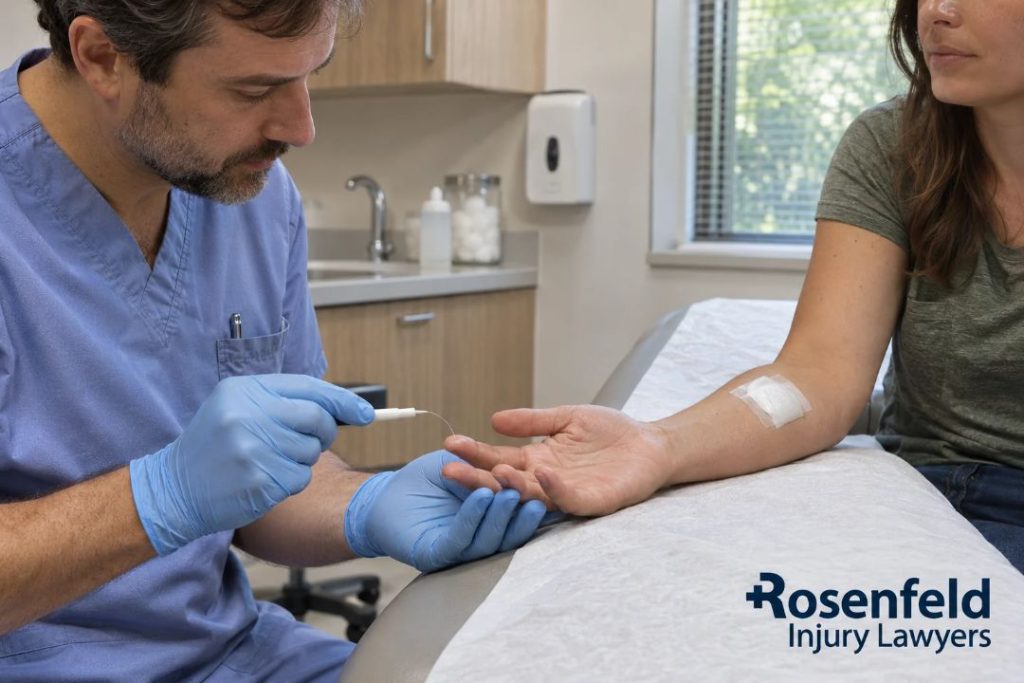
A dog bite can damage nerves beneath the skin, affecting sensation, muscle strength, and movement. If you experience numbness, tingling, weakness, or persistent pain after an attack, your doctor may recommend a nerve damage test to determine whether a nerve has been injured and how severely.
The evaluation often begins with a physical examination. Depending on your symptoms and the location of the bite, your doctor may also order a nerve conduction test (NCS), electromyography (EMG), MRI, or ultrasound. Each test examines a different aspect of nerve function, and some injuries may not become detectable immediately.
Understanding how doctors diagnose nerve injuries can help you prepare for testing, understand the results, and know why follow-up examinations may be necessary.
Signs That May Indicate Nerve Damage
Nerve injuries can affect sensation and movement, with symptoms appearing immediately or becoming more noticeable as the wound heals.
Common signs include:
- Numbness: Reduced or lost sensation around the bite.
- Tingling: Pins-and-needles or electric-like sensations.
- Weakness: Difficulty gripping or holding objects.
- Limited movement: Trouble bending or straightening fingers.
- Persistent pain: Burning pain or unusual sensitivity to touch.
Bites to the hands, fingers, face, arms, or legs may require closer evaluation because nerves in these areas can be vulnerable to injury.
If symptoms persist or affect movement, your doctor may examine the nerves, tendons, and muscles to determine the extent of the damage.
1. Physical Examination: The First Step
A physical examination helps identify changes in nerve function and guides the doctor in deciding whether specialized testing is needed.
What does the doctor check?
Your doctor may assess:
- Sensation: Whether you feel touch or pressure normally.
- Strength: Whether you can move the affected fingers, wrist, arm, or other body part.
- Range of motion: Whether the bite limits normal movement.
- Reflexes: Whether responses to certain stimuli appear normal.
- Two-point discrimination: Whether you can distinguish two nearby points of contact, particularly on your fingers.
The doctor may also inspect the wound and check for possible tendon damage or infection.
A physical exam can reveal abnormalities, but it may not show exactly where a nerve is injured or how extensive the damage is. If symptoms or findings warrant it, the next step may be electrodiagnostic testing or imaging.
2. Nerve Conduction Test (NCS)
Nerve Conduction Test (NCS)
A nerve conduction test measures how quickly electrical signals travel through nerves. It helps doctors identify whether a nerve is damaged or functioning normally.
How is the test performed?
Small electrodes are placed on the skin to deliver electrical impulses and record the nerve’s response.
The test measures:
- Signal speed: How quickly impulses travel.
- Signal strength: The strength of the nerve’s response.
- Signal transmission: Whether the nerve responds normally.
What can NCS reveal?
It can help identify nerve abnormalities and their location, particularly when a dog bite affects the hands, arms, or legs. Results are interpreted alongside your symptoms and physical examination.
Is the test uncomfortable?
You may feel brief tingling or mild electric-shock sensations during stimulation. The test is generally well tolerated and does not involve inserting needles into the nerve itself.
3. Electromyography (EMG)
An electromyography test, or EMG, records electrical activity in selected muscles. It helps doctors assess whether muscles are receiving signals from the nerves that control them.
How is an EMG performed?
A thin needle electrode is inserted into specific muscles. The clinician records electrical activity while the muscle is relaxed and while you contract it.
You may be asked to make small movements, such as bending a finger or tightening a muscle.
What can EMG help identify?
An EMG may help:
- Identify muscles affected by nerve dysfunction
- Detect abnormal electrical activity
- Evaluate weakness related to nerve injury
- Distinguish certain nerve-related problems from muscle disorders
For example, if a bite to the forearm is followed by difficulty moving certain fingers, an EMG may help assess whether the muscles are receiving disrupted signals.
Why does timing matter?
Some changes associated with nerve injury take time to develop and become detectable. Depending on the suspected injury, the doctor may recommend waiting several weeks or repeating the test.
An EMG performed too early may not provide a complete picture. EMG and NCS are often performed during the same appointment because they provide complementary information about nerve and muscle function.
4. MRI and Ultrasound
Electrical tests assess nerve function, while imaging helps doctors identify structural damage around the injured area.
MRI
MRI uses magnetic fields and radio waves to produce detailed images of internal tissues. Doctors may recommend it to check for:
- Deep tissue damage
- Nerve swelling
- Structural abnormalities
- Surrounding muscle injuries
It helps examine anatomy but does not measure nerve signal transmission.
Ultrasound
Ultrasound uses sound waves to examine superficial nerves and surrounding tissues in real time. It may help identify swelling, compression, or structural changes and assess certain structures during movement.
MRI vs. Ultrasound: Which Is Better?
MRI is generally useful for examining deeper tissues, while ultrasound is helpful for assessing superficial nerves. The choice depends on the injury’s location and what the doctor needs to evaluate.
5. Comparing Nerve Damage Tests
Each test provides different information, so doctors may use more than one method to assess an injury.
| Test | What it evaluates | Typical appointment time |
| Physical examination | Sensation, strength, movement | 10–30 minutes |
| Nerve conduction test | Nerve signal speed and response | 30–60 minutes |
| EMG | Electrical activity in muscles | 30–60 minutes |
| MRI | Soft tissues and internal structures | 30–60 minutes |
| Ultrasound | Superficial nerves and nearby tissues | 15–30 minutes |
Times are general estimates and vary by facility, the number of areas examined, and the complexity of testing.
An EMG and NCS may be combined. Imaging may be added when the doctor needs to investigate structural injury. Your symptoms, examination, and test results together provide a more complete picture than any one test alone.
6. When Should You Get Tested?
If a dog bite causes immediate numbness, weakness, or loss of movement, seek medical evaluation promptly rather than waiting for an EMG.
An early examination can document symptoms, assess movement and sensation, and identify concerns that may need urgent attention.
Why are some tests performed later?
Some nerve changes take time to become detectable through electrodiagnostic testing. Depending on the injury and clinical question, a doctor may schedule NCS or EMG several weeks after the bite or recommend repeat testing.
What if the first test is normal?
A normal result may not explain ongoing symptoms. The timing of the test, the nerve being examined, and the type of injury all matter.
If pain, tingling, weakness, or movement problems continue, your doctor may reassess, consider other structures, or choose another test.
7. How Test Results May Affect a Dog Bite Claim
Medical testing can help doctors understand an injury and may also create documentation relevant to a claim. Nerve damage is not always visible. A wound can close while a person continues to experience weakness, altered sensation, or difficulty with daily tasks.
What records may help document the injury?
Keep copies of:
- Examination notes and diagnoses
- EMG, NCS, and imaging reports
- Medical bills and receipts
- Referrals, prescriptions, and follow-up records
- Records of missed work or daily activity limitations
For example, nerve symptoms after a hand bite may interfere with gripping, typing, cooking, or job duties. Test results and clinical notes may help document these limitations and the care recommended.
Do test results determine compensation?
No single test establishes liability or guarantees a settlement. The circumstances of the attack, applicable law, medical evidence, expenses, the impact on daily life, and other facts may all be considered.
Some injuries can also involve ongoing pain or complications, such as complex regional pain syndrome (CRPS). Records documenting the bite, later symptoms, and diagnoses may be relevant when evaluating the overall injury.
Injuries to specific areas may require separate assessment, including dog bite hand injuries or facial injuries caused by dog attacks.
8. Who Pays for Nerve Damage Testing?
Costs depend on your insurance coverage, the provider, and which tests are ordered. EMG, NCS, MRI, and ultrasound may have separate charges.
What medical expenses should you keep track of?
Keep records of:
- Medical bills and payment receipts
- Test results and referrals
- Prescriptions and follow-up appointments
- Physical therapy and rehabilitation expenses
- Missed work or reduced working hours
Documented medical costs may be considered in a dog bite claim, depending on the facts and applicable law.
Reviewing information about medical expenses in dog bite cases can help explain why keeping these records matters.
Frequently Asked Questions
An EMG may provide more information several weeks after a nerve injury, sometimes around three to four weeks. Your doctor may examine you earlier or recommend a different testing schedule based on the bite, symptoms, and need to identify urgent problems.
The electrical impulses can cause brief tingling or discomfort, similar to a mild shock. Most people tolerate the test. The sensation lasts only while the nerve is stimulated, and the test does not involve inserting a needle into the nerve itself.
Symptoms may become noticeable after the initial injury or change as swelling and tissue damage evolve. If numbness, weakness, tingling, or persistent pain develops or continues, get medical advice even if the bite wound appears to be healing.
Test results can help document an injury, limitations, and the need for treatment, but they do not determine settlement value by themselves. A claim also depends on liability, expenses, the injury’s effect on daily life, and the supporting evidence.
Getting Legal Help for Nerve Damage After a Dog Bite
Nerve damage from a dog bite can have lasting effects on your mobility, sensation, ability to work, and daily life. Proper medical testing can help establish the extent of your injury and the treatment you may need.
If your injury has affected your daily activities or ability to earn a living, Chicago Dog Bite Injury Lawyers can help you understand your legal options and pursue compensation for medical expenses, lost wages, and other damages. You can explore Illinois dog bite settlements or schedule a free consultation to discuss your case. You pay no attorney fees unless the firm wins.
This article is general information, not legal advice.
 Legally Reviewed By
Attorney Jonathan Rosenfeld
Content legally reviewed by Jonathan Rosenfeld The information on this page has been legally reviewed by Attorney Jonathan Rosenfeld, founder and managing partner of Rosenfeld Injury Lawyers LLC. With extensive experience representing dog bite victims across Chicago, Mr. Rosenfeld is dedicated to helping injury victims hold negligent dog owners accountable and pursue the maximum compensation available under the law. His deep legal knowledge and commitment to client advocacy ensure that the information provided is accurate, reliable, and aligned with current legal standards.