- Free Case Evaluation: 312-779-6171 Tap Here To Call Us




Most Dangerous Dog Breeds


A Note on Breed, Behavior, and Responsibility
A well-trained and properly socialized dog of any breed can make a wonderful pet. However, statistics show that some dog breeds are responsible for a disproportionate number of serious or fatal dog attacks. An animal considered one of the most dangerous dog breeds does not automatically imply that it is an aggressive dog. Still, pet owners and the general public should exercise extra caution around these breeds to avoid dog bite fatalities.
National Dog Bite Statistics
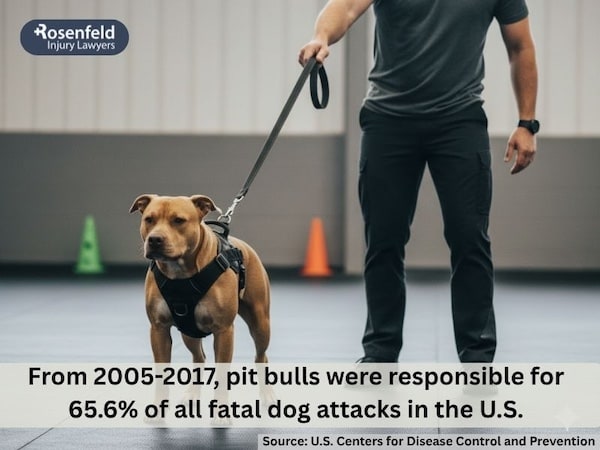
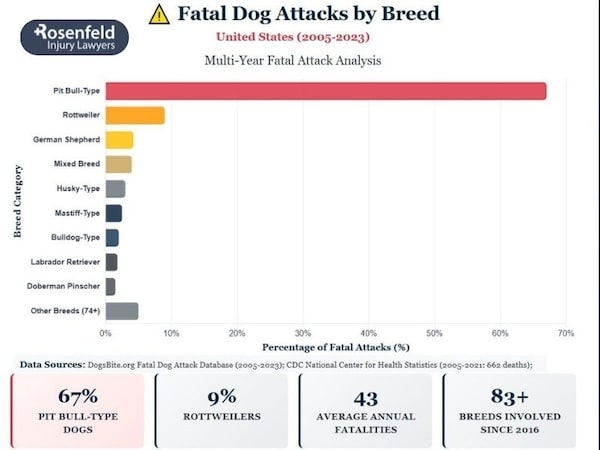
According to the American Veterinary Medical Association, there are approximately 4.7 million dog bite incidents per year, with approximately 800,000 requiring medical attention. The Centers for Disease Control notes that there is an average of 43 human fatalities per year from dog attacks.
The high number of dog bites is partly due to the fact that the United States has approximately 53 million dogs, which is the highest concentration of dogs per capita in the world.
About half of dog bite injuries occur to children under 12 years old. Individuals older than 70 are victims in approximately 10% of all dog attacks and are victims in 20% of all fatal dog bites.
However, as the AVMA notes, dog attack statistics may not show the true scope of the issue. Bites by larger dogs are more likely to be reported because they can cause serious injuries or even death.
In contrast, aggressive behavior in smaller animals is often dismissed, causing what behaviorists call “small dog syndrome.” These smaller dog breeds may be more aggressive toward human beings and other pets, but because they are smaller, they are unlikely to cause a fatal bite.
As such, it is impossible to know exactly how many bites occur per year, nor to say with total certainty which breeds are responsible for the highest number of attacks.
Which Dog Breeds Are Statistically Considered High-Risk?
According to reported statistics, certain breeds are more frequently involved in deadly attacks, particularly if they have not been properly trained from a young age. This is due to their powerful bite force, natural aggression, and, in some cases, poor training.
These statistics do not necessarily predict an individual dog’s behavior or propensity toward human aggression. In some cases, the dog bite victim may not have known the dog’s breed, such as mistaking a mixed-breed dog for a pit bull.
As a note, the Centers for Disease Control stopped collecting breed-specific data in 1998. The CDC, American Society for the Prevention of Cruelty to Animals (ASPCA), and the American Veterinary Medical Association (AVMA) have all reiterated stances against breed-specific legislation.
However, this is not to say that there are no trends in which animals are most likely to bite. Medical journals and other trusted resources can help to identify the most dangerous dog breeds in America.

American Pit Bull Terrier and Pit Bull Mixes
Pit bull is an umbrella term for several different breeds, with the most common type being the American Pit Bull Terrier. These dogs were originally bred as fighting dogs, prized for their high dog aggression.
A literature review on pediatric dog bites found that, among incidents where the breed was definitively known, pit bulls accounted for approximately 27.2% of all attacks. This is despite the fact that pit bulls and pit bull mixed breeds account for only around 5.5% of the total dog population.
A study by the Centers for Disease Control between 1979 and 1998 found that pit bull terriers and pit bull mixes were responsible for 28% of all fatal dog bite incidents. Recently, two pit bulls killed an infant who was only 7 days old.
Rottweiler
Rottweilers are often regarded as one of the best guard dogs due to their protective nature toward their household members. Labeled a “robust working breed” by the American Kennel Club, this mastiff-type dog descended from Roman herding dogs used to protect flocks.
This large breed is known for being playful, protective, and highly bonded to its owners. They also have a bite force of around 328 PSI, putting them near the top of the list for common household pets.
These factors make them one of the high-risk dog breeds. Rottweilers account for approximately 9% of all fatal dog attacks, though they trail behind pit bulls for fatal attacks. In one case from California in 2024, a family’s two Rottweilers attacked and killed a 5-year-old girl, who had lived with the dogs her entire life without incident.
German Shepherd
German Shepherds account for a significant portion of police dogs. These dogs are highly respected for their independent thinking, stamina, endurance, and strong working relationship with their handlers.
Due to their high prey drive, strong bite force, and intelligence, prospective owners must ensure that they are properly trained and receive early socialization to prevent them from attacking other dogs or people.
German Shepherds account for a percentage ranging from 4.4% to 10.5% of pediatric dog bites, depending on the local area’s demographics. In one 2023 case, a woman’s German Shepherd and pit bull terrier hunted down a 76-year-old man, resulting in the man losing both of his legs. The owner was sentenced to six years in prison.

American Bulldog
The American bulldog is larger, leaner, and stronger than British bulldogs, with a bite force of around 305 PSI.
They were originally bred to be an all-around guard and hunting dog, protecting livestock from predators and helping to catch lost cattle. However, the breed largely survived because it is capable of taking down feral hogs that may have threatened children on the farm. This represents their significant power and prey drive.
When trained properly, they make great pets and guard dogs, but they can also cause severe injuries or even death under the wrong circumstances. A 2013 study found that they accounted for 2% of pediatric dog bites. In early 2025, a bulldog owner in upstate New York was fatally mauled by her 6-year-old dog.
Doberman Pinscher
The Doberman Pinscher is a sleek, affectionate guard dog breed known for its strong bite force and protective nature. According to American Kennel Club standards, they are highly intelligent, athletic, and powerful, making them one of the world’s “finest protection dogs.”
Though socialized Dobermans can be friendly with outsiders, they are always on alert and may take extreme measures should they feel a loved one is threatened. Doberman Pinschers were responsible for nine fatal dog attacks between 1978 and 1998. In 2016, a 4-year-old girl was killed by her grandmother’s new Doberman Pinscher, which had just been introduced to the home.
Chow Chows
Chow Chows, while not as common in the United States as in other areas of the world, are highly regarded as guard dogs. This is an old breed that originated in ancient China to protect aristocrats. Breed standards emphasize that they are aloof, reserved, and may be aggressive toward strangers, making them more likely to bite an intruder or guest.
According to a 20-year analysis by the Centers for Disease Control, this breed was responsible for eight fatal dog attacks between 1978 and 1998. In 1993, an elderly woman was attacked and killed by her pet Chow Chow.
Other Breeds Often Named in Dog Bite Statistics
In 2014, the American Veterinary Medical Association released a report on dog breeds most likely to bite. Some of the other breeds noted in this report included the following.
Retriever Types: Labrador Retrievers and Golden Retrievers are common family pets. Because most attacks happen with an animal known to the person, this makes them more likely to be represented in statistics.
Collies: These working dogs, like Border Collies or Shelties, need significant mental stimulation or they may become destructive. They are also known to “herd” people, particularly children, and may nip at them as they would a sheep.
Huskies: The Siberian Husky is not just used to pull sleds; they have also been known to take down larger animals, including dogs and even bears. When not provided with enough social stimulation, they can easily become aggressive. In 2024, a 6-week-old infant was killed by the family’s husky.
Saint Bernards: While Saint Bernards are typically considered a laid-back, lovable breed, their large size means that they can easily hurt a small child or elderly person. In 2021, a Saint Bernard killed a 7-month-old infant.
Jack Russell Terrier: These small terriers are not highly represented in fatal bites, but they can still cause serious harm to a young child. They are hunting dogs that were used to bring down small game, including rabbits and mice. There have been several fatal incidents involving these terriers, particularly involving infants, whose cries may resemble a small prey animal.
It is essential to note that socialization and training, rather than breed, typically determine whether dogs are dangerous. Certain dog breeds are overrepresented in bite statistics because they are more prevalent in a specific area. For example, Siberian Huskies are most commonly represented in dog attacks in Alaska, where they are more common.

In Illinois, a Dog’s Breed Is Not a Legal Defense
Responsible ownership, including choosing a reputable breeder, providing proper training, and prioritizing proper socialization, could prevent thousands of serious dog attacks per year. Unfortunately, some negligent dog owners fail to socialize and train their animals, resulting in attacks on animals and humans.
Though the above breeds are considered the most dangerous dog breeds, the Illinois Animal Control Act does not allow dogs to be classified as dangerous simply because of their breed (510 ILCS 5/). This means several things.
Firstly, a person cannot claim a dog was dangerous simply because of its breed and demand legal action against the owner. For example, if a person were to break into someone else’s house and be bitten by a guard dog, they cannot use the dog’s breed as evidence that the dog is uniquely predisposed to violence. They also cannot excuse their own breach by the presence of a certain dog breed.
The other element is that a dog’s breed cannot be used as a defense in a bite case. For instance, if an infant were attacked by a Chihuahua, resulting in facial scarring and nerve damage, the dog’s owner could not claim that the dog’s breed means that they are not dangerous.
Illinois law imposes strict liability on dog owners, meaning they are entirely responsible for any attack (510 ILCS 5/). However, the court case Kirkham v. Will emphasizes key caveats, including the “reasonable dog” standard.
This standard requires the jury to consider how a well-behaved, properly socialized, and healthy animal would respond to a specific incident, such as an intoxicated person entering their driveway. Juries can rely on evidence from an animal behaviorist or veterinarian, who can attest to how a reasonable animal would behave when faced with a certain situation.
The case emphasizes that dogs must be judged in accordance with their own species’ standards, not by what a human would do in the same circumstance. Likewise, the law asserts that the circumstances around a bite, as well as the animal’s general condition, must be factored into whether the bite was considered justified.
What Makes Us The Best Lawyers for Dangerous Dog Bite Injuries?
Our award-winning attorneys are members of the American Association of Justice (AAJ) and the National Association of Personal Injury Attorneys, representing our dedication to the best possible legal representation.
Having secured over $450 million in settlements and successful verdicts, we have been welcomed into the Million Dollar Advocates Forum, a community of lawyers with the highest success rates.
The compassionate attorneys at Dog Bite Injury Lawyer are widely regarded as exceptional trial lawyers, securing our spot in the Illinois Trial Lawyers Association. Through our advocacy, we help bite victims and their families obtain the settlements they need to heal.
Our Settlements for Dog Bites in Illinois
$1,200,000: Tayesha, a toddler, was attacked by a Doberman Pinscher while visiting family in the Pullman neighborhood. She suffered major facial wounds that resulted in lifelong scarring. We demonstrated that the animal had previously attacked another child, but the owner had failed to disclose this to anyone or seek training.
$885,000: Jacob, a 15-year-old boy, was celebrating the Fourth of July with his family at a Crystal Lake barbecue. An unrelated dog broke through a fence and attacked him, ending with Jacob falling into the bonfire and suffering severe burns. He had to be hospitalized and receive skin grafts.
$700,000: Mary, a retired homemaker, was watering her plants when a neighbor’s pit bull terrier ran down the street and attacked her. She suffered severe bites to her hands and arms, resulting in extensive scarring and nerve damage.
How an Attorney Can Help After an Attack
Our firm will assist you in every aspect of your case, allowing you to focus on your recovery. We will begin by investigating the dog’s history and behavior in relation to the attack. This can include examining veterinary records, interviewing neighbors, and working with animal behaviorists.
We will identify the owner’s insurance policy, such as a homeowner’s insurance, and evaluate your damages to ensure that you receive the maximum compensation. Your damages can include medical bills, lost wages, disfigurement or disability, physical pain and suffering, and emotional distress. Through our aggressive negotiation, we maximize your settlement.
While many cases settle out of court, we have a winning track record in court, too. Our team will file the proper claims and share your story with a judge and jury to improve your chances of a successful verdict.
FAQs About Dangerous Dog Breeds and Illinois Law
Does Illinois Have Laws That Ban Specific Dangerous Dog Breeds?
No. The Illinois Animal Control Act expressly prohibits breed-specific legislation (510 ILCS 5/). Additionally, insurance companies are prohibited from denying or canceling coverage based on a dog’s breed (215 ILCS 5/143.10e). However, many insurance companies will deny coverage or raise premiums if a dog bites someone, regardless of the breed.
Can I File a Claim if I Was Bitten by a Friend’s Dog That’s on This List?
You can file a claim if you were bitten by a dog of any breed, including one that is not on the most dangerous dog breed list. Illinois law holds owners strictly liable for attacks regardless of the animal’s breed, sex, or other characteristics.
What Should I Do if a Dog I Believe to Be Dangerous Is Loose in My Neighborhood?
If you encounter a dog exhibiting aggressive behavior, regardless of its breed, stay away from the animal and call Animal Control. Bring any children or other pets into your home and provide a description of the animal to the dispatcher, such as its size, coat length, and color, and whether it is male or female.
Contact Our Illinois Dog Bite Injury Attorneys Today
While certain breeds are more likely to cause serious harm, any dog can be dangerous if it is not well-trained and socialized. Regardless of the dog’s breed, our firm is ready to fight for you in court. We work on a contingency fee basis, meaning you owe us nothing unless we earn you compensation. Contact the best Chicago dog bite attorney today for a free consultation about your legal options.
Content reviewed by Chicago dog bite lawyer Jonathan Rosenfeld of Rosenfeld Injury Lawyers LLC, who hold dog owners accountable to secure compensation for injured victims and their families, and is a trial lawyer recognized by Super Lawyers, the American Association of Justice, and Million Dollar Advocates for serious crash cases across Illinois.