- Free Case Evaluation: 312-779-6171 Tap Here To Call Us




Most Common Dog Bite Locations on the Body in Adults and Children


Most common dog bite locations vary by age. A 2019 analysis of U.S. emergency department data from 2005 through 2013 found that arms and hands accounted for 47.3% of dog bite injuries overall. In children, head and face injuries are more common. These patterns matter because bite location can affect treatment, long-term function, scarring, and an Illinois injury claim.
Where Do Dogs Bite Adults Most Often?
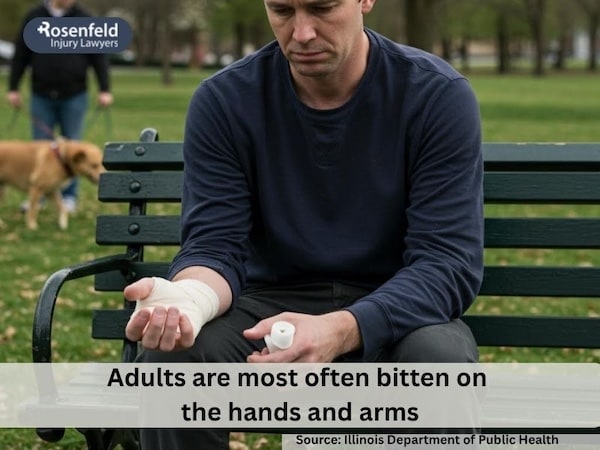
Adults are bitten most often on the hands and arms, then the head and neck, then the legs and feet. In our experience handling Illinois dog bite cases, many hand and forearm wounds occur when someone raises their arms to shield the face, or reaches to pet or feed a dog.
Why Hand Bites Are Especially Risky
In the hand, tendons, nerves, and joints sit close to the skin. Even a small puncture can reach them and lead to infection or lasting loss of function. Dog bites can also introduce bacteria such as Pasteurella and Capnocytophaga. Cleveland Clinic reports that roughly 3% to 18% of dog bites become infected.
Any bite that breaks the skin needs prompt medical care. Ask your doctor about a hand specialist if you notice numbness, trouble bending a finger, a bite over a knuckle or joint, or swelling that spreads. Some hand bites also cause lasting dog bite nerve damage.
Legs and Feet
Lower extremities are easy targets for a lunging or charging animal. Clients are often bitten while walking or jogging, or when a dog rushes a yard boundary. These incidents can cause deep punctures or crush trauma, and sometimes a fall. We photograph the wounds and track time off work and any trouble walking.
Most Common Dog Bite Locations by the Numbers
A 2019 study of U.S. emergency room data from 2005 to 2013 found that 47.3% of bites involved the arms and hands. Head and neck injuries accounted for 26.8%, while 21.5% involved the legs and feet.
| Body area | Share of U.S. dog bite injuries |
| Arms and hands (upper extremity) | 47.3% |
| Head and neck | 26.8% |
| Legs and feet (lower extremity) | 21.5% |
| Lower trunk | 2.9% |
| Upper trunk | 1.5% |
Source: Loder RT, “The demographics of dog bites in the United States,” Heliyon, 2019, using NEISS data from 2005–2013.
Other Bite Locations: Face, Neck, Buttocks and Torso
Dog attacks can involve more than one body area, particularly when a victim is knocked down or unable to move away. Face and neck bites raise real concerns about facial scars from dog bites. Bites near the eye can affect vision and require specialized care, and dog bite eye injuries often need their own medical and legal review. Torso and buttock injuries can also occur during an attack.
Why Are Children Bitten on the Face More Often?
A child’s head, face, and neck sit at the same level as a dog’s mouth, so first contact often lands on these vulnerable areas. Playing on the floor and quick movements increase exposure.
A nationwide pediatric study of 56,106 patients treated from 2015 through 2020 (J Craniofac Surg, 2022) found that the head was the most common bite location, at 62.1% of cases. The upper extremity accounted for another 25.1%.
The broader Loder study shows face bites fade with age. The average age was 15.3 years for head and neck bites, compared with 36.0 years for arm and hand bites.
These bites can affect the eyes or teeth and leave scars that may need revision as the child grows. We move quickly to photograph each injury site, obtain specialist evaluations, and document how the harm affects daily life.
Where Do Most Dog Bites Occur?
Where do most dog bites occur? At home. In the Loder study, 80.2% of emergency room dog bites happened at a home, apartment, or mobile home, while 7.1% occurred on the street. For children under 10, nearly all bites happened at home.
Research also indicates that many dog bites involve dogs known to the victim, such as a family pet or a neighbor’s dog.
How Bite Location Affects Treatment and Your Claim
Where the bite lands shapes both the treatment and the claim. Facial injuries may involve scarring or revision procedures, hand injuries may affect strength or function, and leg injuries may interfere with walking or working. These lasting effects can increase the damages in a claim, which may include:
- Medical care, surgery, and therapy
- Lost wages and diminished earning capacity
- Pain and suffering
If a dog bite left you or your child with a lasting injury, call 312-779-6171 for a free consultation with our Chicago dog bite lawyers. No Fees Unless We Win.
Holding Dog Owners Accountable for Injuries in Illinois
Illinois holds the owner responsible in most dog bite cases. Under 510 ILCS 5/16, an owner is liable when a dog, without provocation, “attacks, attempts to attack, or injures” someone acting peaceably where they have a legal right to be. Illinois defines “owner” broadly to include anyone who keeps, harbors, or cares for the dog, or knowingly lets it stay on property they occupy.
We establish ownership and control, gather witness statements, confirm vaccination status, and secure photos and medical records to advance the claim.
Illinois Dog Bite Claim Deadlines
Illinois generally allows two years to file a personal injury lawsuit (735 ILCS 5/13-202). For a child, the two years generally start at age 18 (735 ILCS 5/13-211). Exceptions can apply.
Frequently Asked Questions About Most Common Dog Bite Locations
The hands and arms. They make up nearly half of dog bites treated in U.S. emergency rooms. Adults are usually bitten while reaching toward a dog or shielding themselves. Young children are the exception: because of their height, they are bitten on the head and face far more often.
Children are more likely to experience head and facial bites because their height can place their face and head closer to a dog’s mouth. Floor-level play can also increase exposure. A 2022 nationwide pediatric study found that the head accounted for 62.1% of pediatric cases.
Yes. Hand bites can have a higher infection risk because important structures lie close to the skin. Dog bites can introduce bacteria, and roughly 3% to 18% become infected. Prompt medical evaluation is important when the skin is broken.
Yes. Most emergency room dog bites happen at a home, apartment, or mobile home, and street bites are much less common. For young children, the home is where nearly all bites occur. That is one reason many bites involve a dog the victim already knows, like a family pet.
Contact Our Illinois Dog Bite Lawyers for a Free Consultation
If you or your child suffered a dog bite, contact us today. We will review records and photos and explain how Illinois’ strict liability applies.
Call 312-779-6171. The consultation with a Chicago dog bite attorney is free and there is no obligation. No Fees Unless We Win. We will outline a strategy to hold the owner accountable, allowing you to focus on your healing.
This article is for general information and is not legal advice.
 Legally Reviewed By
Attorney Jonathan Rosenfeld
Content legally reviewed by Jonathan Rosenfeld The information on this page has been legally reviewed by Attorney Jonathan Rosenfeld, founder and managing partner of Rosenfeld Injury Lawyers LLC. With extensive experience representing dog bite victims across Chicago, Mr. Rosenfeld is dedicated to helping injury victims hold negligent dog owners accountable and pursue the maximum compensation available under the law. His deep legal knowledge and commitment to client advocacy ensure that the information provided is accurate, reliable, and aligned with current legal standards.