- Free Case Evaluation: 312-779-6171 Tap Here To Call Us




What Are the Most Aggressive Dog Breeds?


The most aggressive dog breeds often cited in bite reports include Pit Bulls, Rottweilers, and German Shepherds. At Dog Bite Injury Lawyer, we’ve represented victims seriously hurt by these and other dangerous dogs, and we stand with those recovering from painful dog bite injuries.
Our firm believes every victim deserves compassion and justice. Illinois law holds dog owners strictly liable for attacks, no matter the breed. Below, we review data from leading veterinary and public health organizations to explore how aggression varies among specific breeds and what legal protections exist for victims.

What Are the Most Dangerous Dog Breeds?
When we talk about the most dangerous dog breeds, it’s essential to clarify that “dangerous” or “aggressive” refers to a dog’s propensity to bite or attack, not an inherent lack of goodness. Any dog, regardless of breed, can become aggressive under the wrong circumstances.
According to studies from the American Veterinary Medical Association (AVMA), the Centers for Disease Control (CDC), and the American Temperament Test Society (ATTS), aggression is influenced more by factors like training, socialization, and environment than by breed alone.
However, other studies also show that certain dog breeds appear more frequently in severe or fatal dog attack reports due to their size, strength, and instinct.
Below, we discuss the breeds most often associated with aggressive behavior and severe bite injuries, according to national data and other countries, as well as behavioral research.
Pit Bull
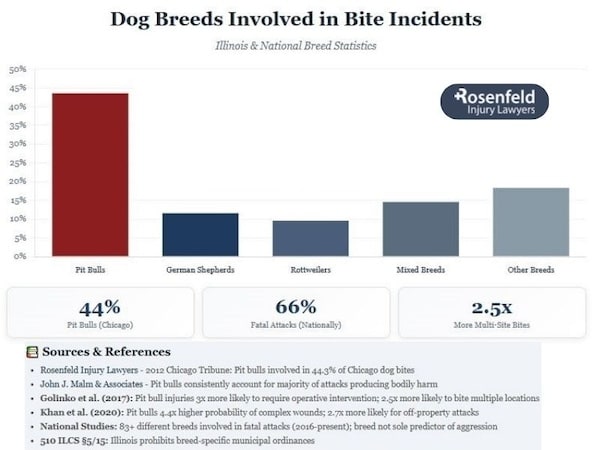
Pit Bulls consistently lead national bite and fatality data. Between 2005 and 2019, they were responsible for 346 of 523 recorded U.S. dog attack deaths, about 66% of all fatalities. In 2020 alone, they accounted for 33 of 46 fatal attacks (72%). Medical trauma studies also show that Pit Bulls cause more severe injuries, with bites four times more likely to result in complex wounds than other breeds.
Their physical traits, such as powerful jaws, high pain tolerance, and determination, make them capable of inflicting catastrophic harm once they attack. Still, many Pit Bulls are gentle pets when properly trained and socialized. The key factor is not the breed’s genetics but the owner’s responsibility to control and train the animal.
Rottweiler
Rottweilers are protective, muscular, and highly intelligent, but their size and guarding instincts make them among the most dangerous dog breeds when mishandled. National reports link Rottweilers to 51 fatal dog attacks between 2005 and 2019, or roughly 10% of U.S. fatalities.
Rottweilers are loyal companions and excellent family dogs when raised with care. However, untrained or provoked Rottweilers can become territorial, leading to severe dog bite incidents. In Illinois, a Rottweiler that attacks someone without provocation can trigger strict civil liability under strict liability rules, regardless of the owner’s intent.
German Shepherd
German Shepherds combine intelligence, loyalty, and protective instincts, which makes them popular as police and service dogs. However, those same traits can cause aggressive behavior when training and structure are lacking. Historical data link German Shepherds to 27 fatal attacks in the U.S.
German Shepherds rank among the top breeds for non-fatal dog bites due to their population size and defensive drive. In hospitals, they frequently appear in bite reports involving children and small animals. These dogs are often described as “reactive” rather than inherently aggressive, meaning they respond quickly to perceived threats or excitement.
Wolf Hybrid
Wolf Hybrids are crosses between wolves and domestic dogs, and they are unpredictable by nature. Their wild ancestry makes them prone to territorial and pack-based aggression. Historical CDC data attribute about 14 fatalities in the U.S. to wolf hybrids, a disproportionately high number considering how few are kept as pets.
These dogs retain instincts that domestic breeds lost centuries ago, such as dominance posturing and hunting drives. Even when raised by experienced breeders in captivity, they can be difficult to control and unsafe around children or smaller animals. Many states restrict or ban this breed due to its danger to humans.
Siberian Husky
Siberian Huskies and related sled dogs (like Malamutes) have caused approximately 27 U.S. fatalities, including 14 attributed to Huskies. These are strong, athletic dogs bred for endurance, not aggression, but their prey drive can lead to attacks on other animals or unattended children.
Huskies are energetic and intelligent, but can become frustrated and destructive when confined or under-stimulated. In several fatal attacks, investigators linked aggression to neglect or inadequate containment, not inherent viciousness. With proper training and exercise, Huskies are loyal companions, but a lack of structure can make them dangerous.
Chow Chow
Chow Chows are independent and protective, often forming deep bonds with one family member while remaining aloof toward strangers. Over the decades, they’ve been implicated in around 10 fatal attacks in the United States.
Their guarding instinct and territorial behavior are strong, and without consistent obedience training, they may bite when startled or challenged. Their powerful jaws and thick fur can make them difficult to control in an altercation. Chow Chows can be loving pups, but require firm, early leadership to prevent aggressive outbursts.

American Bulldog
American Bulldogs are stocky, muscular dogs originally bred for guarding farms and controlling livestock. They often appear in grouped statistics for “bulldog or molosser” breeds, which collectively account for dozens of deadly attacks.
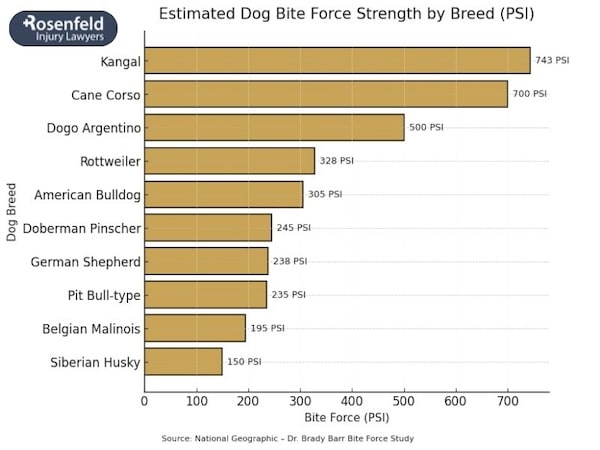
When properly accustomed to people, American Bulldogs are confident and loyal companions. But because of their strength and protective temperament, an untrained Bulldog can become dangerous if provoked or allowed to develop dominance habits. Their bite force, often exceeding 300 PSI, can cause devastating injuries.
Cane Corso
The Cane Corso, an Italian mastiff, is powerful and dignified. This breed’s bite force can exceed 700 PSI, making its attacks particularly severe. While rare, documented fatalities involving Cane Corsos demonstrate their potential for harm when neglected or improperly trained.
They are loyal to their owners and wary of strangers, traits that make them ideal guard dogs but dangerous in inexperienced hands. In Illinois, a Cane Corso that attacks without provocation can be declared a “dangerous” or “vicious dog,” triggering mandatory control and insurance requirements.
Dogo Argentino
The Dogo Argentino was bred to hunt big game, combining power, stamina, and courage. Although less common than other breeds, it has been implicated in fatal dog attacks in the U.S. and abroad. Its bite strength, estimated at 500 PSI, gives it the potential to inflict serious harm.
Dogos are affectionate with family but may become aggressive toward unfamiliar dogs or people. Their protective instincts and dominant temperament make consistent, early training essential. Without structure, their natural drive can turn aggressive.
Bullmastiff
Bullmastiffs have been involved in about eight recorded U.S. fatalities. Bred as estate guardians, they are calm and steady under confident ownership. However, an untrained Bullmastiff can become territorial and aggressive toward strangers, especially if allowed to roam freely.
Their immense power, with adult males weighing over 130 pounds, makes even a single bite capable of serious injury. Bullmastiffs require socialization and firm leadership from puppyhood to prevent dominance behavior from becoming aggression.
Akita
Akitas are loyal and fearless, but known for their dominant personalities. Surveys of ancient breeds found that 59% of Akitas show aggression toward other dogs and 13% toward humans when not properly socialized. They have also been linked to at least four fatal attacks in the U.S. data.
Akitas need early obedience training and strong leadership. Their natural suspicion of strangers, if unchecked, can escalate to aggressive tendencies in adulthood. They’re best suited for experienced owners who understand pack structure and consistent reinforcement.

Doberman Pinscher
Dobermans are iconic guard dogs: alert, protective, and intelligent. Historical data link them to around nine U.S. fatalities over two decades. Though they score well on temperament tests, they can display protective aggression when perceiving a threat to their family.
Modern Dobermans are generally less aggressive than their 20th-century counterparts, thanks to selective breeding. However, neglect, fear-based training, or poor handling can reignite that instinct. With structured leadership, Dobermans are loyal, stable, and safe family pets.
Boxer
Boxers are playful and loyal but strong-willed. They appear in some historical bite reports and have caused about five fatal attacks in the U.S. When poorly socialized, they may react defensively to rough handling or perceived danger.
Their medium-large build and high energy mean that even playful nips can cause injury, especially to children. With regular exercise and positive training, Boxers are affectionate companions, but without it, their protective instinct can shift toward aggression.
Mastiff
Mastiffs such as Fila Brasileiro and related molosser breeds have caused around five to eight fatalities over multiple decades. Their sheer mass and guarding instinct make them intimidating. Most Mastiffs are gentle when raised responsibly, but their territorial and protective nature can lead to dangerous dog classifications after an attack.
Due to their power, Illinois law may require muzzles outside their own home, secure fencing, and liability insurance if a Mastiff is declared “vicious” by local authorities. Proper obedience training is critical to ensuring these dogs remain calm protectors rather than threats.
Alaskan Malamute
Alaskan Malamutes have caused approximately 12–15 U.S. fatalities in recorded data. They are intelligent, independent, and strong-willed, which can make them difficult for inexperienced owners.
Malamutes are pack-oriented and may exhibit dominance aggression toward smaller dogs or animals. Their immense power makes even playful behavior potentially hazardous. Like Huskies, Malamutes require space, exercise, and constant engagement to prevent destructive or aggressive tendencies.
Presa Canario
Presa Canarios are territorial and confident dogs originally bred to guard livestock. While rare, they have been involved in several documented fatalities due to their power and bite force.
Inexperienced or neglectful ownership can lead to dominance problems and aggressive reactions to strangers. A properly trained Presa Canario can be a great pet and protector, but it requires consistent boundaries and daily structure.
Great Dane
Despite their nickname “gentle giants,” Great Danes have caused around seven fatalities in U.S. history. Their towering size, often exceeding 150 pounds, makes them physically capable of causing severe injury with even one bite.
Anxiety or fear-based aggression can develop in Great Danes that lack early socialization. Because they’re so large, owners must ensure strict obedience training from puppyhood to prevent accidents that can turn tragic.
Rhodesian Ridgeback
Rhodesian Ridgebacks were bred in Africa to hunt lions, giving them fearlessness and independence. Although they’ve been implicated in only a few fatalities (3–5 known cases), their prey drive and dominance mean they require firm, confident leadership.
Ridgebacks are devoted family companions when trained properly, but without structure, their hunting instincts can result in aggressive behavior toward smaller animals or unfamiliar people.
Australian Cattle Dog
Also known as Blue Heelers, these intelligent herding dogs are highly energetic and driven. While rarely fatal, they are commonly involved in non-serious bites due to their instinct to nip at moving objects, including children.
Their temperament pass rate in behavioral testing is roughly 80%, meaning most are stable when socialized early. Without guidance, though, their herding instincts can be mistaken for aggression.
Belgian Malinois
Belgian Malinois are prized for their intelligence and speed. They score 94% on temperament evaluations, among the best of working dogs. However, their energy and intensity can turn into reactivity when owners fail to provide mental and physical stimulation.
With the right training, Malinois are exceptional police and military dogs. But without control, they can become aggressive toward strangers or other animals.
Dalmatian
Dalmatians are known for their loyalty and striking appearance, but can be high-strung. They appear in bite data, representing about 1% of pediatric facial bites in hospital studies.
Dalmatians tend to react defensively when startled or anxious, particularly in noisy or chaotic environments. Consistent training and positive reinforcement can help prevent aggressive behavior rooted in fear or stress.
Labrador Retriever
Labrador Retrievers are one of the most popular breeds in the U.S. and, while generally gentle, have been linked to around five fatalities historically. Their sheer numbers mean they occasionally appear in bite statistics, but their per-dog aggression rate is extremely low.
Most Labrador-related attacks stem from overexcitement rather than true aggression. They are social, loving dogs that require proper exercise and human interaction to remain stable.
Saint Bernard
Saint Bernards have caused around four fatal attacks in the U.S., a low number considering their size. These gentle giants are friendly by nature, but can become defensive if frightened or in pain.
The size alone of these very large dogs increases the risk of serious injury during any dog bite incident. Obedience training and calm environments help keep them safe companions.
Terrier Breeds (Bull Terrier, Staffordshire Terrier)
Terriers include several breeds. They are energetic, determined, and fearless. Collectively, they’ve been linked to about six fatalities in national data. Smaller terriers often bite out of fear or overexcitement, while larger terrier types can exhibit persistent aggression if not well-socialized.
Because of their quick reactions, terriers need consistent boundaries and proper socialization to prevent defensive biting.
Mixed Breeds and Unknown Dogs
Not every dog attack involves a purebred. Studies show that 5–10% of fatalities involve mixed-breed or unverified dogs. Often, witnesses can’t identify the breed, and physical traits lead to misclassification.
In Illinois, breed misidentification doesn’t affect your right to recovery. Whether the attacking dog was a Pit Bull mix, Shepherd mix, or unregistered animal, you are still entitled to justice and compensation under Illinois’ strict liability law.
How Does Illinois Law Regulate Domestic Dogs of Certain Breeds?
Illinois law does not single out any specific dog breed as inherently dangerous, so there is no breed-specific legislation. Under 510 ILCS 5/15, animal control authorities may investigate any dog that shows aggressive or threatening conduct, regardless of type. The focus is on how a dog behaves, not whether it belongs to a particular breed.
A dog that “behaves in a manner that poses a serious threat” to a person or another animal may be declared “dangerous” or “vicious” under 510 ILCS 5/2.05a and 510 ILCS 5/2.19b. Once designated, the owner must comply with strict safety measures.
Cook County and the City of Chicago also enforce universal leash, vaccination, and registration rules under Chicago Municipal Code § 7-12. There are no breed bans, but dogs with known aggression histories face stricter supervision and control requirements.
Owners of many breeds historically labeled “high risk,” such as Pit Bulls, Rottweilers, and Cane Corsos, may face higher insurance premiums or coverage limits. While the law treats all dogs equally, regardless of breed differences, insurers often assess risk based on national injury data.
What Are Owners’ Responsibilities for Their Dogs’ Aggressive Behavior?
When a dog in Illinois is designated as dangerous or vicious, the owner must follow strict state and local requirements to protect the public. These include secure confinement, use of a muzzle or short leash in public, registration with local animal control, and maintaining proof of liability insurance. Owners may also be required to post warning signs or complete behavioral evaluations for their dogs.
Under Illinois’ strict liability law (510 ILCS 5/16), a dog’s breed does not limit a victim’s right to seek compensation. To hold an owner legally responsible, victims only need to show that:
- The dog attacked or injured them.
- They were lawfully present at the location and did not provoke the dog.
If an owner ignores safety mandates, allows repeat attacks, or fails to control a dangerous dog, animal control authorities can order forfeiture of the animal under Illinois’ Justice for Buddy Act. This law reinforces that public safety comes first and that owners of every individual dog are fully accountable for their dog’s behavior, no matter the breed.
What Damages Can Victims of Dog Bites Recover in Illinois?
Unlike certain states that impose a “one-bite” rule, victims of dog bites in Illinois have the right to pursue full financial compensation under the state’s strict liability law. Recoverable damages in a dog bite claim typically include:
- Medical treatment – Hospital bills, surgery, reconstructive care, rehabilitation, and future treatment for scarring or nerve damage.
- Lost income – Wages or self-employment income lost while recovering from the attack.
- Pain and suffering – Physical pain, chronic discomfort, and emotional trauma caused by the incident.
- Emotional distress – Anxiety, PTSD, or fear of dogs following the attack, especially common in children.
- Disfigurement or scarring – Compensation for visible scars or permanent injury, which often affects self-esteem and quality of life.
- Loss of normal life – When injuries prevent victims from enjoying activities, work, or relationships as they once did.
- Property damage – Replacement costs for torn clothing, broken glasses, or other personal property damaged during the attack.
In fatal dog attacks, surviving family members may also pursue wrongful death damages, covering funeral expenses, loss of companionship, and future financial support.
Book a Free Consultation With Our Experienced Dog Attack Attorneys
If you’ve been bitten or attacked by a dog, our Chicago dog bite attorneys are here to help. At Dog Bite Injury Lawyer, we handle every aspect of your case, from investigating the attack to pursuing full compensation for your injuries.
We offer:
- Free, confidential consultations
- No upfront costs, we only get paid if you win
- Comprehensive legal representation in civil lawsuits
We stand with dog bite victims across Illinois. Contact us today to speak with an experienced attorney and learn your legal options.
Content reviewed by Chicago dog bite lawyer Jonathan Rosenfeld of Rosenfeld Injury Lawyers LLC, who hold dog owners accountable to secure compensation for injured victims and their families, and is a trial lawyer recognized by Super Lawyers, the American Association of Justice, and Million Dollar Advocates for serious crash cases across Illinois.