- Free Case Evaluation: 312-779-6171 Tap Here To Call Us




Do Small Dogs Bite More Than Big Dogs?


Three Key Reasons Why Smaller Breeds May Be More Reactive
When you think about dangerous dog bites, you probably picture a large dog breed, such as a pit bull or rottweiler, due to common stereotypes. However, many researchers suggest that the chance of a small dog biting you is actually higher, especially if they lack proper training. Even tiny dogs can cause major injuries, so it is essential to understand the dangers that small dogs present.
Our Chicago dog bite injury law firm can support your claim, whether a German Shepherd or a miniature poodle bit you. Let’s examine the factors that contribute to why little dogs are more likely to exhibit aggressive behavior.
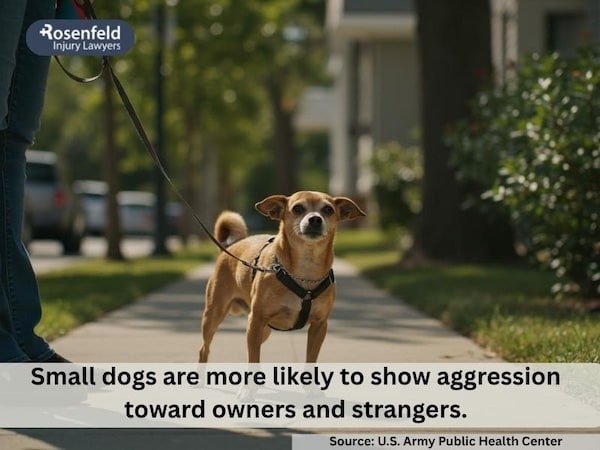
Theory 1: Fear and a Need for Self-Defense
When smaller breeds look around, they tend to see that most other dogs and humans are bigger. This could mean they find unfamiliar dogs and strangers more frightening when compared to larger breeds.
They have a higher baseline of feeling fearful, causing them to lash out against perceived threats.
Theory 2: Owner Behavior and “Small Dog Syndrome”
An owner’s actions can also contribute to aggression in smaller breeds, such as Jack Russell terriers or miniature schnauzers. When pets display undesirable behavior, owners may not take corrective actions because the behavior is perceived as cute or amusing, such as persistent barking, snapping, growling, or nipping.
This can explain how the dog may develop extreme anxiety or aggression and become less obedient.
Theory 3: Genetics and Breeding History
Over the centuries, humans have worked diligently to breed out aggressive behavior in large dogs, as the consequences of an attempted attack are so severe. As a result, friendlier breeds like golden retrievers and Labrador retrievers serve as great pets.
The same steps have not been taken with little dogs because they are perceived to be less dangerous; therefore, aggressive breeds have remained so for centuries.
Same Liability Laws for Both Small and Large Dogs
In Illinois, the size of the dog that attacks a person is irrelevant. Under the Animal Control Act (510 ILCS 5/), owners are strictly liable for any injuries caused by their dogs in unprovoked attacks. Although small dogs may not have as powerful bites, they are often more aggressive and more likely to bite someone when fearful.
There is also no “one-bite rule” in Illinois. Some states have adopted this standard, under which an owner may not be liable for the first attack if their dog has never exhibited aggressive traits.
Why Every Bite Should Be Taken Seriously, Regardless of Dog Breed
Every bite should be taken seriously by the victim. For example, even deep puncture wounds from dogs with smaller body sizes can cause infections. The small size of a Chihuahua or other similar dog can also make them potentially dangerous to children, as they can easily bite a child’s face and neck.
After an attack occurs, it is crucial to seek medical attention immediately. This will ensure your injuries are treated properly and that you establish documentation for potential legal action.
Suing the owners of both large and small dog breeds can lead to compensation for legal damages, including lost income, medical expenses, emotional distress, and loss of enjoyment of life.
Our lawyers have secured numerous settlements for dog bite victims in the past, including:
- $1,200,000 – Two-year-old Ethan was mauled by a relative’s Doberman, leaving severe facial scarring that required future care.
- $195,500 – Eleven-year-old Caleb was bitten by a neighbor’s dog that escaped its yard, leaving lasting leg wounds.
Contact Our Illinois Dog Bite Lawyers for a Free Consultation
While big dogs may pose a greater risk in an attack, it is often the tiny canines that are more likely to become aggressive. Whether they are more fearful around strangers or the owners have failed in their training, Chihuahuas and other small dogs are perfectly capable of causing serious injuries.
Other factors, such as training, age, socialization, toy possessiveness, and owner aggression, can also contribute to a dog being afraid and attacking a family member or friend during play. Our experienced law firm is ready to guide you through the claims process. We have worked with many vulnerable victims who have suffered dangerous encounters with both smaller and larger breeds.
Our legal services include:
- Investigating the case
- Assessing all damages to your health
- Navigating the two-year statute of limitations in Illinois(735 ILCS 5/13-202)
- Taking past aggressive traits into account for the settlement
- Gathering evidence
- Negotiating with insurance companies
- Litigating in civil court
If dachshunds or other small canines have injured you, contact us today to schedule a free consultation.
Content reviewed by Chicago dog bite lawyer Jonathan Rosenfeld of Rosenfeld Injury Lawyers LLC, who hold dog owners accountable to secure compensation for injured victims and their families, and is a trial lawyer recognized by Super Lawyers, the American Association of Justice, and Million Dollar Advocates for serious crash cases across Illinois.