- Free Case Evaluation: 312-779-6171 Tap Here To Call Us




How to Report a Dog Bite to Animal Control in Chicago


Knowing how to report a dog bite to animal control is crucial for protecting public safety and preserving your legal rights after an attack. In Chicago, all dog bites must be reported to Chicago Animal Care and Control (CACC) or the Cook County Department of Animal and Rabies Control, depending on where the bite occurred.
Reporting ensures that the dog’s rabies vaccination status is verified, the animal is properly quarantined or observed, and that victims can prove the incident for any potential legal claim.
Does Illinois Law Require Reporting Dog Attacks?
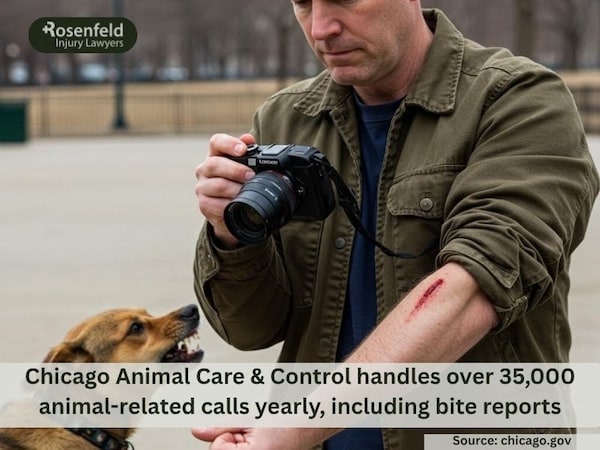
Yes. Under the Illinois Animal Control Act (510 ILCS 5/) all animal bites involving humans must be reported to the appropriate local animal control authority. This law applies to every dog attack that results in a bite, scratch, or other physical injury, no matter how minor it may seem.
The law places a clear duty on both the dog owner and the person bitten (or anyone with knowledge of the incident) to report the bite to law enforcement or animal control within 24 hours. The purpose is to protect public safety and allow authorities to determine whether the dog should be classified as a dangerous dog or vicious dog under state and Cook County regulations.
Once reported, officials from the Cook County Department of Animal and Rabies Control or Chicago Animal Care and Control begin an investigation to verify the dog’s rabies vaccination, assess any aggressive behavior, and ensure the animal is observed or quarantined as required by state law.
These reports also serve as key documentation in personal injury or dog bite cases, helping victims later establish how and when the attack occurred.
How to Report a Dog Bite to Animal Care and Control in Chicago
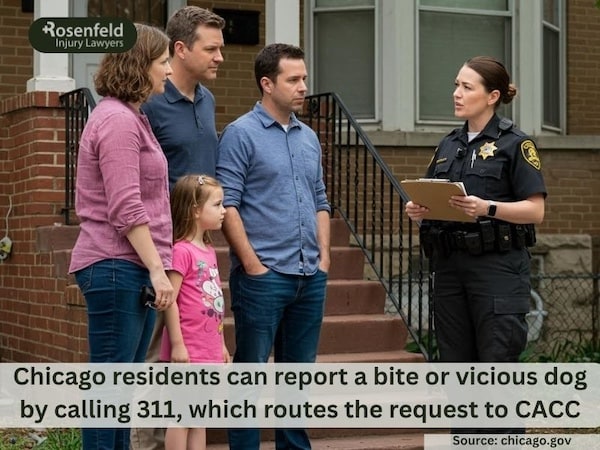
If a dog bite takes place within the City of Chicago, the incident must be reported directly to Chicago Animal Care and Control (CACC). This department is responsible for the enforcement of the Animal Control Act within city limits.
You can file a bite report in one of several ways:
- Call 311 or visit 311.chicago.gov to submit a report under “Animals.”
- Provide details including where the bite occurred, the dog owner’s name and address (if known), the location of the attack, and a description of the dog or companion animal involved.
- If the situation involves an ongoing threat or aggressive behavior, contact your local police department or the Cook County Sheriff’s Office in addition to CACC.
When making the report, include as much information collected as possible, such as the dog’s rabies vaccination, photos of injuries caused, and any medical records or bills documenting immediate medical attention. This documentation helps the investigation and supports any potential legal claim you may file later with a personal injury attorney.
After you report the bite, animal control officers may contact you to confirm the details of the incident, inspect the location, and verify that the dog owner complies with rabies vaccination and quarantine requirements. The goal is to protect the community, prevent further harm, and ensure the victim receives proper medical care.
How to Report a Dangerous or Vicious Dog
Chicago residents can report a dangerous or vicious dog directly through the city’s 311 system. A dangerous dog is one that bites or behaves in a way a reasonable person would see as posing a serious risk of physical injury without justification. A vicious dog is one that causes serious injury or death, or has been declared dangerous on multiple occasions, as defined under the Illinois Animal Control Act.
To report, visit the city’s Vicious Animal Complaint portal or call 311. If the attack happened recently or the dog is still displaying aggression, contact the police right away. Provide key details such as where the incident took place, what injuries were caused, the dog owner’s information (if known), and any signs of dangerous behavior.
After a complaint is filed, Chicago Animal Care and Control investigates to determine whether the dog should be classified as potentially dangerous, dangerous, or vicious. The owner may be required to confine the animal securely, use a muzzle and leash in public, post warning signs, and maintain liability insurance. In severe cases involving serious physical injury, the circuit court may authorize euthanasia to protect the public.
What Happens After an Animal Bite Is Reported in Illinois
Once a dog bite or other animal attack is reported, local animal control and public health authorities begin an official investigation to confirm the facts of the incident and prevent further harm. This process is handled by animal care officers, depending on where the bite happened.
Rabies Vaccination Confirmation and Observation
Under Illinois law, every dog owner must confirm the dog’s rabies vaccination status after a bite report is filed. If the dog is unvaccinated or the rabies vaccination has expired, the animal will be quarantined for 10 days at home, at an animal control shelter, or at a veterinary facility approved by Cook County.
During this time, officers observe the dog for any signs of rabies or aggression. If the dog remains healthy after observation, it may be released, provided the owner renews the rabies vaccination as required by law.
Public Health and Safety Review
The purpose of the animal control investigation is to protect public safety and ensure compliance with the Animal Control Act. Officers gather information from witnesses, the victim, and the dog owner, including details about how the attack happened, any injuries caused, and whether the dog had shown prior aggression.
If the investigation finds that the animal poses a continuing threat, it may be classified as a potentially dangerous dog or vicious dog, requiring special confinement or restrictions under Cook County regulations.
Medical Verification and Documentation
Victims should seek immediate medical attention following any dog attack, even if the bite seems minor. Medical records and bills serve as crucial evidence if an attorney later helps you file a potential civil claim.
Animal control officers may request copies of these documents to verify that the victim received proper medical care and that the injuries align with the reported incident. Maintaining thorough documentation helps demonstrate the seriousness of the injury and can strengthen your future case.
Legal Follow-Up and Owner Responsibility
After a bite report, the dog owner may receive official notice outlining quarantine instructions, vaccination requirements, and possible penalties for noncompliance. If the animal is declared dangerous or vicious, the owner must follow all legal safety measures, such as posting warning signs, carrying liability insurance, and ensuring the pet does not leave the property without control.
Failure to comply can result in fines, court orders, or circuit court proceedings. In severe cases involving serious physical injury, the dog may be impounded until a judge determines the appropriate outcome under state law.
When Should a Dog Bite Be Reported to Local Law Enforcement?
A dog bite should generally be reported to local law enforcement when the attack causes serious physical injury, involves a vicious dog, or poses an immediate danger to others. In Chicago, victims can contact the local police department or the Cook County Sheriff’s Office, especially if the dog owner refuses to cooperate with animal control or the dog continues to display aggression.
Police help document the incident, secure the dog, and coordinate with animal control under the law. A police report also supports future personal injury cases, proving that the attack occurred and helping victims recover medical bills, lost wages, and other damages.
If the injury required medical treatment or the dog has attacked before, a reasonable person should report it immediately to both animal control and law enforcement to protect others from further harm.
Consult a Local Personal Injury Attorney for Your Dog Bite Case
If you were bitten or attacked by a dog, a Chicago dog bite lawyer from our team can help you understand your legal options and pursue fair compensation for your medical bills, lost wages, and pain and suffering.
We guide victims through every step of the legal process, working to hold negligent dog owners accountable under Illinois law. We offer a free consultation and handle all cases on a contingency fee basis, meaning you pay nothing unless we win your case.
Contact us today to protect your legal rights and start your recovery with experienced attorneys who care.
Content reviewed by Chicago dog bite lawyer Jonathan Rosenfeld of Rosenfeld Injury Lawyers LLC, who hold dog owners accountable to secure compensation for injured victims and their families, and is a trial lawyer recognized by Super Lawyers, the American Association of Justice, and Million Dollar Advocates for serious crash cases across Illinois.