- Free Case Evaluation: 312-779-6171 Tap Here To Call Us




How to Protect Children From Dogs


Safety Rules for Interacting With Your Family Dog
While many parents may worry about animal attacks in areas with many stray dogs, knowing how to protect children from dogs that are family pets may not seem as crucial. However, the canine rules of etiquette apply regardless of how long one has known the animal.

Create a “Safe Zone”
Creating a safe zone for the family pet is one of the most important steps parents take to protect their kids from attacks. This could be a crate, bed, or closed-off area of the home. Warn the children that this is the dog’s space and should never be entered without permission.
Never allow a child under six to be alone with your dog, as this is the age group most likely to suffer severe dog bites.
Respect Mealtime and Rest
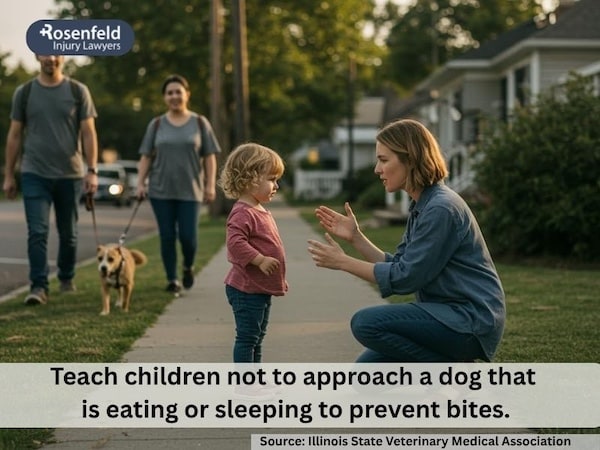
Teach children basic respect for the dog’s personal space when they are eating or sleeping. At these times, the dog should be left alone to eat or nap in peace. Never allow a child to take food from a dog, shout them awake, or grab them when they are sleeping. Even a mild-mannered dog may reflexively snap when startled.
Gentle Touches Only
Though your child may be interested in dogs, pets are not toys and should not be handled roughly. For children under six, consider purchasing them a plush dog that looks similar to your pet, modeling the behavior that you would like them to show around the animal.
Teach your children basic etiquette around dogs, including avoiding petting the dog’s face. Use the three-second rule: allow the child to gently stroke the dog for three seconds, then pause to reassess how the animal’s behavior. If the dog nudges the child’s hand or shows interest in more attention, then the child can pet the dog for three more seconds.
How to Protect Your Kids From Strange Dogs in Public
Teach children that dogs in public areas are not always interested in attention. They may be nervous, learning socialization, or simply less social than others.
While some parents may think a local dog park is a good place to socialize their child around new dogs, this isn’t always a good idea. Your family pet may be protective about kids and resource guard your children, while other dogs may never have encountered a child and don’t know how to behave. Additionally, dogs playing are in a heightened emotional state and may accidentally hurt your child.
Instead, find teaching moments about safe interactions with strange dogs in your local community: both about how to respect a dog’s space and how to demonstrate non-threatening behavior for a safe, mutually enjoyable experience.
Always Ask First
Not all dogs are especially social with humans they don’t know. Only approach an animal that is leashed and in control of its owner. If the dog is alone, the assumption should be that they are dangerous. This is equally true if the dog is not leashed, but tied up, such as in someone’s yard.
Approach slowly and ask the owner if their dog is amenable to pets from strangers before letting your child near. If the dog is leashed, make sure to keep your child out of range until you have permission.
Let the Dog Approach
Just because the dog’s owner says, “My dog is friendly,” does not necessarily mean that the dog wants to be petted. With a rudimentary understanding, canine behavior is straightforward. If the dog seems tense or disinterested, thank the owner for the offer and back away. Only initiate contact if the dog itself moves closer.
As with a family pet, instruct your child to follow the three-second rule: pet for three seconds, wait three seconds, and then pet again.
Be a Tree
The Doggone Safe program is a seminar about dogs, kids, and scenarios that may become dangerous. One of its most crucial lessons is “Be a Tree – Don’t Flee.” This means that if the dog gets overexcited, staying still and waiting for them to calm down before petting can help to de-escalate the situation and avoid a dog bite.
Never Run
Unfortunately, parents in areas with many dogs must also teach children about safety on the way to school and what strategies have worked best to deter dog attacks. If the dog is tied out, the child should stay out of its reach.
If the child has to pass by a dog that is unleashed and unaccompanied by its owner, approach slowly and do not show fear. Don’t flee, as the animal may decide to pursue. Avoid making eye contact and walk away slowly but confidently. Do not attempt to engage an unaccompanied stray or unleashed pet.
A Special Note About Service Dogs
Service dogs are not pets. They are performing their task for their owner, whether that is alerting to blood sugar drops or guiding a blind individual through a store. Distracting them could put the handler in danger.
Teach children never to touch, approach, or call out to a service animal, as it will distract them from their job. Explain that the dog is working and needs to focus.
What to Do Immediately After a Dog Bites a Child
After the dog bites your child, the animal should be left alone entirely, although a call to Animal Control should be made as soon as possible.
Get the child away from the dog and visit the emergency room for treatment, especially if the child is under the age of six. Your child may need shots, stitches, or antibiotics. Be sure to keep records of any treatments.
Next, call animal services to report the bite. This makes an official report of the dog bite for legal purposes, such as a lawsuit.
When Another Owner’s Negligence Causes Your Child’s Injury
While parents are responsible for teaching their children about animal safety, dog owners are strictly liable for any injuries their dog may cause in Illinois (510 ILCS 5/). For example, they must have proof of vaccination, keep their animal under control at all times, and leash their dogs when in public.
If their dog bites another person, this can lead to impoundment and an investigation. A licensed veterinarian will examine the dog for any illnesses that may have caused them to bite and require proof of vaccination. If the owner cannot produce rabies records, the animal can legally be held in quarantine for several days to monitor its behavior.
Not only can negligent owners face criminal charges or have their dog put down, but they may also be open to civil lawsuits by the victim’s family. Damages offered in a lawsuit could include medical bills, loss of income, disfigurement, pain and suffering, and emotional distress.
Explore Your Rights Under the Illinois Animal Control Act
If a dog attacked your child, you have legal options. Our compassionate, award-winning dog bite attorneys in Chicago are members of the Million Dollar Advocates Forum, having secured over $450 million in successful verdicts and settlements for 5,000 clients nationwide.
Our team will handle the investigation and negotiation so that you can focus on your child’s emotional and physical recovery. We will review the animal’s veterinary records, order behavioral tests, and negotiate with the owner to receive a fair settlement.
While many cases settle out of court, our attorneys are members of the Illinois Trial Lawyers Association, ready to litigate in your jurisdiction.
We work on a contingency fee basis, meaning you owe us nothing unless we win. Contact us today to schedule a free consultation with a compassionate personal injury attorney.
Content reviewed by Chicago dog bite lawyer Jonathan Rosenfeld of Rosenfeld Injury Lawyers LLC, who hold dog owners accountable to secure compensation for injured victims and their families, and is a trial lawyer recognized by Super Lawyers, the American Association of Justice, and Million Dollar Advocates for serious crash cases across Illinois.