- Free Case Evaluation: 312-779-6171 Tap Here To Call Us




How to Know if It’s Safe for Your Dog to Greet Another Dog


A Guide to Safe Dog-to-Dog Greetings and Owner Liability
Many Illinois dog owners want their pets to socialize with other dogs, but even a friendly meet-up can turn into a dog fight. Knowing when it’s safe to let your dog approach another dog can prevent injuries to both pets and humans.
This guide shows you how to read dog body language, manage leashes, and properly introduce dogs to reduce risk when facing an oncoming or strange dog. It also explains Illinois owner liability, including strict liability if a person is bitten while intervening in a fight.
Whether you’re walking a single dog past many dogs, visiting a park, or bringing a new puppy to your house, the right approach and training helps you stay calm and keep your dog, yourself, and other dog owners safe.
The Dangers of On-Leash Greetings
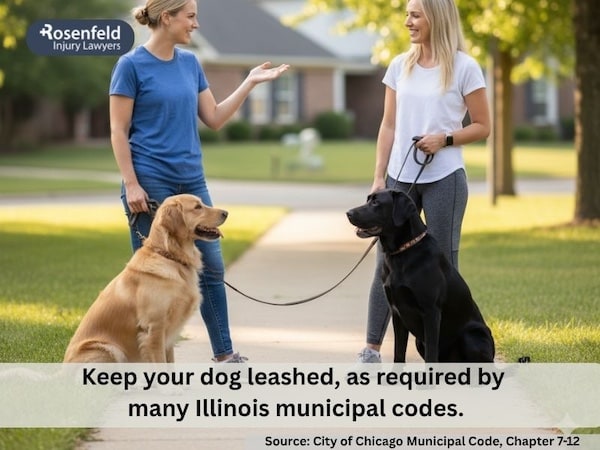
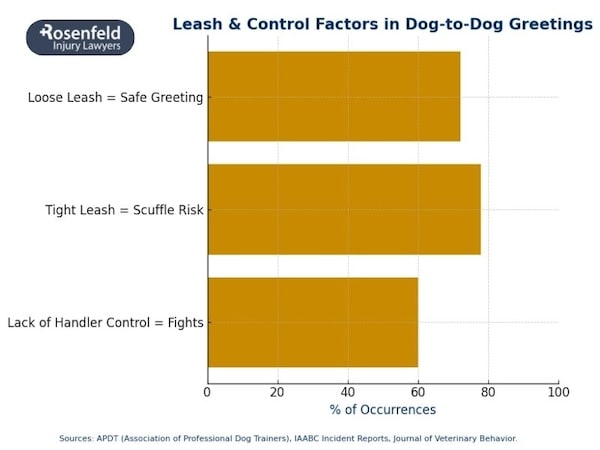
Canine behavior experts warn that tight leashes often spark conflict. A leash restricts natural movement, prevents dogs from circling or sniffing, and blocks calming signals like turning away or slowing down. When both dogs feel trapped, tension rises, making fights more likely.
Because on-leash greetings limit normal canine communication, especially with unfamiliar dogs, they’re high-risk for redirected aggression or even bites to people trying to intervene. Keeping leashes loose, calmly walking past an oncoming dog, or introducing dogs properly in open spaces is far safer for pets and owners alike.
Reading the Body Language of Both Dogs Interacting Is Key
Body language is one of the best tools dog owners have to predict whether a greeting will go smoothly or end in conflict. Before letting dogs engage in social interactions, look at both your dog and the other dog. Certified dog trainers recommend scanning for relaxed, friendly signals and also for warning signs of stress or aggression.
Positive, Low-Risk Signals (Green Light)
- Loose posture: soft muscles, wiggly movements, relaxed tail
- Soft eyes and blinking rather than a hard stare
- Approaching in an arc instead of a direct approach
- Sniffing the ground or other dog’s butts calmly
- Play bows, gentle wagging, or “dog lays” posture showing calmness
- Pausing or turning the head away to reduce tension
- Allowing space for the other dog to move or sniff
- Slow, relaxed sniff of the new dog
Warning or High-Risk Signals (Red Light)
- Stiff body posture or tightening the leash
- Hard stare or “whale eye” (showing whites of the eyes)
- Ears pinned back, lip lifting, or growling
- Direct, fast approach or dog runs straight at another dog
- Barking, raised hackles, or freezing in place
- Refusing to turn away or blocking space
- Lunging, snapping, or trying to mount the other dog
- Showing teeth or intense focus on a dog or puppy
If you see mostly “green light” behaviors, you may proceed cautiously or properly introduce dogs in a controlled setting. If you see “red light” signs, remain calm, keep your dog close, and avoid letting dogs greet to prevent a dangerous interaction.
How to Introduce Dogs Properly and Safely
- Pick a neutral, roomy spot. In a Chicago neighborhood or park, avoid tight sidewalks, crowded entrances, and the dog park gate. Give plenty of space from other dogs and unfamiliar dogs.
- Do a quick gear & manners check. Use a standard 4–6 ft leash (no retractables). Keep leashes loosened, not tense. One dog per handler. Have high-value treats ready. If either dog has a bite history, consult a professional dog trainer first.
- Scan dog body posture. Green lights: loose body language, soft eyes, curved/arc approach, calm sniff. Red lights: stiff posture, hard stare, barking, lunging, freezing. If you see red, do not let your dog come near.
- Start with a parallel walk. Begin 20–30 feet apart, walking in the same direction. Reward the dog. Gradually narrow the distance if both dogs stay relaxed around the other dog.
- Approach in an arc, not head-on. Straight approaching feels rude to most dogs. Curve in. Keep sessions short. Avoid crowding a single dog.
- The “3-second” sniff, then break. Let the dogs briefly sniff (often the other’s butts), then cheerfully call them apart for a reset and treat. Repeat short greet-and-go cycles.
- Manage leashes like seatbelts, not anchors. Keep leashes loose so dogs can move, turn away, or disengage. A tightened leash raises tension and can trigger conflict during leash greetings.
- Level up only if both dogs are easygoing. If all signals remain friendly, you can lengthen greeting time or move to a larger area. Off leash is only appropriate in a secure space with owner consent and reliable recall.
- End on a win. Keep first dog meetings brief. If arousal spikes or one dog runs in too hot, calmly separate, take a walk, and try again another day.
- If tension appears, bail early. Interrupt with a happy voice, treat toss, or gentle U-turn. Don’t grab collars or reach between dogs. When in doubt, properly introduce another day, or skip the greet entirely.
Why You Shouldn’t Let Your Dog Greet Every Dog You See
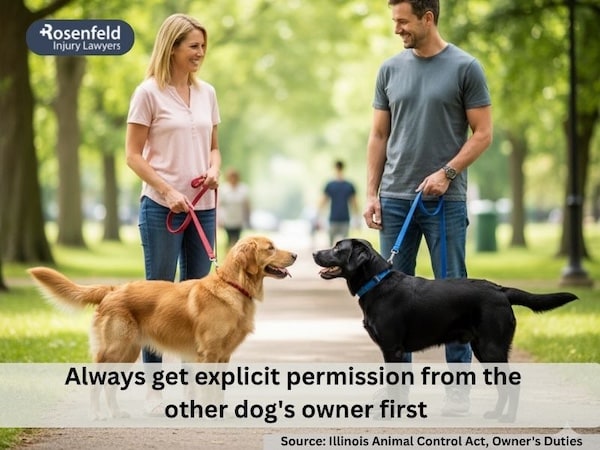
Many dog owners assume meeting every approaching dog should end in a sniff or a “say hi.” Teaching your dog to calmly walk past another dog without reacting is safer and more valuable than letting them greet every dog they see. Not all strange dogs are friends, and most dogs handle stress better when they don’t feel pressured to interact.
By practicing loose-leash walking and focus on you, your dog learns good manners, reduces frustration, and avoids the risk of sudden barking, lunging, or a fight.
Special Considerations for the Dog Park
Dog parks can be wonderful social spaces for meeting new friends, but they’re also high-energy environments full of unfamiliar dogs.
Many dog owners don’t realize the entrance gate is one of the riskiest places for conflict because it’s cramped, loud, and filled with overexcited dogs rushing to greet a new dog. Instead of entering immediately, stand back and observe the energy levels and how other dogs interact.
When you do enter, let your dog off-leash quickly in the double-gated area to avoid tight-leash tension. Introduce dogs gradually in an open space rather than at the gate. If your dog seems overwhelmed, keep your dog near you, or leave and try again at a quieter time.
By reading dog behavior and choosing the right moment to let your dog approach, you protect your dog, yourself, and other dog owners from preventable incidents.
The Legal Consequences When Letting Dogs Greet Each Other Goes Wrong in Illinois
A quick dog sniff can turn into a fight in seconds. Under Illinois law, the owner of the aggressor dog may be liable for veterinary bills and for any injuries to a person bitten while trying to intervene.
Because many owners instinctively separate fighting dogs, redirected bites to people are common. Illinois treats these incidents seriously, holding owners responsible for medical costs, lost wages, and pain and suffering.
Reading body stance, using leashes wisely, and knowing when to skip a greeting help protect your dog and you from legal and financial trouble. It’s important to start training your best friend early, as it can be difficult to change the learned behaviors of adult dogs.
Understanding Strict Liability in a Dog-to-Dog Incident
Illinois applies strict liability to dog bites under the Illinois Animal Control Act (510 ILCS 5/). This means that if a person is bitten while trying to break up a dog fight, even if the bite was redirected aggression rather than an intentional attack, the owner of the dog that caused the injury is legally responsible for the human’s damages.
Unlike negligence laws, strict liability does not require the victim to prove the dog had a history of aggression or that the owner acted carelessly. As long as the person was lawfully present and did not provoke the dog, the owner is on the hook for medical expenses, lost income, and pain and suffering.
How We Help When an Introduction to a New Dog Leads to Injury
When a dog encounter goes wrong, sorting out who is legally responsible can be complicated. Our law firm has extensive experience investigating these incidents, from leash greetings on street walks to chaotic moments at a park. We look closely at canine behavior and owner actions to determine which party failed to act responsibly.
This can include situations where an owner ignored their dog’s warning signs, allowed a strange dog to approach off leash, or forced an on-leash interaction with an unknown dog despite obvious tension. By gathering witness statements, veterinary and medical records, and expert opinions from certified professional dog trainers, we build a clear picture of what happened.
We then pursue full compensation for our clients’ damages. This includes veterinary bills for injured pets, medical expenses for humans bitten during redirected aggression, lost wages, and pain and suffering. Our goal is to hold negligent owners accountable and help victims, both human and canine, recover physically, emotionally, and financially.
Book a Free Consultation
If a dog introduction went wrong and caused injury to you or your pet, our Illinois Dog Bite Lawyer can help. We understand dog-to-dog interactions, redirected aggression, and owner liability, and we work to recover full compensation for medical bills, veterinary costs, and pain and suffering.
Our Chicago dog bites lawyers offer free, confidential consultations and charge no fee unless we win. Call us today or fill out our online form to discuss your case and learn how we can protect your rights and help you recover.
Content reviewed by Chicago dog bite lawyer Jonathan Rosenfeld of Rosenfeld Injury Lawyers LLC, who hold dog owners accountable to secure compensation for injured victims and their families, and is a trial lawyer recognized by Super Lawyers, the American Association of Justice, and Million Dollar Advocates for serious crash cases across Illinois.