- Free Case Evaluation: 312-779-6171 Tap Here To Call Us




Signs of Aggressive Behavior in Dogs


Understanding Canine Aggression to Protect Your Family Members
Dog bites rarely happen without warning. Most dogs show clear warning signs before they react aggressively, but many people miss them. Recognizing the signs of aggressive behavior in dogs protects family members, visitors, and other animals from a dangerous behavior problem.
Canine aggression is a major public safety issue. While most dogs are friendly, any individual dog can develop aggressive behavior under stress, illness, or fear. By learning how dogs communicate and understanding their body language, pet parents can respond early with management techniques.
At Chicago Dog Bite Injury Lawyers, we help victims of dog aggression hold negligent owners accountable. This article explains the ladder of aggressive behavior, common triggers for aggression in dogs, and when to seek professional help, plus how our Illinois dog bite injury attorneys fight for your rights.
The “Ladder” of Aggressive Dog Behavior
Aggression in dogs rarely happens without warning. Instead, dogs progress through a predictable escalation of behaviors, often called the “ladder of aggression,” before resorting to biting. Each step up the ladder represents a dog feeling more threatened or stressed.
By recognizing these stages early, dog owners can respond appropriately with dog training, start a behavior modification plan, and prevent predatory behavior from escalating into a serious injury.
The ladder of aggression shows how dogs express rising discomfort, fear, or frustration. Dogs usually begin with subtle cues, hoping to avoid conflict, and only move to overt aggression if those cues are ignored. This sequence applies to purebreds and rescue dogs alike. When family members, visitors, or unfamiliar people know how to read these signals, they can diffuse the situation before a bite happens.
Early and Subtle Warning Signals
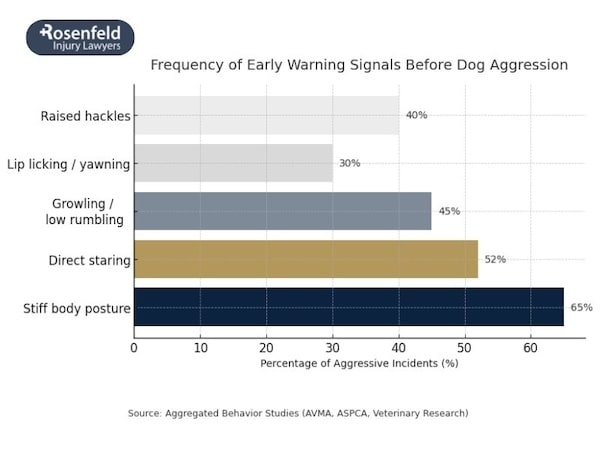
At the lowest rung of the ladder, many dogs express discomfort through very subtle behavior. These early signals are easy to overlook but represent the dog’s first attempt to avoid confrontation. Yawning when not tired, for example, is a stress signal rather than a sign of sleepiness.
Lip licking or flicking the tongue may indicate unease or nervousness, while turning the head or body away is a polite attempt to disengage from a perceived threat, another animal, or unfamiliar humans. Recognizing these early cues gives pet parents the opportunity to redirect the dog, reduce stress, and prevent escalation.
Clear Signs of Distress
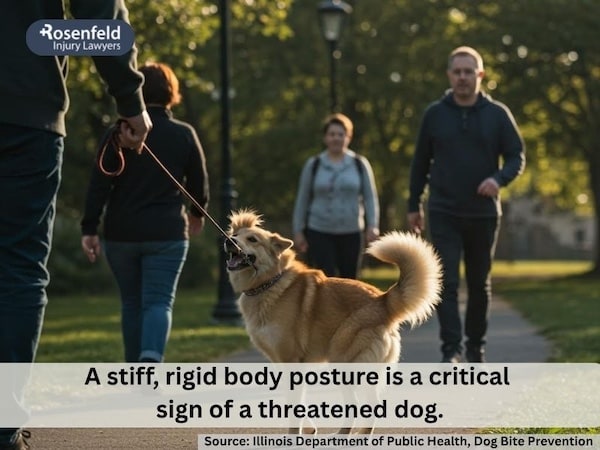
If a fearful dog or stressed dog is ignored during the subtle stage, its body language becomes more pronounced. The dog may show body stiffening as muscles tighten and adrenaline rises. Ears pinned back are a classic indicator of defensive aggression, and the “whale eye” (showing the whites of the eyes) is a direct signal that the dog feels threatened or cornered.
At this point, it is critical to create distance and remove whatever the dog perceives as a scary thing before the situation deteriorates into aggressive postures or a bite.
Starting to Displaying Aggression
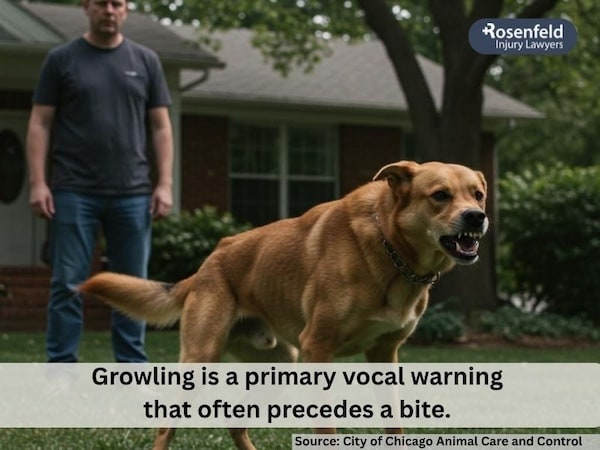
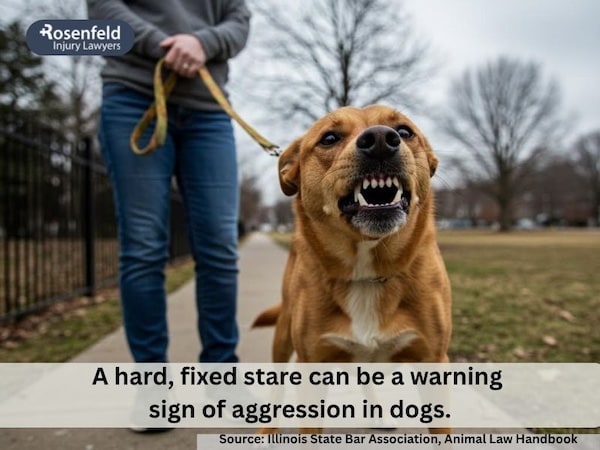
When earlier signs are dismissed, the dog begins to display obvious warning signals openly. These unmistakable indicators show that the animal is prepared to defend itself or its resources. Growling is a verbal warning to back away, while snarling combines a growl with facial tension and intense eye contact.
Baring teeth is a visual aggressive display signaling readiness to escalate to biting if necessary. These offensive postures are the dog’s last chance to tell you to stop before a physical confrontation occurs.
It’s important to understand that growling and snarling are not “bad” behaviors, they are safety valves. Punishing these signals can suppress the warning signs and lead to redirected aggression or biting without notice, which makes the dog far more dangerous.
The Final Step: Lunging, Snapping, and Biting
If all previous warnings are ignored, a dog may climb to the top rung of the ladder, the aggressive response itself. Lunging is a forward rush meant to scare or knock back the perceived threat. Snapping is a near-bite that misses or only grazes as a warning.
Biting is the ultimate and most harmful behavior directed at a person, other dogs, or other animals. By this stage, the dog is overwhelmed and may have lost the ability to self-regulate.
Recognizing this ladder of aggressive canine behavior gives the owners a chance to implement behavior alteration techniques, use positive reinforcement techniques, and involve professional dog trainers or a veterinary behaviorist before a dog’s behavior reaches the point of no return.
Many aggression issues can be resolved or greatly reduced with early intervention, medical screening for hormonal issues or pain, and a customized treatment plan designed to change the dog’s emotional response to triggers.
By learning to read these warning signs of aggression, pet parents can protect their family, visitors, and other animals while also reducing stress and improving the quality of life for their dog.
What Causes Dog Aggression?
Understanding the motivation behind aggression in dogs is key to preventing a dangerous behavior problem. Dogs don’t suddenly attack without cause; instead, they respond to something in their environment or within their own bodies.
By identifying the triggers for a dog’s aggressive behavior, pet parents can work with professionals to create a treatment plan, use management methods, and start a behavior alteration program before the problem escalates.
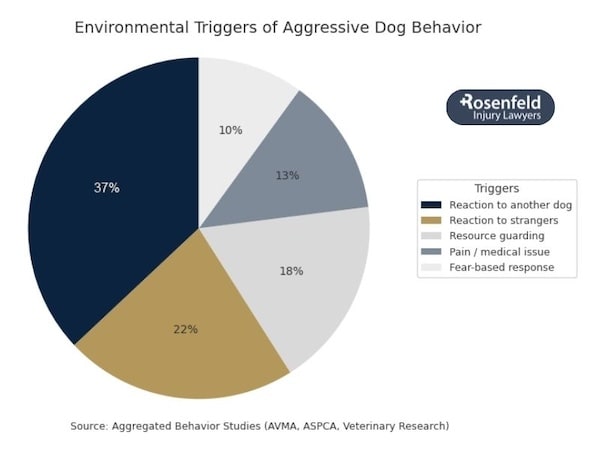
Below are the most common causes of dog aggression understanding:
Fear Aggression
Fear is the single most common cause of aggression. A fearful dog may react aggressively when it feels trapped, threatened by unfamiliar people, or confronted by other dogs or other animals. Even a friendly dog may respond with a bite if it perceives something scary or is overwhelmed by a chaotic environment.
This type of aggression is defensive rather than offensive, and typical signs include trembling, crouching, or avoidance before a sudden aggressive response. Pet parents should use positive reinforcement and gradual desensitization rather than punishment to help fearful dogs feel safe.
Territorial and Protective Aggression
Some dogs exhibit aggressive behavior when defending their home, yard, or family members. This is called territorial aggression or protective aggression. A dog may display aggression by barking, lunging, or baring teeth when strangers approach. Male dogs and female dogs alike may respond this way, especially in the presence of unfamiliar dogs, people, or other animals.
Territorial aggression is rooted in the dog’s instinct to guard resources like their food bowl or social group from a perceived threat. For example, a female dog will very likely be protective of her pups, and that’s a completely normal instinct. Effective management involves limiting access to entry points, using behavior alteration techniques, and supervising introductions.
Possessive Aggression
Also called resource guarding, possessive aggression happens when a dog becomes aggressive over food, toys, or a favorite resting spot. The dog may growl, snap, or react aggressively if someone approaches its food bowl, chew bone, or even a favored person.
Resource guarding is a learned behavior: the dog discovers that aggression makes the scary thing go away. Pet parents should seek professional help to teach positive behavior modification and management, such as trading up or teaching a “leave it” cue.
Pain-Elicited Aggression
Even a normally gentle individual dog may become aggressive if touched while in pain. Injuries, arthritis, dental disease, or medical issues like hormonal imbalances can make a dog more irritable.
This aggression is not about dominance but discomfort, and a veterinary behaviorist can help identify underlying health causes. A veterinarian should always rule out any medical problem before starting behavior modification, and older dogs or those recovering from surgery may be especially prone to this form of aggression. Identifying why a dog is aggressive (fear, territory, possessions, or pain) is the first step to long-term safety for both the dog and the community.
Why You Should Never Punish a Dog for Growling
A growl is one of the most important communication tools in canine communication. It’s not predatory behavior but a dog’s way of saying, “I’m uncomfortable” or “please back off.”
Far from being an act of defiance, a growl is a safety mechanism that should put enough pressure on the perceived threat to prevent bites. When a dog sees a threat, whether it’s an unfamiliar person, another pet, or a stressful situation, growling is the earliest, clearest signal of distress and rising aggressive postures.
Punishing a dog for growling teaches it to skip that warning signal altogether. Instead of expressing discomfort through a growl, the dog may jump straight to lunging or biting without notice. This makes aggressive behavior far more dangerous, not less. By suppressing the growl, you eliminate the chance to intervene early with training techniques or behavior modification.
The better approach is to respect the growl as a warning sign and identify the underlying cause of the dog’s behavior. With professional help, owners can use positive reinforcement, desensitization, and counterconditioning to build the dog’s confidence and reduce its need to be aggressive.
This kind of behavior modification program preserves safety while addressing the root cause of the aggression, rather than simply masking it or turning it into redirected aggression.
Liability for Aggressive Dogs and Other Animal Injuries
In Illinois, the law places a clear responsibility on dog owners and handlers to manage their animals and prevent harm to others. Every owner has a legal duty to ensure that their dog does not engage in dangerous behavior toward family members, visitors, or other dogs and pets.
This duty applies equally to purebred dogs, mixed breeds, and rescue dogs, regardless of their breed or size. Strict liability also applies regardless of the underlying cause of the aggression.
Under the Illinois Animal Control Act, a dog owner is strictly liable for damages when their animal attacks, bites, or otherwise injures someone without provocation. This means that a victim does not have to prove the owner was negligent or that the dog’s aggressive attack was predictable.
Instead, as long as the victim was lawfully present and did not provoke the animal, the owner is financially responsible for medical bills, lost income, pain and suffering, and other losses stemming from the attack.
We use this law to hold negligent owners accountable, gather evidence of bites or shown aggression of the dog involved in the attack, and help victims recover the compensation they need for their injuries and long-term care.
Do Certain Dog Breeds Exhibit Aggressive Behavior More Often?
Some breeds show up more often in bite statistics, but aggression in dogs is an individual trait shaped by genetics, socialization, training, and health, not simply breed type. A friendly dog from a breed seen as “dangerous” may never show aggression, while a small companion dog may show aggression from fear or pain.
Research from the AVMA and other veterinary sources shows certain breeds like German Shepherd Dogs, pit bull–type dogs, Rottweilers, Jack Russell Terriers, Chow Chows, and Akitas in severe dog-human injury reports more often than others.
But breed popularity, reporting practices, and misidentification play a major role. Owner surveys such as C-BARQ also show Chihuahuas, Dachshunds, and Pekingese often scoring high for stranger-directed aggressive behavior, while Golden Retrievers and Labrador Retrievers score low as the least aggressive dogs.
Under the Illinois Animal Control Act, liability depends on the individual dog’s actions and the owner’s responsibility, not the breed. For dog owners, early socialization, positive behavior modification techniques, and consistent management matter far more than breed. For victims, this law ensures their rights don’t depend on breed labels but on the facts of the attack.
What Makes Us the Best Lawyers for Aggressive Dog Behavior Cases?
Our team combines deep legal experience with a focused understanding of dog aggressioncases. We know how to build strong claims by uncovering the full history of a dog’s aggressive behavior and the owner’s responsibility to prevent harm.
This includes gathering veterinary records, animal control reports, eyewitness statements, and testimony from certified dog trainers or veterinary behaviorists to show a pattern of aggressive displays or a history of previous bites that the owner ignored.
Documenting these prior incidents strengthens a victim’s case for full compensation under the Illinois Animal Control Act, which holds owners strictly liable when their dog injures someone without provocation.
Our attorneys also identify any management methods the owner failed to use, such as fencing, leashing, or behavioral training, to prove negligence and secure damages for medical bills, lost income, and pain and suffering.
By combining legal strategy with a deep understanding of dog aggression and other behavior problems, we help victims show the court why the attack was preventable. Our goal is to hold negligent owners accountable and ensure our clients recover the resources they need to heal physically and emotionally after a traumatic dog attack.
Our Settlements for Dog Bites and Other Aggression Issues
We have a proven track record of holding negligent owners accountable for dog aggression incidents. Our team carefully investigates each case, documents aggressive behavior, and uses medical and financial evidence to secure compensation for victims.
These results show our ability to help clients recover after devastating dog attacks:
- We obtained a $375,000 settlement for a three-year-old child who was mauled by a pit bull. The child required surgery and was left with significant facial scarring.
- We secured a $195,500 settlement for an eleven-year-old bitten by a neighbor’s dog that escaped from a fenced yard, causing serious wounds and emotional trauma.
- We achieved a $177,555 settlement for a delivery driver attacked by a Giant Schnauzer while delivering packages. The attack caused nerve damage to the driver’s dominant hand and led to an extended absence from work during recovery.
These cases demonstrate how we combine legal expertise and a deep understanding of signs of aggression in dogs to maximize our clients’ recovery under Illinois law.
When to Seek Professional Help for Aggression in Dogs
If your dog has begun to exhibit aggressive behavior such as growling, lunging, snapping, or other aggressive displays, it’s important to act early. Pet parents should first schedule a veterinary exam to rule out medical issues such as pain and injury since these can trigger aggressive behavior even in normally gentle animals.
Once health causes are addressed, working with a certified animal behaviorist or professional dog trainer is the next step. These specialists can design a tailored program, teach positive reinforcement, and help reduce your dog’s stress in social interactions with unfamiliar humans or other animals.
Book a Free Consultation
We offer free, confidential consultations to help you understand your options. Our team knows how to investigate bite history, uncover ignored aggressive displays, and prove the owner’s responsibility under the Illinois Animal Control Act.
We work on a contingency fee basis, which means you pay nothing unless we win your case. Our attorneys will fight tirelessly to hold the negligent owner accountable and recover compensation for your medical expenses, lost wages, and pain and suffering.
Don’t wait, contact us today to schedule your free consultation and take the first step toward justice and healing.
Content reviewed by Chicago dog bite lawyer Jonathan Rosenfeld of Rosenfeld Injury Lawyers LLC, who hold dog owners accountable to secure compensation for injured victims and their families, and is a trial lawyer recognized by Super Lawyers, the American Association of Justice, and Million Dollar Advocates for serious crash cases across Illinois.