- Free Case Evaluation: 312-779-6171 Tap Here To Call Us




Chicago Dog Laws


At Dog Bite Injury Lawyer, we know how important dogs are to families across the city of Chicago. But we also understand the challenges that come with living in a busy urban environment, where rules are necessary to keep people, pets, and neighborhoods safe.
Chicago dog laws are designed to balance the joy of pet ownership with public safety, and when these laws are ignored, the consequences can be devastating. We stand with dog bite victims and their families, offering guidance and support when injuries occur because local dog laws were violated.

What Are the Dog Registration Requirements in Chicago?
In the City of Chicago, all dogs four months and older must have a current dog license issued by the City Clerk. To get one, pet owners must show proof from a licensed veterinarian that the dog has a current rabies vaccination. The permit and tag fee depends on whether the pet is spayed or neutered, with sterilized pets costing far less to register.
Unsterilized dog fees are higher because unplanned litters contribute to pet overpopulation, and thousands of dogs are euthanized annually, outcomes that can often be avoided through spaying or neutering.
Dog registration is required under the regulation issued by the city for acquiring permission to use the Chicago Park District’s dog-friendly areas, and it is also necessary for admission to many dog boarding and daycare service facilities.
Once issued, the registration tag must be attached to the dog’s collar whenever the animal is off the owner’s property. The tag links to city records and helps with both rabies prevention and reuniting lost pets. If an owner fails to register their dog or keep the tag visible, the Cook County Department of Animal and Rabies Control may issue tickets and impose a possible fine for each day of noncompliance.
Licenses can be purchased online, at the City Clerk’s office, or through participating Chicagoland veterinary offices that handle registration at the time of an office visit.
What Are Chicago Dog Owners’ Responsibilities?
Owning a dog in Chicago comes with clear duties under the municipal code. Pet owners must make sure their animals are properly vaccinated, licensed, and controlled at all times.
Rabies Vaccination
Every dog four months or older must have a current rabies vaccination given by a Chicago area veterinarian clinic or other licensed provider. Proof of vaccination is required to obtain a current dog license issued by the City Clerk, and the record is tied to the dog’s collar and registration tag. Out-of-state residents bringing pets into the city must follow the same procedures and show proof from their own vets.
Control and Restraint
Local rules require that dogs entering public spaces remain under control at all times. An off leash animal that leaves the owner’s property can lead to tickets, fines, and potential designation as a dangerous dog. A responsible person bringing a dog into public areas must keep the animal on a leash and prevent it from biting, jumping, or threatening others.
General Care Duties
Dog owners are also expected to provide food, water, and shelter, to clean up after their pets, and to follow all animal and rabies vaccination rules. The city enforces these regulations through the Cook County Department of Animal and Rabies Control, which can impose a possible fine if a dog is unlicensed, unvaccinated, or left roaming.
By keeping your dog vaccinated, tagged, and leashed, you’re following the law and protecting other animals, neighbors, and your own pet.
What Are the Chicago Leash Laws?
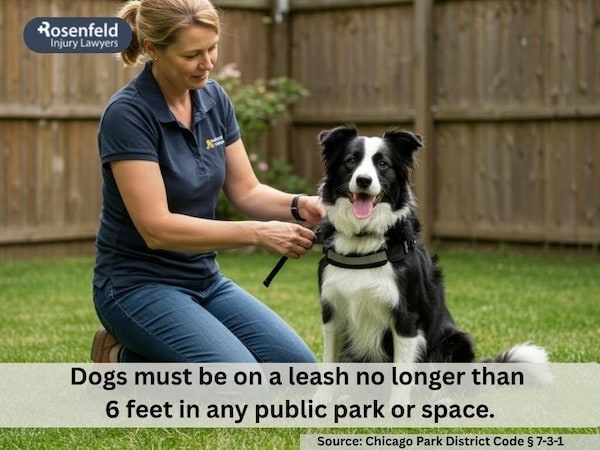
Chicago requires every dog owner to keep their pet properly restrained once it leaves the owner’s property. Under the law, an off leash dog is a violation of city rules and may result in tickets, fines, or even a dangerous dog designation.
Restraint Requirements
City rules state that a dog must be on a leash or otherwise under control whenever it is outside the home or yard. A fence is acceptable only if it fully prevents the animal from jumping over, reaching through, or escaping. If a pet roams into public space without a leash, the Cook County authorities can impose a fine.
Definition of “Under Restraint”
The city clarifies that an animal is considered under restraint if it is:
- Held by a leash or lead;
- Kept within the owner’s property;
- Inside a vehicle, crate, or other enclosure; or
- In a Chicago Park District DFA (dog-friendly area) following all posted DFA rules.
Chicago’s leash regulations protect neighbors and other pets, but also the dog itself. When a pet runs loose, it risks being picked up by animal control, treated as a stray, or worse: injuring someone and facing consequences under strict liability rules. By keeping a dog’s collar secured with its registration tag and using a leash in public, owners follow the law and protect their community.
What Are the Consequences If a Dog Is Found Off-Leash in Chicago?
In Chicago, an off dog outside the owner’s property is a violation of the law. The Cook County Department of Animal and Rabies Control can issue tickets and fines starting at $300. If the dog causes property damage, fines may reach $1,000, and serious injury or death can bring penalties up to $10,000, along with restitution, community service, or even jail time.
These cases are treated as strict liability, meaning the dog owner or responsible person is accountable regardless of intent. An unrestrained pet may also be seized, and repeat offenders may be required to sterilize the dog before it can be returned.
Even in Chicago Park District DFAs (dog friendly areas), dogs need a permit and tag issued through the owner’s veterinarian or other participating Chicagoland veterinary office. Violating DFA rules can lead to removal and additional fines.
When Is a Dog Deemed Dangerous in Chicago?
Under the Cook County ordinance, a dog may be classified as a dangerous animal if it bites or attacks a person or another pet without provocation, or if it repeatedly threatens people while off the owner’s property. When this happens, the Cook County Department of Animal and Rabies Control can investigate and issue a written finding.
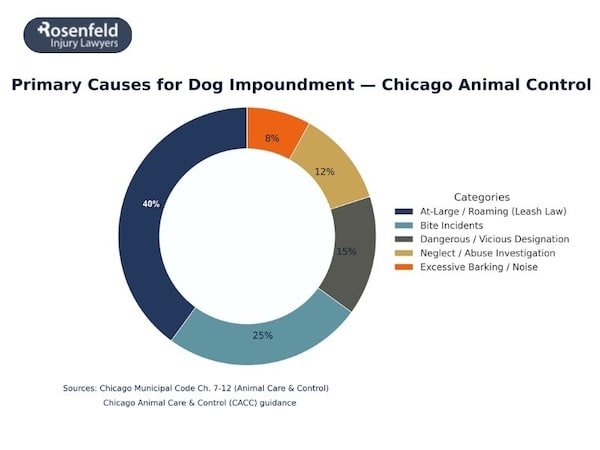
A declared dangerous dog must be muzzled and leashed by a person bringing the dog into public, confined in a secure enclosure at home, and carry a registration tag and microchip. Owners must also post a sign stating “Dangerous Animal” on the property, carry liability insurance, and follow rabies prevention rules. Failure to comply can lead to impoundment, fines, or even euthanasia in severe cases.
What Are Dog-Friendly Areas in Chicago?
Chicago allows dogs to be off the leash only in approved Dog-Friendly Areas (DFAs), managed by the Chicago Park District. These fenced spaces and the Montrose Dog Beach are the exceptions to strict Chicago leash laws.
Permits and Tags
For visitors wishing to enter a DFA, each pet must have a permit and tag issued by a participating veterinarian. The tag fee is $10 per dog, per year, valid for a single season (January through December of the same year). There are no day passes, and an out of state resident must follow the same procedures. The tag must be attached to the collar whenever the dog is inside a DFA.
Enforcement
Signs are posted at every entrance stating the DFA rules. The Cook County Department of Animal and Rabies Control enforces DFA rules and can issue tickets and impose a possible fine of up to $500 for violations. Owners must keep their pets vaccinated, display the registration tag, and obey rules limiting three dogs per person.
Locations
Some of the most popular DFAs include:
- Montrose Dog Beach
- Belmont Harbor DFA
- Grant Park DFA
- Horner Park DFA
- Puptown (Margate Park) DFA
- Wicker Park DFA
A full list is available from the Chicago Park District.
By keeping up with your pet’s registration, attaching the proper dog’s tag, and following rabies vaccination rules, you can safely enjoy these spaces while protecting your community and your pet.
How Are Dog or Animal Bites Regulated by the Illinois Animal Control Act?
Illinois applies strict liability to bite cases. Under 510 ILCS 5/16, if a dog, without provocation, bites or injures someone who is lawfully present, the owner or other responsible person is fully responsible for damages. Victims do not need to prove negligence.
Chicago’s laws expand on this. A bite includes any wound, nip, or saliva contact with broken skin. After a bite, the owner’s responsibility includes complying with rabies vaccination requirements, observation periods, and paying related fees.
If the animal is deemed dangerous, stricter rules apply: confinement in secure enclosures, muzzling and leashing by a person bringing the dog off the owner’s property, liability insurance, and a sign posted stating “Dangerous Animal.”
How to Report a Dog Bite in Chicago
Anyone bitten by a dog should first get medical care, then notify the Cook County animal bite investigation authorities. Reports can be made by phone at (708) 974-6140 or by email to AnimalControl@cookcountyil.gov.
When filing, include details about the dog’s tag, current rabies vaccination, and the dog’s owner. The department may place the pet under rabies observation, impound the animal, or investigate whether it should be declared a dangerous dog under the law.
Reporting protects your health, creates a record for legal claims, and helps the authorities enforce Chicago’s leash ordinances and other regulations.
Contact Us to Help You Recover Compensation
If you were injured by a dog, our Chicago dog bite law firm is here to guide you through the legal process. We handle every step, from gathering medical records to pursuing claims under Chicago and state laws.
We provide a free consultation and handle cases on a contingency fee basis, so you never owe fees unless we secure compensation on your behalf. Reach out today to learn your rights and take the first step toward justice.
Content reviewed by Chicago dog bite lawyer Jonathan Rosenfeld of Rosenfeld Injury Lawyers LLC, who hold dog owners accountable to secure compensation for injured victims and their families, and is a trial lawyer recognized by Super Lawyers, the American Association of Justice, and Million Dollar Advocates for serious crash cases across Illinois.